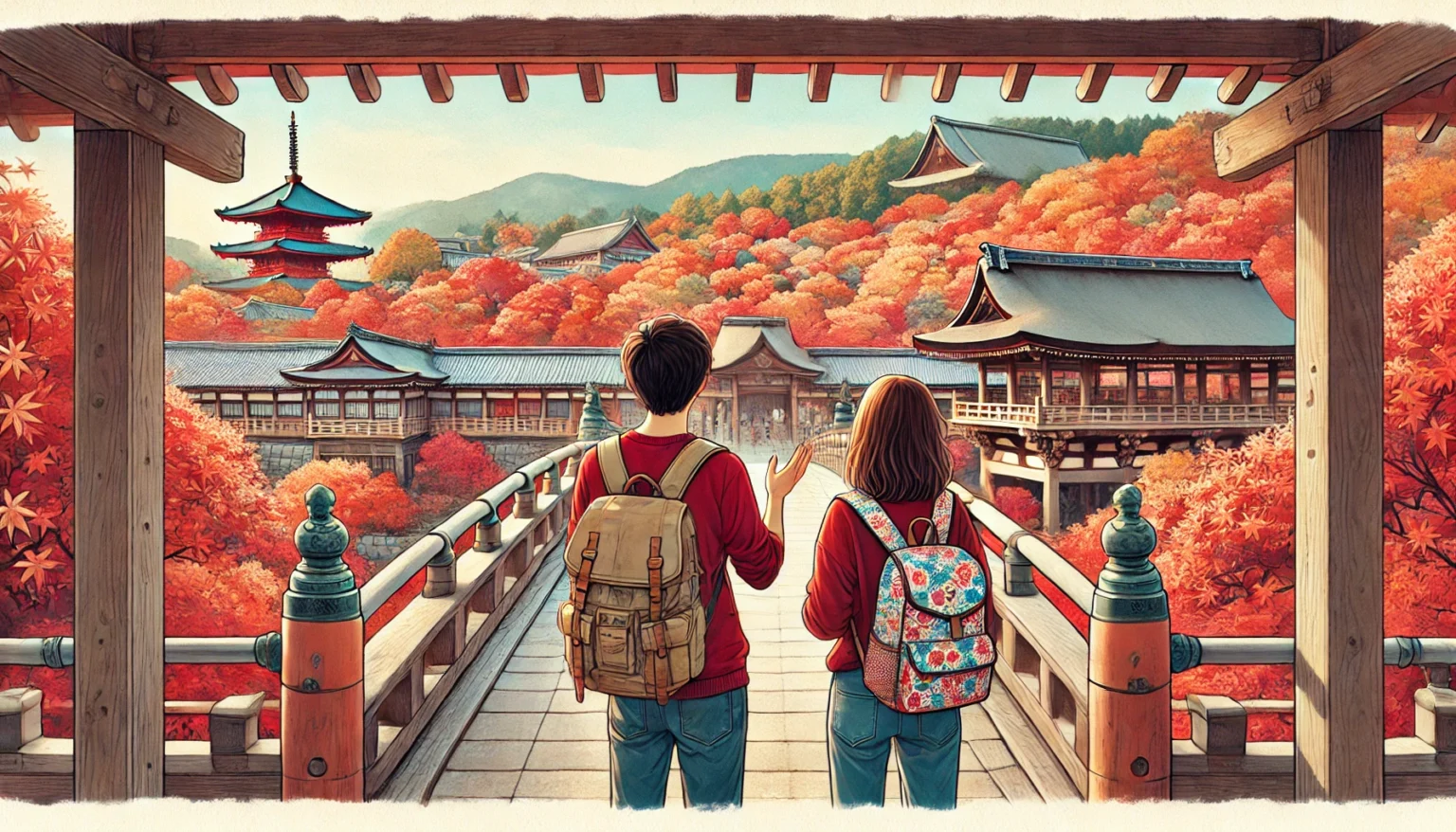
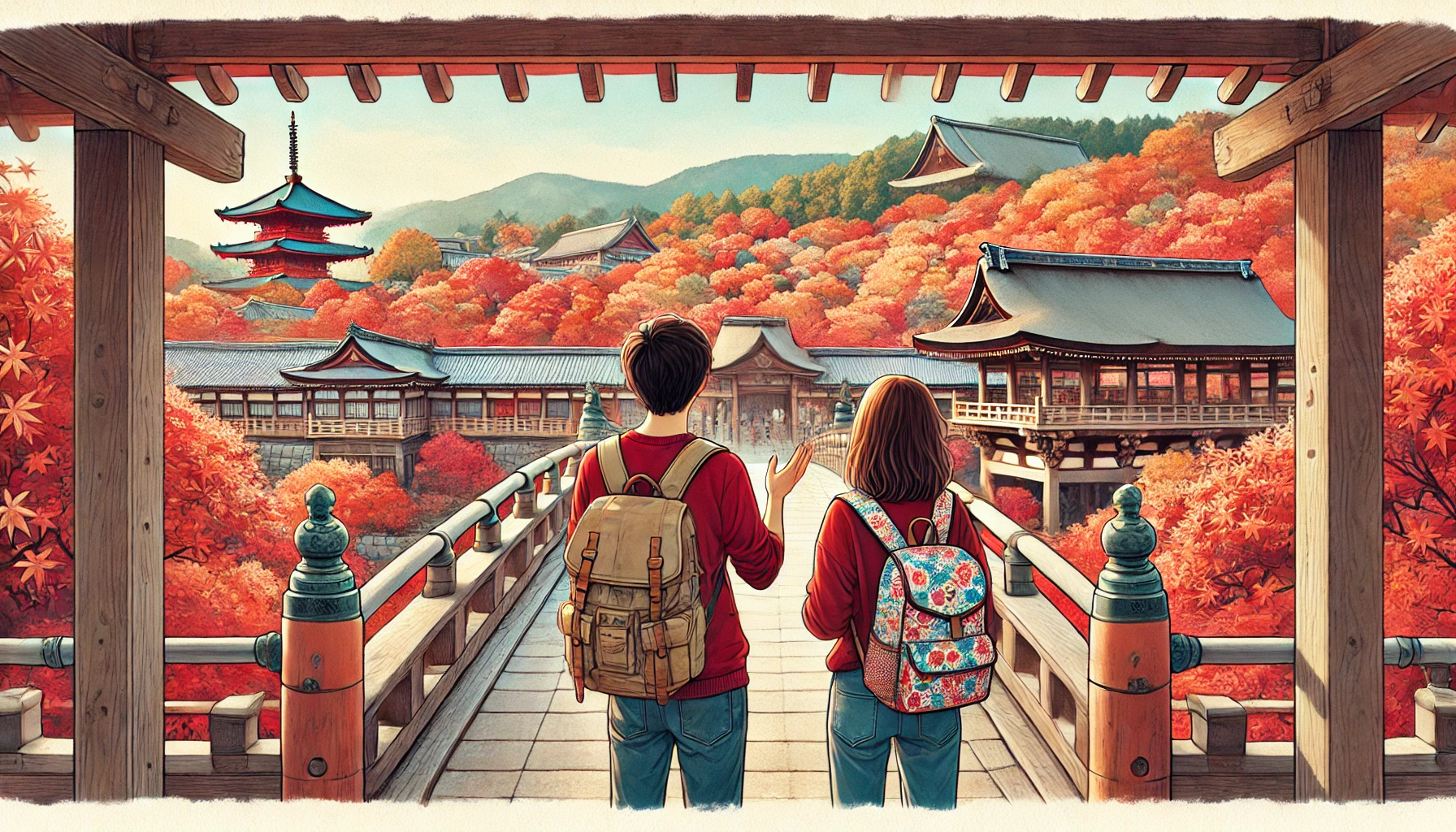
Explore Tofuku-ji and Sennyū-ji at your own pace, mostly accessed from Tofuku-ji Station. Tofuku-ji is famous for its autumn leaves seen from the Tsūten-kyō bridge; next door, Sennyū-ji, known as “Mitera,” is much quieter. This route in southern Kyoto is enjoyable during both the autumn foliage season and regular times.
Highlights: Tofuku-ji, Kōmyō-in, Sennyū-ji
1. Tofuku-ji
Founded in 1236 by Regent Kujō Michiie to honor ancestors, Tofuku-ji combines characters from Nara’s Tōdai-ji and Kōfuku-ji, making it the largest temple complex in Kyoto and the head temple of the Rinzai sect. The entrance Sanmon is a national treasure and the oldest existing Zen gate in Japan; the ceiling features a dragon painting by the Yoshiyama school, and the Nirvana painting is specially displayed during the spring Nirvana ceremony.
To see the Tofuku-ji autumn leaves, walk along the Tsūten-kyō bridge connecting the main hall and the Kaisando, overlooking about 2,000 maple trees in the Shōgaku-kyō valley. The Hojo garden (formerly known as the Hasso no Niwa, designated a national scenic spot in 2014) was created in 1939 by Mirei Shigemori, based on the “Eight Aspects of Enlightenment.” Legend has it that during the Muromachi period, Yoshiyama Myōchō requested to replace the cherry blossoms with maples when he presented the Nirvana painting to Ashikaga Yoshimichi, leading to the current autumn scenery. Admission is not a single ticket for the entire temple: the Sanmon exterior is free, while the Tsūten-kyō, Kaisando, and Hojo garden require separate tickets, as indicated on the store card and official website.
2. Kōmyō-in
A sub-temple of Tofuku-ji, located outside the temple walls. You can visit it first from Toba-kaido Station. The main garden, “Hashin-tei,” is also designed by Mirei Shigemori, featuring moss and stones in a dry landscape style, earning it the nickname “Rainbow Moss Temple”; the tea house Rōgetsu-an has moon-themed windows. This spot is quieter when the Tsūten-kyō is crowded.
3. Sennyū-ji
Located at the foot of Mt. Getsurin, Sennyū-ji is the head temple of the Shingon sect, with a recommended stay of about 1 hour. Founded in 1218 by Shunjō, the temple is named for its spring water and has historically hosted imperial funerals, earning it the title “Mitera.” The main gate features a four-legged design moved from the Kyoto Imperial Palace during the Keichō era. The three Buddha statues (Amitābha, Shakyamuni, Maitreya) symbolize the past, present, and future. The Guanyin Hall dedicated to Yang Guifei is located deep to the left of the main gate; it is believed to have been brought back by the monk Tankai from the Southern Song Dynasty, showcasing distinct Song-era craftsmanship. The garden offers seasonal beauty throughout the year.
🚝Access: Kansai Airport ⮕ Kyoto
🚄 Travel Guide from Kansai Airport (KIX) to Kyoto
There are two main options for traveling from Kansai International Airport (KIX) to Kyoto: JR Line and Limousine Bus.
JR Limited Express HARUKA (Fastest and Most Comfortable) – Direct to Kyoto Station, with spacious and comfortable seating, is the most recommended choice. Approximately 75 – 80 minutes, ticket price around ¥3,590
👉kkday HARUKA Ticket
👉Klook HARUKA Ticket
👉Trip HARUKA Ticket
If your itinerary includes Osaka, Kyoto, Nara, Kobe, and Himeji, the JR Kansai Rail Pass is the most cost-effective option, offering three types of tickets.
JR Kansai Mini Pass: 3 days, approx. ¥2,800
👉kkday
👉Klook
👉Trip
JR Kansai Area Pass: approx. ¥2,600/day
👉kkday
👉Klook
👉Trip
JR Kansai Wide Area Pass: 5 days approx. ¥11,500
👉kkday
👉Klook
👉Trip
Kansai transport + sights pass: 30 days from ¥11,000
👉Klook
It’s recommended to check the content on each platform; I personally find Trip’s explanations clearer and more straightforward.
Tofuku-ji access: JR
Take the JR from Osaka to Tofuku-ji. First, take the Limited Express or HARUKA to Kyoto Station, then transfer to the JR Nara Line (local) to reach 【JRTofuku-ji Station】 in about 45 minutes for ¥2,040.
From Kyoto Station, take the JR Nara Line (local) directly to 【JRTofuku-ji Station】 in about 2 minutes for ¥150.
If you plan to use JR multiple days, consider buying a JR Pass for better value as follows:
JR Kansai Mini Pass: 3 days, approx. ¥2,800
👉kkday
👉Klook
👉Trip
JR Kansai Area Pass: approx. ¥2,600/day
👉kkday
👉Klook
👉Trip
JR Kansai Wide Area Pass: 5 days approx. ¥11,500
👉kkday
👉Klook
👉Trip
Kansai transport + sights pass: 30 days from ¥11,000
👉Klook
It’s recommended to check the content on each platform; I personally find Trip’s explanations clearer and more straightforward.
Tofuku-ji access: Keihan
Take the Keihan Main Line to 【Toba-kaido Station】 from Osaka or Kyoto
From Osaka: Yodoyabashi Station/Tenmabashi Station ⮕ Toba-kaido Station (about 72 min ¥480)
From Kyoto: Gion Shijo/Kiyomizu Gojo ⮕ Toba-kaido Station (about 7 min ¥240)
Ideal for travelers staying in the eastern part of Osaka (like Yodoyabashi) or in the Higashiyama area of Kyoto.
Keihan Railway: Kyoto-Osaka Sightseeing Pass
Coverage: Unlimited rides on the Keihan Main Line and the cable car to Ishiyama-dera for one day; easily pays off if you take more than three rides.
Direct access to sightseeing hotspots: The Keihan line connects many important attractions, especially in Kyoto, making it easy to reach:
Fushimi Inari Taisha (Fushimi Inari Station)⛩️
Gion, Kiyomizu-dera area (Gion Shijo Station, Kiyomizu Gojo Station)
It is recommended to open the map on a computer or large screen first, then refer to the convenience stickers for your stops. Tofuku-ji is closer to Tofuku-ji Station, while Sennyū-ji can also be accessed from Keihan Toba-kaido Station.
Convenience stickers are arranged by walking direction: orange for Tofuku-ji, blue for the Sennyū-ji area.
Loading map…
Open the attractions map
Tofuku-ji & Sennyu-ji sticky notes
🚶♂️Start🚶♀️
Tofukuji Station
東福寺駅
Click for Navigation
Google Maps
Apple Maps
Copy address
Intro
▼
Tofuku-ji Station
Attraction Overview
Tofuku-ji Station is a junction for the JR Nara Line and the Keihan Main Line. Many travelers visiting Tofuku-ji and Sennyū-ji in Kyoto get off at this station.
After exiting, head to Tofuku-ji, which can be crowded during the autumn foliage season; Sennyū-ji, written as Sennyū-ji in Japanese, is also accessible from this station, or you can switch to the Keihan Line and get off at Toba-kaido Station. Check the day's schedule and fares for JR/Keihan.
Tobakaido Station
鳥羽街道駅
Click for Navigation
Google Maps
Apple Maps
Copy address
Intro
▼
Toba-kaido Station
Attraction Introduction
Toba-kaido Station is a stop on the Keihan Main Line. Travelers heading to Sennyū-ji and Imakumano Kannon-ji often depart from this station; Tofuku-ji is closer to Tofuku-ji Station.
DRAGON BURGER, located near Tofuku-ji Station, is a burger restaurant transformed from a century-old traditional house. It offers a unique gourmet burger experience, elevating the fast-food image into a refined dish. The burger recipes are crafted by British chef Adam Lawson, who has honed his skills in renowned French and Italian restaurants. Inspired by Japanese and Kyoto culinary culture, the burgers feature rare cuts of domestic wagyu beef, specifically "neck meat," sourced from grass-fed cattle, paired with fresh Kyoto vegetables like Kujō green onions from contracted farmers. The signature "Kyoto Classic" burger uses Kujō green onions and a special onion miso sauce, while the "Yuzu Pepper" cleverly incorporates white miso, showcasing Kyoto's unique flavors. The restaurant retains the warm atmosphere of the traditional house, blending stylish decor with a Japanese garden, making it an excellent choice for lunch during sightseeing or an evening drink.
🎬 DRAGON BURGER Video
Reserve
👉autoreserve
Daikoku Ramen - Tofukuji Branch
大黒ラーメン 東福寺店
Click for Navigation
Google Maps
Apple Maps
Copy address
Intro
▼
Daikoku Ramen Tofuku-ji
Item
Details
Address
246-1 Honmachi 13-chome, Higashiyama-ku, Kyoto City, Kyoto Prefecture
Daikoku Ramen Tofuku-ji is located right outside the JR Nara Line and Keihan Main Line Tofuku-ji Station. This shop exudes a nostalgic Showa-era diner vibe, loved by locals and tourists for its "cheap and delicious" offerings. The menu prices seem to have traveled through time, with ramen starting at just ¥530, offering great value. The broth features a rich tonkotsu soy flavor, presenting a gentle golden hue, smooth texture, and creamy pork essence, while clearly showcasing the distinct aroma of soy sauce—a nostalgic taste you'll want to enjoy every day. The shop has a warm atmosphere, and after your meal, they even give you a ¥100 discount coupon, making you want to return again and again. If you're looking to experience local, affordable, and nostalgic ramen in Kyoto, this is definitely a great choice.
「いづ松」 is a historic Kyoto sushi restaurant near Tofuku-ji. Founded by a former apprentice of the renowned sushi shop 「いづう」, it became independent in 1948 and is now run by the second generation. The restaurant retains a nostalgic atmosphere typical of traditional sushi shops, with the most popular menu item being the "Kyoto Sushi" platter. This platter allows you to sample six different types of Kyoto sushi, including: box sushi (shrimp, egg, anago), inari sushi, rolled sushi, and unique items like "oboro-maki" (kelp and pickled vegetables) and "iso-maki" (with mackerel). Among them, the thick, flavorful mackerel sushi (鯖寿司) is a must-try. The vinegared rice is excellent, and each piece of sushi is crafted with great precision, allowing you to enjoy a tranquil, nostalgic dining experience while savoring various Kyoto sushi.
🎬 いづ松 Video
Reserve
👉autoreserve
Bread, Coffee and Hirarinto
パンとコーヒーとひらりんと
Click for Navigation
Google Maps
Apple Maps
Copy address
Intro
▼
Bread, Coffee, and Hirarin...
Item
Details
Location
15-789 Honmachi, Higashiyama-ku, Kyoto City, Kyoto Prefecture
Business Hours
07:00~18:00 ※Irregular holidays (confirm with the shop before visiting)
This is a traditional house café near Tofuku-ji Station. True to its name "Bread, Coffee, and...", it offers much more. Stepping into this shoe-free restaurant feels like returning home, with a comfortable space and tranquil atmosphere featuring various seating options including sofas, tatami, a bar, and a garden terrace. What makes it special is its "fusion" menu. Many customers wonder, "Is this a soba shop? A pizza place? Or a café?" You can enjoy a relaxing breakfast set here, as well as the shop's pride, "100% Soba Noodles," with the signature "Toku Fuku Fuku Soba" being particularly popular. Additionally, the wood-fired pizza and the so-called "gentle coffee that brings happiness" are also favorites. Whether you want a break during sightseeing or just a leisurely dining spot, this beloved hidden gem among locals offers a relaxing time.
Abbesses is a hidden French restaurant that relocated from Gion Hanamikoji to the Fushimi Inari area. With only 8 seats, it offers a stylish decor reminiscent of a Parisian bistro, creating a mature and serene atmosphere, perfect for anniversaries or business meetings. The name is inspired by the historic "Abbesses" metro station in Paris, symbolizing a desire to create joyful moments for guests. The chef personally visits farms, focusing on seasonal ingredients and Kyoto vegetables to bring out their natural flavors. The signature dish is the "30 Vegetable and Seafood Salad," where all vegetables, except for leafy greens, are seasoned and cooked differently based on their characteristics, offering a rich and varied taste experience. The restaurant also features natural wines from around the world, perfectly complementing the delicate dishes for a high-value culinary feast.
Kōmyō-in is one of the sub-temples of Tofuku-ji, a major temple of the Rinzai sect. Compared to the crowded Tsūten-kyō viewing the autumn leaves, this spot is much quieter. Kōmyō-in is renowned for its distinct four seasons and Zen-inspired dry landscape garden. The exquisite moss in the garden showcases rich layers under light, especially in autumn, where green moss, red leaves, and white sand intertwine, earning it the beautiful nickname "Rainbow Moss Temple" (虹の苔寺). Visitors are drawn to its transcendent tranquility, sitting on the porch to quietly observe the garden, where time seems to stand still.
Historical Background and Cultural Significance
Kōmyō-in was founded in the early Muromachi period in 1391 by Zen Master Kinsan Meichō. However, it gained modern acclaim through the garden design master Mirei Shigemori during the Showa era. In 1939, Shigemori was commissioned to design the main garden, named "Hoshin Garden." "Hoshin Garden" is a dry landscape garden that reflects the Zen worldview. The garden uses white sand to symbolize the vast ocean, cleverly arranging 75 stones, with three groups of "Three Deity Stones" representing Shakyamuni, Amida, and Yakushi as focal points, resembling light rising from the sea. Behind the garden, the azalea bushes trimmed into cloud patterns represent clouds in the sky. From the Hojo, the garden presents different aesthetics in new greens, summer, autumn leaves, or winter snow. The adjacent tea house "Rōgetsu-an," also a masterpiece of Mirei Shigemori, is named after the Zen phrase "Clouds do not rise on the ridge, yet the moon falls on the heart of the waves," embodying the spirit of Zen unity.
🎬 光明院 Video
Kōmyō-in is not within Tofuku-ji. If you come from Toba-kaido Station, you can first visit Kōmyō-in on your way.
Funda-in (ふんだいん) is one of the sub-temples of the Rinzai sect's Tofuku-ji, offering a tranquil space away from the crowds at Tsūten-kyō. Known as Sesshū-ji, it features a dry landscape garden designed by the famous ink painter Sesshū Tōyō. The garden is divided into the South Garden and East Garden. The South Garden, known as the "Crane and Turtle Garden," uses stones and moss to create a serene layout, with white sand symbolizing the ocean, a mossy "Crane Island" on the left, and a powerful "Turtle Island" on the right, depicting eternal motion on a still canvas. The East Garden offers a different view, framed by the round window of the tea house "Tōnan-tei," creating a natural circular painting filled with Zen aesthetics and poetic beauty.
Historical Background and Cultural Significance
Funda-in's history dates back to the late Kamakura period (1321–1324), founded by the then regent Ichijō Uesugi to commemorate his father, inviting Zen master Jōzan as the first abbot. It became the family temple of the Ichijō clan, a prominent noble family. The name "Sesshū-ji" comes from the master Sesshū Tōyō (1420–1506), who practiced and painted here in his youth, leaving behind an immortal garden masterpiece. However, the garden fell into neglect during the mid-Edo period. It was meticulously restored in 1939 by renowned garden master Mirei Shigemori, reviving Sesshū's Zen aesthetic and making it a must-visit site among Kyoto's dry landscape gardens.
🎬 芬陀院 Video
Nisshakamon Gate
日下門
Click for Navigation
Google Maps
Apple Maps
Copy address
Intro
▼
Tofuku-ji (Nikkamon)
Item
Details
Location
Tofuku-ji Nikkamon
Spot Introduction
Nikkamon is one of the most common entrances to enjoy the autumn leaves at Tofuku-ji and access Tsūten-kyō. While it may not hold the same cultural significance as the temple's "Sanmon" (National Treasure) or "Gekkamon" (Important Cultural Property), it serves as the gateway to Tofuku-ji's core and most exquisite areas. Passing through the solemn Nikkamon, visitors are greeted with a stunning view ahead, leading to the ticket office and entrance for Tofuku-ji's soul sights—Tsūten-kyō and Kaisando. During the autumn leaf season, this spot becomes a gathering point for countless tourists who embark on the bridge overlooking the "Washiyu River" to witness the legendary "Tōten Kōyō" in all its fiery glory. In the early morning or during special worship events, Nikkamon often serves as a meeting point, guiding people into the tranquil Zen temple before the crowds arrive.
Tofuku-ji Temple - Main Hall
東福寺 本堂
Click for Navigation
Google Maps
Apple Maps
Copy address
Intro
▼
Tofuku-ji Main Hall
Item
Details
Location
Tofuku-ji Main Hall
Spot Introduction
Tofuku-ji is one of the five major Zen temples in Kyoto (ranked fourth among the five mountains) and serves as the core of the Tofuku-ji area. The solemn "Main Hall" (Hondō) and "Hōdō" (Lecture Hall) are the spiritual heart of the temple.
The "Main Hall" (also known as the "Buddha Hall") is the main building enshrining the principal deity, Shakyamuni Buddha. The current Main Hall was rebuilt in 1934 (Shōwa 9), showcasing a magnificent wooden structure that reflects modern Zen architectural style, exuding a solemn atmosphere that calms the spirit. Connected to the Main Hall is the "Hōdō," which features a large mural of "Blue Dragon" (Shōryū) painted by modern artist Tōmoto Inshō on its ceiling. The dragon's powerful presence is a masterpiece of modern Japanese art, open to the public only on specific dates or during ceremonies, making it a breathtaking sight if you are fortunate enough to see it.
However, Tofuku-ji has faced numerous fires since its establishment. Both the "Main Hall" and "Hōdō" have been burned down multiple times. The existing Main Hall is a modern reconstruction, while the more historically significant "Sanmon" gate is designated as a national treasure, being the oldest surviving Zen Sanmon structure in Japan, perfectly embodying the grandeur of medieval Zen.
🎬 東福寺 本堂 Video
Sanmon Gate
三門
Click for Navigation
Google Maps
Apple Maps
Copy address
🕖Winter 09:00~15:30
Intro
▼
Tofuku-ji Sanmon (National Treasure)
Item
Details
Location
15-778 Honmachi, Higashiyama-ku, Kyoto City, Kyoto Prefecture
Hours
・ April to end of October: 09:00–16:00 (last entry 16:30) ・ First Sunday of November to December: 08:30–16:00 (last entry 16:30) ・ First Sunday of December to end of March: 09:00–15:30 (last entry 16:00)
Admission
・ Free to view the Sanmon exterior (within Tofuku-ji) ・ Interior access to the Sanmon is only available during special openings, requiring an additional ticket (e.g., Autumn Special Opening Adult ¥1,000) (Note: Tofuku-ji ticket does not cover the entire temple; Tsūten-kyō, Kaisando, and Hojo garden require separate tickets)
The "Sanmon" stands at 22 meters tall, making it the oldest and largest Zen temple gate in Japan. This two-story structure skillfully combines the grand design of the "Daibutsuyō" (Indian style), the intricate decorations of "Zen style," and the elegant roof of "Wagyō" (Japanese style), showcasing the pinnacle of Muromachi period architecture. Whether surrounded by fresh greenery in early summer or fiery red leaves in deep autumn, this vermilion gate exudes a timeless solemnity and tranquility, symbolizing Kyoto's Zen culture.
Historical Background and Cultural Significance
The history of Tofuku-ji Sanmon dates back to 1425 (early Muromachi period), when it was rebuilt under the orders of the shogun Ashikaga Yoshimichi. Although it survived the Onin War and other conflicts, it has witnessed the rise and fall of Tofuku-ji multiple times. In 1952, it was officially designated as a "National Treasure" of Japan, affirming its irreplaceable historical and artistic value.
The term "Sanmon" is also known in Buddhism as the "Three Gates of Liberation," symbolizing the "Gate of Emptiness," "Gate of Formlessness," and "Gate of No Desires" that one must pass through to reach enlightenment, representing wisdom, compassion, and skillful means. The plaque "Myōun-kaku" hanging in the upper level is said to be the calligraphy of Ashikaga Yoshimichi. The interior (accessible only during special openings) houses a seated statue of Shakyamuni Buddha adorned with a crown and sixteen Arhats, with the ceiling and beams painted with vibrant Buddhist imagery by the monk "Kichizan Myōchō" and his disciples, showcasing a magnificent Buddhist world.
🎬 三門 Video
Hojo
方丈
Click for Navigation
Google Maps
Apple Maps
Copy address
🕖Winter 09:00~15:30
Intro
▼
Tofuku-ji Hojo Garden
Item
Details
Address
15-778 Honmachi, Higashiyama Ward, Kyoto City, Kyoto Prefecture
Hours
・April to October: 09:00–16:00 ・November to early December: 08:30–16:00 ・Early December to March: 09:00–15:30 (Last entry 30 minutes before closing)
Admission
¥500 (Adults), ¥300 (Elementary and Junior High School Students)
The "Hojo" of Tofuku-ji serves as the abbot's residence, but it is the surrounding "Hojo Garden" that truly makes it famous. This garden is a masterpiece of the Showa era (1939) by garden designer Mirei Shigemori, themed around the Zen concept of "Eight Aspects of Enlightenment." It features four distinct dry landscape gardens on the east, west, south, and north sides of the Hojo, collectively known as the "Garden of Eight Aspects," representing the pinnacle of modern Zen gardens.
・South Garden: The largest dry landscape garden, symbolizing the Eight Seas with white sand, and four groups of rocks representing the legendary four islands of Horai, showcasing a solemn Zen spirit. ・North Garden: The most famous "Ishidate Garden." Using moss and cut square stones (the stones are from the old imperial envoy gate), it creates a checkerboard pattern, perfectly blending traditional and modern aesthetics. ・East Garden: Cleverly arranged cylindrical stones form the shape of the "Big Dipper," hidden within a sea of white sand. ・West Garden: Features square-shaped azalea bushes paired with white sand, presenting an orderly "Iida Ishidate" pattern. Each of these four gardens is independent yet interconnected, allowing visitors to experience four distinctly different garden arts as they walk around the Hojo.
The Hojo building was destroyed by fire in 1881 and rebuilt in 1890. The "Garden of Eight Aspects" we see today was redesigned by Mirei Shigemori in 1939 (Showa 14). Its unique cultural significance lies in Shigemori's bold combination of the rustic and robust style of the Kamakura period with the aesthetic of modern abstract art. He skillfully utilized discarded stones (such as the paving stones in the North Garden and the column stones in the East Garden), giving them new life.
🎬 方丈 Video
Tsutenkyo Bridge
通天橋
Click for Navigation
Google Maps
Apple Maps
Copy address
🕖Winter 09:00~15:30
Intro
▼
Tofuku-ji Tsūten-kyō
Item
Details
Address
15-778 Honmachi, Higashiyama-ku, Kyoto City, Kyoto Prefecture
Opening Hours
April to October: 09:00–16:00 (closes at 16:30) November to early December (autumn foliage season): 08:30–16:00 (closes at 16:30) Early December to March: 09:00–15:30 (closes at 16:00)
Admission Fee
To visit Tsūten-kyō and Kaisando at Tofuku-ji: Adults ¥1,000, Elementary and Junior High School Students ¥500 (autumn special viewing period prices, check the website for other times)
Tsūten-kyō is the prime spot for viewing the autumn leaves at Tofuku-ji and is one of the temple's most iconic structures. This wooden bridge spans the "Shiyu-gan" valley, connecting the main hall and Kaisando. From the bridge, visitors can overlook the sea of maple trees below. The maple leaves at Tofuku-ji, known as "Tsūten Kōyō," are characterized by their small size and golden hues, differing from the more common vibrant red leaves. During autumn, Tsūten-kyō becomes crowded with visitors from around the world eager to witness the legendary "sea of clouds" of maple leaves, with sunlight filtering through the leaves and casting a beautiful glow on the vermilion bridge, creating an unforgettable scene. Even outside the foliage season, the fresh greenery and serene valley below offer a unique Zen experience, making it a perfect spot to appreciate the beauty of Kyoto's seasons.
Historical Background and Cultural Significance
Tofuku-ji is the head temple of the Rinzai sect, founded by Kujō Michiie in the Kamakura period (1236) with the aim of establishing a large temple to rival Todai-ji and Kōfuku-ji in Nara, taking one character from each temple's name. As one of Kyoto's five mountains, Tofuku-ji holds a prestigious position. The "Tsūten-kyō" was originally constructed in 1380 (Muromachi period) by the Zen master Shun'ya Myōha. At that time, the master built the bridge so that monks could avoid descending into the valley and climbing back up during their practice, allowing them to "pass" to Kaisando for daily rituals. Thus, this bridge serves not only as a stunning viewpoint but also carries the history of the monks' diligent practice. Although the current bridge was rebuilt after being damaged by the Ise Bay Typhoon in 1959, its role as a "path" connecting faith and daily life remains deeply rooted in the Zen spirit of Tofuku-ji.
🎬 通天橋 Video
Gaunkyo Bridge
臥雲橋
Click for Navigation
Google Maps
Apple Maps
Copy address
🕖Winter 09:00~15:30
Intro
▼
Tofuku-ji Gaun-kyo
Item
Details
Address
Tofuku-ji Gaun-kyo
Hours
・ April to late October: 09:00–16:00 (last entry 16:30) ・ November to early December: 08:30–16:00 (last entry 16:30) ・ Early December to late March: 09:00–15:30 (last entry 16:00) *Note: Gaun-kyo is located in the free area at the temple entrance, more like a public passage, but visitor hours usually align with the temple's opening times.
Admission
・
Gaun-kyo: Free. ・ Tofuku-ji Tsūten-kyō & Kaisando (viewed from Gaun-kyo): Regular season: Adults ¥600 / Children ¥300 Autumn foliage season (November 10–30): Adults ¥1,000 / Children ¥300 ・ Tofuku-ji Hojo garden: Adults ¥500 / Children ¥300
Spot Introduction
Gaun-kyo is one of the famous "Three Bridges" in the autumn foliage haven of Tofuku-ji, located on the western side, facing the central Tsūten-kyō and the eastern Engetsu-kyo. This rustic wooden corridor bridge spans the "Washing Jade Stream" valley, serving as a vital connection between the temple and surrounding areas, and is a dream spot for photographers and visitors alike. The main charm of Gaun-kyo lies in its excellent vantage point for viewing the entire Tsūten-kyō. Especially in late autumn, from Gaun-kyo, the opposite Tsūten-kyō appears as a floating corridor above a sea of fiery red maple leaves, creating a spectacular scene. About 2,000 maple trees in the valley ignite simultaneously, making this one of the most photographed angles of Tofuku-ji's autumn leaves. Since there is no admission fee to Gaun-kyo, it is always crowded with visitors eager to capture this classic view during the foliage season.
The name "Gaun" literally means "lying in the clouds," filled with Zen meaning, suggesting a retreat from the mundane and a hermitage in the mountains. This resonates with Tofuku-ji's tranquil atmosphere as a place of practice. Compared to the Tsūten-kyō, built specifically for monks' training (from the main hall to Kaisando), Gaun-kyo serves more as a connection between the secular and the sacred. It is not only a witness to history but also an essential part of Tofuku-ji's layout, quietly bearing the footsteps of hundreds of years of worshippers, monks, and local residents, as well as countless travelers' admiration for Kyoto's autumn.
🎬 臥雲橋 Video
Gekkamon Gate
月下門
Click for Navigation
Google Maps
Apple Maps
Copy address
Intro
▼
Tofuku-ji Getsukamon (Gekka-mon)
Item
Details
Location
Tofuku-ji Getsukamon
Admission Fee
Entry to Getsukamon, located in the free area in front of the main hall of Tofuku-ji, is free.
Attraction Overview
Getsukamon (also known as Gekka-mon) stands quietly within the expansive grounds of Tofuku-ji, a major Zen temple in Kyoto, located in front of the main hall (Hondō). While not as famous as Tsūten-kyō for its autumn foliage, this gate is a precious testament to the temple's long history. The architectural style of Getsukamon is simple yet dignified, featuring a "four-legged gate" design with a "kirizuma" (gabled) roof, covered with delicate "hinoki bark" (cypress bark). As visitors pass through this gate to the main hall, they are captivated by its stable posture and weathered wooden structure, as if stepping into a time tunnel of the Muromachi period.
Getsukamon holds significant historical value, being one of the oldest structures still standing within Tofuku-ji. It was built during the early Muromachi period (around 1333 to 1392), showcasing typical features of Zen temple architecture of that time. Throughout Tofuku-ji's long history of fires and reconstructions, Getsukamon, along with the important cultural property "Rokuharamon," has miraculously survived, becoming a valuable artifact for studying medieval architecture. In 1902 (Meiji 35), Getsukamon was officially designated as an "Important Cultural Property" by the Japanese government. It serves not only as a physical passage but also symbolizes the boundary between the secular and the sacred in Zen Buddhism. Its name "Getsuka" or "Gekka" carries deep Zen meaning, evoking the tranquility and enlightenment illuminated by moonlight, representing an important cultural heritage that embodies the spirit of Tofuku-ji as a Zen training ground.
🎬 月下門 Video
Kaisan-do
開山堂
Click for Navigation
Google Maps
Apple Maps
Copy address
🕖Winter 09:00~15:30
Intro
▼
Tofuku-ji Kaisando (Jōraku-an)
Item
Details
Address
Tofuku-ji Kaisando
Opening Hours
April to late October 09:00–16:00 (last entry 16:30) November to early December 08:30–16:00 (last entry 16:30) Early December to late March 09:00–15:30 (last entry 16:00)
Admission Fee
Kaisando ticket must be purchased with Tsūten-kyō ticket
Tsūten-kyō & Kaisando Admission Fee: Autumn Season (mid-November to early December): Adults ¥1,000 Elementary and Junior High School Students ¥500 Other Periods: Adults ¥600 Elementary and Junior High School Students ¥300 (Note: "Hojo Garden" has a separate admission fee)
Attraction Overview
Tofuku-ji Kaisando, also known as "Jōraku-an," was established to commemorate the founder of Tofuku-ji, Shōichi Kokushi (Enni Ben'en), and is designated as an Important Cultural Property of Japan. This area is the most famous spot for viewing autumn leaves in Tofuku-ji, connected to the main hall (Hojo) by the renowned Tsūten-kyō bridge. The bridge spans the "Shiyokyō" valley, serving as a passage for monks and offering a stunning view of the fiery red maple leaves. Kaisando itself showcases the solemn beauty of Zen architecture, featuring an exquisite garden in front. One side has a dry landscape garden with white sand and moss, adorned with stones, while the other side features a unique grid-patterned garden, adding tranquility and elegance to the solemn hall.
Shōichi Kokushi (Enni) was a significant monk in Japanese Zen history who traveled to the Southern Song dynasty to seek teachings, bringing back many cultural and technical practices (such as noodle making and weaving) to Japan. Kaisando (Jōraku-an) is where he attained enlightenment, and a hall was built later to enshrine his portrait. Thus, the construction of Tsūten-kyō was not only for convenience but also symbolized the spirit of Zen's "never forgetting the roots," allowing later monks to cross the valley daily to pay respects at Kaisando.
🎬 開山堂 Video
After leaving Tofuku-ji, you can take a stroll around Sennyū-ji.
Shōrin-ji, one of the sub-temples of Tofuku-ji, quietly sits in a corner of Higashiyama, Kyoto. Recently, it has gained fame for its stunning "Hanashōzu," where the water basin is adorned with seasonal flowers, creating breathtaking art pieces that attract countless photographers and visitors throughout the year.
Beyond its visual appeal, Shōrin-ji is an excellent place to experience inner peace. The temple offers various activities such as zazen, sutra copying, and yoga, allowing visitors to reflect and find tranquility in the solemn atmosphere of the ancient temple.
Historical Background and Cultural Significance
Shōrin-ji dates back to 1550, established by the 205th abbot of Tofuku-ji, Zen Master Kōgaku Reishō. Its location is at the "demon gate" of Tofuku-ji (northeast), and the main deity, the statue of Bishamonten, plays a crucial role in protecting Tofuku-ji from disasters, which is why Shōrin-ji is also revered as "Bishamonten of Tofuku-ji."
Culturally, Shōrin-ji symbolizes protection and attracts many worshippers seeking prosperity and success, as Bishamonten is the god of wealth and victory. Additionally, the temple's garden is famous for its "auspicious red leaves" in autumn, believed to bring good fortune and beauty to those who admire it. This blend of natural beauty and sacred faith embodies the cultural richness of Shōrin-ji.
🎬 勝林寺 Video
Sennyu-ji Temple
泉湧寺
Click for Navigation
Google Maps
Apple Maps
Copy address
🕖09:00~16:30
Intro
▼
Sennyū-ji (Mitera Sennyū-ji)
Item
Details
Address
27 Sennyū-ji Sannei-cho, Higashiyama-ku, Kyoto
Hours
・ March to November: 09:00–17:00 (last entry 16:30) ・ December to February: 09:00–16:30 (last entry 16:00) (※ The treasure hall "Shinshō-den" is closed on the 4th Monday of each month)
Admission
・ Main hall visit (Buddha hall, Reliquary hall, etc.): ¥500 (Adults) / ¥300 (Elementary and junior high school students) ・ Special visit (Imperial hall, garden): ¥500 (Junior high school students and above)
Sennyū-ji, located at the foot of Mt. Getsurin in Higashiyama, Kyoto, is often visited alongside Tofuku-ji. It's accessible from Tofuku-ji Station or Toba-kaido Station. With deep ties to the Japanese imperial family, it has historically been referred to as "Mitera," meaning "Imperial Temple." The expansive grounds feature several solemn halls, including the Buddha hall and Reliquary hall, showcasing the beauty of Song dynasty architecture.
One of Sennyū-ji's most famous treasures is the "Kannon statue of Yang Guifei," housed in the Kannon hall. Legend has it that this statue was carved to resemble Yang Guifei by Emperor Xuanzong of Tang, and was later brought back to Japan by the monk Shunjō from the Southern Song dynasty. The statue's beauty and compassionate aura make it a symbol of prayers for beauty, good fortune, and safe childbirth, attracting countless women to pay their respects.
Historical Background and Cultural Significance
The origins of Sennyū-ji date back to the Heian period, initially a small grass hut. In 1218, during the Kamakura period, the monk Getsurin Daishi Shunjō aimed to establish a large temple here, introducing architectural styles and Buddhist rituals from the Song dynasty in China. During construction, a clear spring emerged at one corner of the temple, leading to its name "Sennyū-ji."
Its core cultural significance lies in being the "Bodhi place of the imperial family" (the imperial family's mausoleum and shrine). From the 13th century's Emperor Shijō to the Meiji Emperor in the Edo period, several emperors and royal family members are interred in the "Getsurin Tomb" behind the temple. The "Reimeiden" enshrines the tablets of emperors throughout history, while the "Imperial hall" serves as a resting place for emperors during visits to the tombs. Some structures were relocated from the Kyoto Imperial Palace, preserving the elegance of the imperial style. Sennyū-ji is not only a place for Buddhist practice but also a living museum witnessing the faith and historical legacy of the Japanese imperial family.
Raigoin quietly stands within the expansive grounds of the royal temple "Mitera Sennyū-ji," filled with historical secrets and spiritual energy. Although located in Higashiyama, it is close to the Fushimi area and often considered part of the southern Kyoto sightseeing route. Compared to the grandeur of Sennyū-ji, Raigoin offers a serene escape for travelers seeking a deep cultural experience. The most famous feature of the temple is the legendary "Dokko Water," a sacred spring said to have been created by the monk Kōbō Daishi using a "dokko" (a ritual tool). This spring has never run dry and is believed to have healing properties. The tea room "Kansui-ken" and its garden were built around this sacred water, allowing visitors to pay for entry and quietly experience the Zen ambiance of the garden.
Historical Background and Cultural Significance
The history of Raigoin dates back to the Heian period with Kōbō Daishi, but its most significant moment in Japanese history is closely tied to the Edo period's "Chūshingura" incident. The leader of the Akō rōnin, Ōishi Kuranosuke (Ōishi Yoshio), is said to have resided in Yamashina while planning the revenge against Kira Yoshinaka. He frequently visited Sennyū-ji for worship and established the tea room "Kansui-ken" at Raigoin. This tea room served not only as a place for him to enjoy tea and admire the sacred water but also as a secret meeting spot for discussions with his comrades about their revenge plans. The temple still preserves a portrait of Ōishi Kuranosuke, a treasured tea kettle (Important Cultural Property), and the "Jizō statue" he carried for victory, providing concrete evidence of this tragic history. Additionally, Raigoin is the fourth stop on the "Sennyū-ji Seven Lucky Gods Pilgrimage," enshrining "Hotei," the deity of good fortune and fulfillment. During the New Year, many worshippers come here seeking good luck, bringing a lively atmosphere to this tranquil ancient temple.
Imakumano Kannon-ji is quietly nestled in the expansive forests of Sennyū-ji in Kyoto's Higashiyama district, offering a serene escape from the bustling crowds. Despite its proximity to the popular Tofuku-ji, this temple retains a rare tranquility. The entrance features a striking vermilion torii bridge spanning a clear stream, symbolizing the gateway to the sacred. Surrounded by lush greenery, the air is fresh, and in autumn, it becomes a hidden gem for locals to enjoy the vibrant maple leaves, painting the ancient temple in stunning colors without the usual crowds.
Historical Background and Cultural Significance
The history of Imakumano Kannon-ji dates back to the early Heian period (around the 9th century). Legend has it that Kōbō Daishi (Kūkai), the founder of the Shingon sect, encountered an incarnation of the Kumano deity while practicing here and received a Kannon statue, leading to the establishment of the temple. Due to this connection, the site was named "Shin Nachiyama," and the temple was thus called "Imakumano" (meaning "New Kumano").
Culturally, Imakumano Kannon-ji is renowned as the 15th pilgrimage site of the "Saigoku Thirty-three Kannon Sacred Places." Additionally, it has a notable connection to the imperial family. In the late Heian period, Emperor Go-Shirakawa prayed to the principal deity, the Eleven-faced Kannon, for relief from chronic headaches and miraculously recovered. Since then, Imakumano Kannon-ji has gained fame as a place for head health and headache relief. Today, the temple still enshrines the "Boke-fūji Kannon," attracting many visitors seeking mental clarity and longevity.
🎬 今熊野觀音寺 Video
Kaiko-ji Temple
戒光寺
Click for Navigation
Google Maps
Apple Maps
Copy address
🕖09:00~17:00
Intro
▼
Kaikō-ji (Jōroku-san)
Item
Details
Address
29 Sennyū-ji San'nai-cho, Higashiyama-ku, Kyoto
Hours
09:00–17:00
Admission
・General visit: Free ・Special inner sanctum visit: ¥500 (Open during specific periods, such as April 1-15 in spring and November in autumn)
Kaikō-ji is one of the sub-temples of the Shingon sect Sennyū-ji, quietly located along the slope of Sennyū-ji Road. Though modest in appearance, it houses a breathtakingly large statue of Shakyamuni Buddha—Jōroku Shaka Nyorai. This wooden statue, including the halo and pedestal, reaches a total height of 10 meters (the statue itself is about 5.4 meters), making it one of Japan's largest wooden Shakyamuni statues, designated as an Important Cultural Property. The statue was crafted by the genius sculptor Unkei and his son Tankai during the Kamakura period, with its rare floral patterns reflecting the influence of Song dynasty Buddhist art, both solemn and magnificent.
Historical Background and Cultural Significance
Kaikō-ji was founded in 1228 (the 2nd year of Antei) by the monk Danzō, who returned from studying in the Song dynasty. The temple is best known for the legend surrounding its principal statue of Shakyamuni. According to tradition, during the Edo period, Emperor Go-Mizunoo narrowly escaped an assassination attempt in his dreams, and at that critical moment, the statue of Shakyamuni at Kaikō-ji manifested, taking the blow on behalf of the emperor. The next day, a knife mark was found on the statue's throat, as if it were bleeding. As a result, this statue is revered as "Mikawari-san" (the substitute Buddha), deeply respected by devotees who believe it can bear their suffering and misfortunes. Even today, many visitors come to pray for protection, especially for ailments related to the throat and neck. Additionally, Kaikō-ji is one of the stops on Kyoto's "Sennyū-san Seven Lucky Gods Pilgrimage," enshrining Benzaiten, attracting many seeking talent and fortune.
🎬 戒光寺 Video
Sokujo-in Temple
即成院
Click for Navigation
Google Maps
Apple Maps
Copy address
🕖09:00~16:30
Intro
▼
Sokujoin Temple
Item
Details
Address
28 Sennyū-ji San'nai-cho, Higashiyama-ku, Kyoto
Hours
09:00–16:30 (Dec–Feb until 16:00)
Admission
Free entry / Special viewing of the main hall (Buddha statues) ¥500
Sokujoin quietly resides within the grounds of the imperial-related Sennyū-ji, housing treasures of Heian period art. Entering the main hall, you'll be awed by the sight of 26 Buddha statues, with the central figure being Amida Nyorai, surrounded by 25 Bodhisattvas, resembling a grand "Buddha symphony." This space aims to recreate the moment when Amida Buddha leads the Bodhisattvas from the Western Paradise to welcome the deceased, earning it the title "Pure Land of the Present World," allowing visitors to experience the solemnity and compassion of paradise while alive.
Historical Background and Cultural Significance
The history of Sokujoin dates back to the 3rd year of the Jōryaku era (992 AD), originally founded by the monk Eshin Sōzu (Minamoto no Shin) in the Fushimi area. Later, the Heian period noble Kujō Michiie (son of Fujiwara no Yorimichi) placed the Amida Nyorai and 25 Bodhisattva statues here, establishing the temple's foundation. The temple fell into neglect during the Meiji period's anti-Buddhist movement but was relocated to its current site within Sennyū-ji in 1902, preserving this precious cultural heritage.
This site is also deeply connected to the legendary archer Nasu no Yoichi. It is said that during the Genpei War's Battle of Yashima, he fell ill on his way to battle and prayed to Amida Buddha at Sokujoin. After recovering, he successfully shot the fan swaying atop the Taira ship, achieving great merit. In gratitude, he became a monk in his later years and is believed to be buried here, with his grave still attracting many visitors seeking to fulfill their wishes and hit their targets.
Every third Sunday in October, Sokujoin holds the grand "25 Bodhisattva Procession Offering" (お練り供養), where devotees wear Bodhisattva masks and splendid attire, recreating the solemn procession of Amida Buddha crossing time to welcome the deceased, making it the best time to experience the Pure Land faith of the Heian period.
🎬 即成院 Video
Otanien Chaho
大谷園茶舗
Click for Navigation
Google Maps
Apple Maps
Copy address
🕖09:30~18:00
Intro
▼
Ōtani-en Tea Shop
Item
Details
Address
7 Kizunomori-cho, Higashiyama-ku, Kyoto City, Kyoto Prefecture
Business Hours
Monday to Saturday 09:30–18:00, Closed on Sundays and public holidays
Ōtani-en Tea Shop, located near Imakumano and Sennyū-ji, has been serving Uji tea for over ninety years. The shop prides itself on "homemade" quality, offering authentic Uji tea at reasonable prices. In addition to selling tea leaves, they craft various handmade desserts, such as Uji tea ice cream, matcha ganache chocolates, and Uji tea soft serve (to go). The owner, a certified tea taster, personally selects and blends the tea to ensure consistent quality and flavor. By sourcing tea directly from Uji market without wholesalers, the shop maintains over 50 high-quality tea varieties. As a certified "Uji Tea Café," they also have a resident tea instructor providing expert tasting advice. Recommended dessert: "Matcha Kuzu Azuki," featuring warm, thick kuzu powder wrapped around red bean paste and mochi, drizzled with rich matcha—a refined taste for connoisseurs.
Taki-o Jinja quietly stands near Tofuku-ji Station, often overlooked by tourists as a hidden artistic treasure. Though small, its Haiden features breathtaking intricate carvings, regarded as one of Kyoto's finest woodcrafts. Enter the hall and look up to see a massive 8-meter-long dragon sculpture on the ceiling, so vivid and detailed that it seems ready to soar away. The carvings also include phoenixes, kirins, rabbits, and cranes, showcasing the exquisite craftsmanship of the Edo period. For travelers who appreciate Japanese shrine architecture and art, this is an unmissable "power spot."
Historical Background and Cultural Significance
The history of Taki-o Jinja dates back to the Heian period, but the stunning shrine buildings were reconstructed during the late Edo period, specifically between 1839 and 1840, with significant support from Shimomura Hikoemon, the founder of the famous department store Daimaru. Shimomura was a devout believer who often prayed here for business success and family prosperity, making Taki-o Jinja a sacred place for seeking career and financial fortune. The shrine's Haiden, Honden, corridors, and other parts have been designated as "Kyoto City Tangible Cultural Properties" due to their exceptional artistic value. These exquisite carvings were created by the renowned Edo period sculptor Kuzan Shintaro. The most famous ceiling dragon is accompanied by a lively legend: it is said that the dragon, carved so realistically, would sneak out at night to drink from nearby rivers, causing panic among residents. To prevent its escape, a wire mesh was installed around it, adding a layer of mystery to Taki-o Jinja.
🎬 瀧尾神社 Video
Route about 4 km (60 min)
Loading map…
Total walking time is one hour; with stops for photos, plan for 3-5 hours of travel time.
Tofuku-ji is just one stop away from Fushimi Inari Shrine, making it easy to visit both. Start your morning at Fushimi Inari and head to Tofuku-ji in the afternoon.
How to get to Tofuku-ji? Where is Tofuku-ji Station?
Both JR Nara Line and Keihan Main Line stop at Tofuku-ji Station. From Kyoto Station, take the JR Nara Line for about 2 minutes, ¥150. If coming from Osaka, you will likely transfer at Kyoto first. You can also get off at Toba-kaido Station for a closer access to Sennyū-ji and Kōmyō-in; Tofuku-ji itself is still closer to Tofuku-ji Station. During the autumn foliage season, expect many people exiting the station, check the JR/Keihan schedule for the day.
How to view the autumn leaves at Tofuku-ji? Is it necessary to go up Tsūten-kyō?
Tsūten-kyō connects the main hall and Kaisando, offering a view of about 2,000 maple trees in the Shōgaku Valley, making it the most popular spot for viewing Tofuku-ji's autumn leaves. During the foliage season (the shop card states November to early December), the gates open earlier, around 08:30. If you don't want to buy a ticket for Tsūten-kyō, you can walk across the free Gaun-kyo bridge for a panoramic view of Tsūten-kyō. Legend has it that the abundance of maple trees in the temple is due to the Muromachi period when cherry blossoms were replaced with maples; just enjoy the story and check the official website for flower conditions before your visit.
How much is the entrance fee for Tofuku-ji? Can one walk through the entire temple?
No. The Sanmon, Getsukamon, and Gaun-kyo are in the free area. The Tsūten-kyō and Kaisando have a special autumn viewing fee: adults ¥1,000, junior high and elementary students ¥500. Other times, adults are about ¥600 (check the store card/official website for details). The Hojo garden is sold separately: adults ¥500, junior high and elementary students ¥300. The upper level of the Sanmon is only available for purchase during special openings. Prices may vary by season, so please refer to the convenience store.tofukuji.jpfor reference.
Can Tofuku-ji and Sennyū-ji be visited on the same day?
Yes, this is the most convenient route for a free walking tour in Kyoto. It is recommended to visit Tofuku-ji first (it gets crowded, so plan time for the maple viewing), then walk to Sennyū-ji. The total distance is about 4 kilometers. To walk less: enter Tofuku-ji from Tofuku-ji Station, then change to Keihan Toba-kaido Station to reach Sennyū-ji. Sennyū-ji itself takes about 1 hour.
What kind of temple is Sennyū-ji? How is it different from Tofuku-ji?
Sennyū-ji (Sennyū-ji) is the head temple of the Shingon sect, historically hosting imperial funerals and known as Mitera. Tofuku-ji is the head temple of Zen Buddhism, famous for its architecture and maple leaves. Sennyū-ji is less crowded, with a sloped path leading down; its main gate was relocated from the Kyoto Imperial Palace. The main hall features the Three Generations of Buddha, and the Guanyin of Yang Guifei is located deep to the left of the main gate. It is often written as 'Sennyū-ji' in searches, which refers to the same temple. Official websitemitera.org。
Should I visit Kōmyō-in? Is it inside Tofuku-ji?
No, it's not within the temple walls; it's a sub-temple of Tofuku-ji. You can reach it first from Toba-kaido Station. The main garden, Hoshin-tei, is a dry landscape garden by Mirei Shigemori, also known as the Moss Temple of Rainbows. Admission is 500 yen, and it's open from 07:00 until sunset. While waiting at Tsūten-kyō, this place offers more seating to enjoy the garden.
Is it enough to see only Tofuku-ji for Kyoto's autumn foliage?
Tofuku-ji's Tsūten-kyō is the most famous spot in Rakunan, not the only one in Kyoto. On the same day, you can also visit Sennyū-ji Garden and Imakumano Kannon-ji; for the iconic thousand torii gates, head to Fushimi Inari (one stop away). The blooming season varies each year, and during the autumn foliage season, Tsūten-kyō gets very crowded. Arrive early or take the alternative route via Gaun-kyo or Kōmyō-in.
Is the Guanyin statue of Yang Guifei an actual likeness of her?
No, it's a Guanyin statue. In the 2nd year of the Kankei era (1230), the monk Tankai brought it back from the Southern Song Dynasty. It features an egg-shaped face and a slight hunch, with clear Song Dynasty carving techniques. The temple and locals often associate it with Yang Guifei and beauty, making it a part of the faith narrative. It's located deep inside the Guanyin Hall on the left side of the main gate at Sennyū-ji.
How to choose between Hojo Garden and Tsūten-kyō?
Tsūten-kyō offers views of the valley's maple sea; Hojo Garden, designed by Mirei Shigemori, features a four-sided dry landscape (South Garden with white sand, North Garden with pine trees, East Garden with the Big Dipper, and West Garden with azaleas), designated as a national scenic spot in 2014. There are two tickets available; if you have enough time, see both. If you only want to capture the maple and are on a budget, most people choose Tsūten-kyō.
How long should I stay?
Walking through the area takes about 1 hour. Tofuku-ji (Sanmon, Tsūten-kyō, gardens) takes 1.5 to 2 hours, Kōmyō-in about 30 to 40 minutes, and Sennyū-ji around 1 hour. Including photo time, expect 3 to 5 hours. If you only visit the free areas of Tofuku-ji, you can complete a loop in about 1 hour.