Table of Contents
Yokohama Attractions: A Guide to Yamashita Park, Chinatown, Motomachi, and Harbor View Park
Yokohamais located in Kanagawa Prefecture, about a half-hour train ride from Tokyo. As one of Japan’s first international ports to open to the world, it is renowned for its unique exotic atmosphere, culinary culture, and romantic harbor night views. This guide focuses on the four most iconic areas of Yokohama to help you explore this charming port city!
If you are looking for a one-day itinerary for Yokohama, you can arrange these four areas in the order of the walking route described in this article.
These four attractions are located next to each other, making them perfect for exploring on foot, allowing you to experience the changing atmosphere of each neighborhood along the way.
Yamashita Park – A Romantic Harbor Landmark
Yamashita Park is Yokohama’s most famous seaside park, built after the Great Kanto Earthquake using reclaimed land. It is the best spot to enjoy the scenery of Yokohama Port.
Yokohama Chinatown – The Largest Chinatown in East Asia
Yokohama Chinatown, along with those in Kobe and Nagasaki, is one of Japan’s three major Chinatowns, and it is the largest and oldest. Filled with the atmosphere of traditional Chinese culture and hundreds of restaurants, it is a paradise for food lovers.
Motomachi Shopping Street – A European-Style Fashion District
Located right next to Chinatown, Motomachi is the most fashionable area in Yokohama. Formerly a settlement for foreigners, it is now famous for its European-style fashion boutiques, specialty shops, and elegant cafes.
Harbor View Park – Sunsets and Night Views
Harbor View Park is located on a hill, and its name literally translates to “a hill park where you can see the harbor.” It is a scenic spot perfect for enjoying views of Yokohama Port and the night skyline.
If you want to plan a comprehensive itinerary covering all four locations:
Chinatown (Lunch) → Motomachi (Afternoon tea and shopping) → Harbor View Park (Stroll and sunset) → Yamashita Park (Night view)

From Narita Airport ⮕ Yokohama
1. The Narita Express “N’EX” offers direct service to Yokohama, taking 90min, starting from approximately ¥4,370
2. Take the [Skyliner京成電鐵] to Ueno and transfer to the [JR高崎線] to reach [JR橫濱]. Travel time is 96min, starting from approximately ¥3,160
Yokohama Transportation Guide
There are many ways to get to Yokohama, and below are some combinations that are easier to understand.
Transportation in Yokohama
The attractions in Yokohama are widely distributed, so if you plan to visit several spots in one day, you will need to use the following transportation options.
1.The Minato Mirai Line (みなとみらい線) is shown in the picture below; it connects key attractions in Yokohama. When you arrive at Yokohama Station, you will transfer to this line. If you are traveling between these attractions, it is recommended to purchase a Minato Mirai Line One-Day Pass (available at ticket machines at Minato Mirai Line stations).
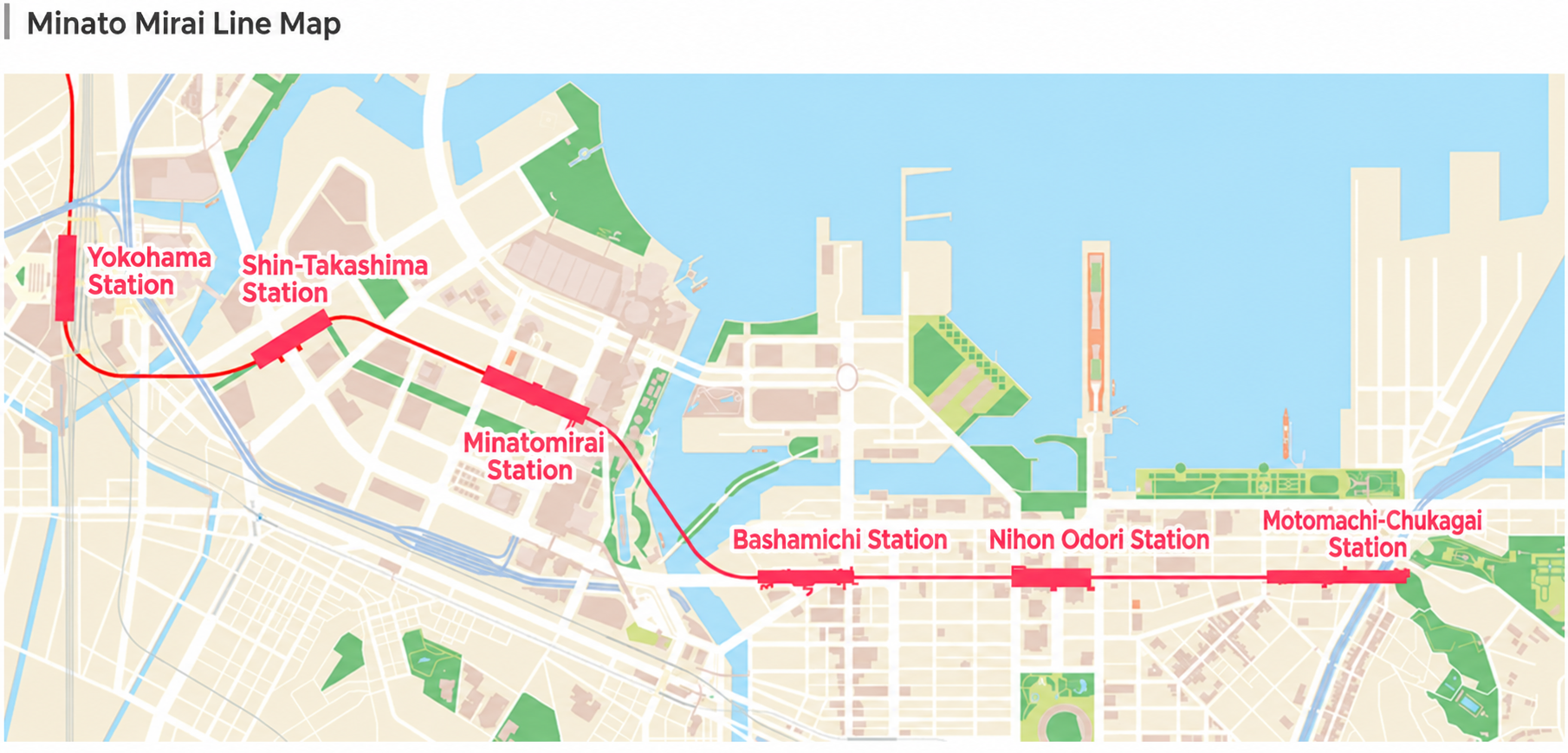
The Kanto Region 5-Day Pass allows you to ride the Minato Mirai Line.
2. Use the Yokohama Minato Burari Ticket to ride the Yokohama sightseeing buses for one day.
To be honest, I don’t personally use the one-day bus pass. Its advantage is that it covers many routes and saves on walking distance, but the downside is that you have to check the routes and verify if the pass is valid for them. I basically prefer using the Minato Mirai Line as it is simpler. I only use the bus for attractions in more specific locations (like Sankeien Garden), which makes things easier. I’ve provided the information below for those who are interested.
From Tokyo to Chinatown, Motomachi
Departing from Nippori, Ueno, Tokyo Station
1.JR Keihin-Tohoku Line/Negishi Line ⮕Ishikawacho Station:The easiest way to reachJRIshikawacho Station (approximately 49 min)
If you purchased the Minato Mirai Pass (Tokyu Line Minato Mirai Pass) for one day, you can refer to the following route:
2. JR Tōkaidō Main Line ⮕ Yokohama Station transfer to the Minato Mirai Line ⮕ Motomachi-Chukagai Station (approximately 46 minutes)
To get from JR Yokohama Station to Yamashita Park, walk from Motomachi-Chukagai Station after arrival; please check the actual schedule and walking time based on the information of the day.
You can use the vouchers below
Departing from Ikebukuro, Shinjuku Sanchome, Shibuya
Tokyu Toyoko Line ⮕Motomachi-Chukagai Station:The easiest way to reachMotomachi-Chukagai Station(about 54min)
If you are departing from Shibuya, you can use the Tokyu Toyoko Line + Minato Mirai Line one-day pass as follows: (for Shibuya only, to be used on the Tokyu Toyoko Line)
👉kkday東急線+港未來線一日乘車券
👉Klook東急線+港未來線一日乘車券
Yokohama Attractions Map
Attraction Convenience Stickers Arrangement
Open the map on your computer and refer to the attraction convenience stickers below to arrange your walking order.
Orange Block (Yamashita Park ), Blue Block (Chinatown), Green Block (Yamate), Purple (Minato Mirai Park)
Yokohama Attractions Sticky Notes
▼Start▼
Ishikawacho Station (Exit 4) ⮕ Chinatown (3min)
Motomachi-Chukagai Station (Exit 2) ⮕ Chinatown (1min)
▼Toward Yamashita Park Area▼
✨ Features and Origins of Yamashita Park
Yamashita Park was born following the devastating destruction caused by the 1923 Great Kanto Earthquake in Yokohama. The Japanese government utilized the rubble and debris from the disaster for land reclamation, a process that took four years. The seaside park was finally completed and opened to the public in 1930. As a result, Yamashita Park is considered a symbol of Yokohama’s recovery and rebirth from disaster.
🚢 Cruise Landmark NYK Hikawa Maru:A luxury cargo-passenger liner with nearly a century of history, once hailed as the “Queen of the Pacific.” After retiring in 1960, it was permanently moored next to the park and is now open to the public as a maritime museum (admission fee required).
🌹 This is a sprawling park that stretches along the Yokohama Port. The sunken flower beds (hinkou kadan) in the park feature approximately 1,900 roses of about 160 varieties, with the best viewing seasons being spring and autumn. The park is always bustling with activity, drawing locals who enjoy leisurely strolls while gazing at the “Minatomirai” scenery, as well as visitors enjoying picnics on the expansive lawn plaza。
Sticky Note: Arranged in order by train station
Showing: All(6)
Yokohama Marine Tower
横浜マリンタワー
- Google Maps
- Apple Maps
- Copy address
🕖10:00 AM - 10:00 PM
Intro
▼Yokohama Marine Tower
| Item | Details |
|---|---|
| Attraction Address | 14-1 Yamashitacho, Naka Ward, Yokohama, Kanagawa Prefecture |
| Business Hours | 10:00 AM - 10:00 PM (Observation Deck, last admission 9:30 PM) |
| Admission Ticket | 【Observation Deck Admission Fee】 Adults (Weekdays): ¥1,200 Adults (Weekends and Public Holidays): ¥1,400 (Children and student prices also available) |
| Official Website | www.marine-tower.yokohama |
Attraction Introduction
Standing next to Yamashita Park, the 106-meter tall Yokohama Marine Tower is one of the most iconic landmarks of the port city of Yokohama. After a major renovation, it grandly reopened in September 2022 with a brand-new look. The observation deck located on the 30th and 29th floors offers a wide 360-degree panoramic view, allowing visitors to overlook the vast Yokohama Port, the distant Minato Mirai 21 area, and the Bay Bridge; on clear days, even Mount Fuji can be seen in the distance. The sunset and magical moments in the evening are especially popular among photography enthusiasts.
At night, the interior of the observation deck features a "Media Art Gallery" that combines light and shadow art, merging Yokohama's dazzling night scenery with art to create an unprecedented visual feast. The tower itself is illuminated with colorful lights at night, becoming the most dazzling presence in Yokohama's night sky.
Historical Background and Cultural Significance
The birth of Yokohama Marine Tower has profound historical significance. It was built in 1961 to commemorate the 100th anniversary of Yokohama Port's opening. At that time, it was not only a tourist tower but also had a unique practical function—it was the tallest "lighthouse" in the world. Its lights (divided into red and green) guided ships in and out of the port for years, ensuring safety at sea, and this important "lighthouse" function continued until it was officially decommissioned in 2008.
After a massive renovation lasting three and a half years in 2019, the reborn Marine Tower in 2022 adopts the new concept of "Nature and Future." It is no longer just a simple observation platform; the lower floors (1st to 4th floors) have transformed into a space filled with artistic atmosphere, galleries, shops, and renowned restaurants and cafes. It not only carries the historical memory of Yokohama as an international port but also showcases the city's vitality and charm as it continuously moves towards the future through art and modern facilities.
🎬 横浜マリンタワー Video
👉kkday
👉klook
👉Trip
Yokohama Doll Museum
横浜人形の家
- Google Maps
- Apple Maps
- Copy address
🕖09:30~17:00
Intro
▼Yokohama Doll Museum
| Item | Details |
|---|---|
| Attraction Address | 〒231-0023 Kanagawa Prefecture, Yokohama City, Naka Ward, Yamashitacho 18 |
| Business Hours | 09:30~17:00 (Last admission at 16:30) |
| Admission Tickets | • Adults (High school students and above): 400 yen • Children (Elementary and junior high school students): 200 yen ※ Special exhibitions may incur additional charges. |
| Official Website | www.doll-museum.jp |
Introduction
The Yokohama Doll Museum is a museum dedicated to the collection of dolls, with the core concept of "Setting Sail from Yokohama: A Cultural Exchange of Dolls from Around the World." The museum houses over 10,000 precious dolls from more than 100 countries. Here, visitors can not only admire ethnic dolls that showcase the customs and traditions of various countries but also see exquisite crafts made by Japan's "Living National Treasure" artisans, as well as classic dolls that span different generations and evoke nostalgia. This is a cultural space that transcends age, allowing families of three generations to enjoy together.
Historical Background and Cultural Significance
The origins of this museum date back to 1977. At that time, Ms. Eiko Ohno, who served as the secretary and interpreter for the famous "King of Pearls," Mikimoto Kokichi, donated her lifelong collection of precious dolls from around the world to the city of Yokohama. This prompted the city to establish a small exhibition room in the Industrial Trade Center building in 1979.
As the collection continued to grow, the current museum building was officially opened in 1986 to provide better preservation and exhibition space, while also revitalizing tourism in the Yamashita area of Yokohama. The building itself is distinctive and won the BCS Award (Building Contractors Society Award) in 1987.
As an international port city, Yokohama has always been a gateway for cultural exchange. The Yokohama Doll Museum is not only a collection of dolls but also plays a role in international goodwill. The museum houses the "Blue-Eyed Doll," a gift from the United States in 1927 to promote friendship between Japan and the U.S., showcasing the role of dolls in peace and cultural exchange. In recent years, the museum has also incorporated "Cool Japan" modern culture, including anime figures and character models into its exhibitions, cleverly connecting traditional crafts with contemporary popular culture.
🎬 横浜人形の家 Video
Yamashita Park
山下公園
- Google Maps
- Apple Maps
- Copy address
🕖24H
Intro
▼Yokohama Yamashita Park
| Item | Details |
|---|---|
| Address | 279 Yamashita-cho, Naka-ku, Yokohama, Kanagawa Prefecture |
| Opening Hours | Open all day (24 hours) |
| Admission Fee | Free entry |
| Official Website | www.city.yokohama.lg.jp |
Introduction
Yokohama Yamashita Park is Japan's first seaside park and one of Yokohama's most iconic landmarks. Stretching along the Yokohama waterfront, it offers visitors spectacular views of the Minato Mirai 21 skyline, the Yokohama Bay Bridge, and passing ships. It is not only an ideal place for a stroll and relaxation, but the park is also dotted with numerous artistic and historical features.
If you are planning your Yokohama itinerary, Yamashita Park pairs perfectly with Yokohama Chinatown for a walking route. The park’s meticulously maintained "Future Rose Garden" features blooms throughout the four seasons, with the spring and autumn roses being particularly famous and attracting many visitors. Additionally, the iconic "Girl in Red Shoes" statue, the "Guardian of Water" fountain—a gift from Yokohama's sister city, San Diego—and the "Hikawa Maru" ocean liner museum permanently docked at the shore are all representative sights of Yamashita Park. For a one-day Yokohama trip, Yamashita Park, Hikawa Maru, and Yokohama Chinatown can be combined into a single harbor-side walking itinerary.
Historical Background and Cultural Significance
The birth of Yamashita Park is a story of rebirth and hope. Originally a stretch of sea, the land was reclaimed using the vast amounts of rubble generated by the devastating 1923 Great Kanto Earthquake. It took seven years to complete, and the park was opened in 1930.
Therefore, Yamashita Park is not just a green space for Yokohama citizens to relax; it carries the profound significance of "post-disaster reconstruction" and serves as an important symbol of Yokohama rising from the ruins to modernize. After World War II, it was briefly under the jurisdiction of the U.S. military (1945–1959) before being returned and once again becoming a stage for international exchange. Today, Yamashita Park embodies Yokohama's open and inclusive spirit as an international port city, hosting countless festivals and continuing to inject vitality into the city.
🎬 山下公園 Video
Sea Bass Yamashita Park
シーバス山下公園
- Google Maps
- Apple Maps
- Copy address
🕖Approx. 10:00–18:00 (Subject to ferry schedule)
Intro
▼Sea Bass Yamashita Park Pier (シーバス山下公園のりば)
| Item | Details |
|---|---|
| Address | Yamashitacho, Naka-ku, Yokohama, Kanagawa (Inside Yamashita Park) |
| Business Hours | Approx. 10:00–19:00 (Ticket counter hours; actual operation times depend on the ferry schedule) |
| Access | , it is a mini-cruise experience that lets you feel the openness and vitality of Yokohama as an international port city while enjoying the sea breeze. |
| Official Website | www.yokohama-cruising.jp |
Fare (Boat Fee):(Varies by route)
* To Yokohama Station East Exit (横浜駅東口): Approx. ¥1,000
* To Pukari Pier (ぷかりさん橋) (Minato Mirai): Approx. ¥800
* To Red Brick Warehouse Pier (ピア赤レンガ): Approx. ¥700
(※Adult one-way fare reference; subject to operator announcements)
Introduction
The "Sea Bass Yamashita Park Pier" is the perfect starting point to experience the charm of the port city of Yokohama. It is quietly situated within Yamashita Park, one of the oldest seaside parks in Japan, and serves as a major stop for the famous "Sea Bass (シーバス)" water bus. This stylish vessel, whose name combines "SEA" and "BUS," is an important water transport connecting Yokohama's major attractions. If you are looking for a way to travel from JR Yokohama Station to Yamashita Park, the Sea Bass is a great option; please check the official website for the latest schedules and fares.
Boarding here allows you to enjoy Yokohama from a completely different "sea perspective." As the boat slowly leaves the pier, you will get a panoramic view of the magnificent Yokohama Bay Bridge, the towering Landmark Tower, and the modern skyline of Minato Mirai 21. This is not just a mode of transport, but a mini-cruise experience that lets you feel the openness and vitality of Yokohama as an international port city while enjoying the sea breeze.
🎬 シーバス山下公園 Video
NYK Hikawa Maru
日本郵船氷川丸
- Google Maps
- Apple Maps
- Copy address
🕖10:00–17:00
Museum
Intro
▼NYK Hikawa Maru (Hikawa Maru Museum Ship)
| Item | Details |
|---|---|
| Address | Yamashita Park, Yamashita-cho, Naka-ku, Yokohama, Kanagawa Prefecture |
| Opening Hours | 10:00–17:00 (Last admission at 16:30) |
| Admission Fee | General: ¥400 (Discounted tickets available for students and seniors) |
| Official Website | hikawamaru.nyk.com |
Introduction
Permanently moored in front of Yamashita Park in Yokohama, the "NYK Hikawa Maru" is the only surviving pre-war Japanese cargo-passenger ship. It is more than just a vessel; it is a "floating museum." Stepping onto the deck feels like traveling through a time tunnel back to the 1930s, the golden age of luxury liners known as the "Queen of the Pacific." Visitors can explore the original passenger cabins, elegant social lounges, dining rooms, and even the mechanical heart of the ship, including the bridge and engine room. The ship’s interior retains much of the Art Deco style that was popular at the time, with exquisite details offering a glimpse into the luxury and charm of ocean travel in the past.
Historical Background and Cultural Significance
Completed in 1930, the "Hikawa Maru" was a state-of-the-art passenger ship built by Nippon Yusen Kaisha (NYK) for the North American route (Yokohama to Seattle). During its service, it not only transported countless passengers and cargo but was also the preferred choice for many celebrities, such as Charlie Chaplin, when crossing the Pacific. It stands as a testament to the peak of Japan's shipbuilding industry.
However, with the outbreak of the Pacific War, the fate of the "Hikawa Maru" changed. It was requisitioned by the Navy and converted into a hospital ship, navigating through the fires of war. Throughout the conflict, it miraculously dodged mines and torpedoes multiple times, remaining one of the very few large Japanese ships that were never sunk. After the war, it briefly resumed passenger service before being honorably retired in 1960.
Since 1961, it has been moored at Yamashita Park and opened to the public as a museum. In 2016, the "Hikawa Maru" was designated a "National Important Cultural Property" by the Japanese government. Its cultural significance lies not only in the ship itself but in the history it carries—a blend of Japan's modern glory, the cruelty of war, and post-war recovery. It is a living piece of history and an indispensable landmark and cultural symbol of the Port of Yokohama.
🎬 日本郵船氷川丸 Video
Footbath "The Wharf House" Yamashita Park
足湯ザ·ワーフハウス 山下公園
- Google Maps
- Apple Maps
- Copy address
🕖10:00–21:00
¥300
Intro
▼THE WHARF HOUSE YAMASHITA KOEN
| Item | Details |
|---|---|
| Address | 279 Yamashita-cho, Naka-ku, Yokohama, Kanagawa (Inside Yamashita Park, in front of the Industry & Trade Center) |
| Business Hours | CAFE: 09:00–17:00 CRAFTBEER & GRILL: 17:00–22:00 BBQ: 11:00–22:00 (Operates March–November) 足湯テラス (Footbath Terrace): 10:00–21:00 SHOP: 10:00–19:00 |
| Average Budget | Lunch: ¥1,000–¥1,999 Dinner: ¥4,000–¥5,999 |
| Tabelog Rating | 3.46 |
| Official Website | wharfhouse-yokohama.zetton.co.jp |
Restaurant Highlights
Located within the iconic Yamashita Park, THE WHARF HOUSE is a multi-purpose seaside restaurant offering a prime location with stunning views of Yokohama Port. It is more than just a restaurant; it is a lifestyle destination. The facility combines a cafe, restaurant, shop, BBQ area, and even a "Footbath Terrace" where you can soak your feet while enjoying the ocean view.
The restaurant offers service throughout the day, starting with a "CAFE" serving healthy light meals in the morning, and transitioning into a sophisticated "CRAFTBEER & GRILL" atmosphere in the evening. For dinner, you can enjoy meat and seafood grilled on professional Weber grills, paired with a selection of seven "Yokohama Beer" craft brews or locally produced "Hama Wine."
Additionally, they offer picnic set rentals, allowing visitors to easily enjoy a relaxing time on the lawns of Yamashita Park with delicious food. Whether it is the blue sky and sea during the day or the night view of Minato Mirai at dusk, THE WHARF HOUSE is the perfect base to experience the charm of Yokohama Port.
🎬 足湯ザ·ワーフハウス 山下公園 Video
From here, you can head to attractions in Nihon-odori, the Red Brick Warehouse, and Minatomirai Station.
Yokohama Popular Tickets
▼Chinatown Area▼
📍 Yokohama Chinatown Travel Highlights
👣 Strolling and Taking Photos: Stroll along the main street and the branching alleys (such as Shanghai Road and Zhongshan Road), enjoying the colorful archways, Chinese character signs, and magnificent temple architecture. Remember to take photos at iconic spots like the Shanin Gate.
😋 Food Experience: There are about 500~600 Chinese shops and restaurants here, offering a rich variety of cuisines, including Cantonese, Beijing, Shanghai, and Sichuan. You can also buy local snacks like meat buns, soup dumplings, and pan-fried buns.
Sticky notes are arranged in order of the station’s direction
The Origins of Yokohama Chinatown
The formation of Yokohama Chinatown is closely related to the history of the opening of Yokohama Port:
Opened in 1859: Yokohama Port was officially opened in 1859, attracting many Chinese merchants to settle and engage in trade, gradually forming the initialChinese community.
Early development: The Chinese community continued to grow, forming a district with residential and commercial functions, most of the residents originally from Guangdong Province.
Becoming a tourist destination: After the establishment of diplomatic relations between China and Japan in 1972, the Japanese people’s interest in Chinese culture increased significantly, and Yokohama Chinatown naturally became an importanttourist attraction in Yokohama City, developing into the area primarily focused on commerce and cuisine that it is today.
Showing: All(10)
Norikura
のり蔵
- Google Maps
- Apple Maps
- Copy address
Intro
▼Norizo (のり蔵)
| Item | Details |
|---|---|
| Address | 1F, 81 Yamashita-cho, Naka-ku, Yokohama, Kanagawa |
| Business Hours | Thursday to Sunday & Holidays 09:00–18:00 (or until sold out) Closed on Monday, Tuesday, and Wednesday |
| Budget | ~¥999 |
| Tabelog Rating | 3.71 |
| Official Website | norizobread.com |
Restaurant Features
"Norizo" is a popular bakery tucked away in the alleys of Yokohama Chinatown. Its unique storefront design makes it look like an elegant shop selling Japanese sundries at first glance. Because the interior space is small (limited to 5 people at a time), you will often see a line of customers waiting outside.
The bread here is famous for its chewy (mochi-mochi) texture and high quality. The must-try signature item recommended by foodies is the "Nori Ham Roll" (のりハムロール), where the aroma of seaweed perfectly blends with ham and cheese for an impeccable taste and texture. In addition, creative Japanese-style savory breads like the "Croquette Bread" and "Miso Eggplant Bread" are also very popular.
🎬 のり蔵 Video
Osatei
おさ亭
- Google Maps
- Apple Maps
- Copy address
🕖17:00–22:30
Duck Hot Pot
Intro
▼Osatei (おさてい)
| Item | Details |
|---|---|
| Address | 1F, GS Heim Yamashitacho, 98 Yamashitacho, Naka-ku, Yokohama, Kanagawa Prefecture |
| Business Hours | Tuesday to Saturday 17:00–22:30; Closed on Mondays and Sundays |
| Budget | ¥8,000–¥9,999 |
| Tabelog Rating | 3.62 |
| Official Website | osatei.com |
Restaurant Features
Osatei is a hidden gem tucked away in the alleys of Yokohama Chinatown, specializing in "Duck Iron Pot" cuisine that allows you to fully savor the essence of duck. The interior is stylish and sophisticated, making it the perfect place to enjoy a meal in a tranquil atmosphere.
The signature "Duck Iron Pot Course" is the only choice for true gourmets. The meal begins by placing duck skin into a special iron pot and heating it slowly for nearly 20 minutes to extract pure, golden duck fat. Next, the staff uses this precious fat to sear shungiku (Japanese garland chrysanthemum) and shiitake mushrooms. The vegetables absorb the rich aroma of the duck fat, and with just a touch of salt, the flavor is truly stunning.
After enjoying the seared vegetables, broth is added to the pot to transition into shabu-shabu mode. You can enjoy duck meatballs and sliced duck breast. The restaurant recommends swishing the duck breast in the broth for 10 seconds and dipping it in salt to best appreciate its tenderness and natural sweetness. For the finale, you can choose from ramen, udon, or zosui (rice porridge), which absorbs all the concentrated flavors of the broth, providing a perfect conclusion to this duck feast.
👉autoreserve
Keya Antiques
キヤアンティークス
- Google Maps
- Apple Maps
- Copy address
🕖11:00–19:00
European Antiques
Intro
▼Kiya Antiques Yokohama Main Store (キヤアンティークス横浜本店)
| Item | Details |
|---|---|
| Address | 108-1 Yamashita-cho, Naka-ku, Yokohama, Kanagawa Prefecture |
| Business Hours | 11:00–19:00 (Closed: Mondays; if Monday is a national holiday, the store will be open) |
| Official Website | www.kiya-co.jp |
Product Features
Kiya Antiques specializes in European antique furniture, primarily from the UK, offering a wide range of treasures spanning from the Victorian era to the post-war period. With thousands of items in stock, the selection is incredibly diverse, including classic Ercol furniture, delicate antique jewelry, ornate chandeliers, stained glass, carpets, as well as various tableware and paintings. Another unique feature of the store is its collection of "repatriated" Japanese antiques that have returned from Europe, such as Old Imari and Kutani porcelain, showcasing a unique and refined taste in collecting.
Store Introduction
Founded in 1980 in the port city of Yokohama, Kiya Antiques is one of Japan's most iconic specialty shops for Western antiques. Located near Yokohama Chinatown, the store occupies a three-story building filled with a dazzling array of antiques, feeling much like a small museum. Every item has been carefully selected and restored, exuding a rich sense of history. Beyond retail, Kiya Antiques operates a professional repair workshop (located in Fujisawa) dedicated to the restoration and maintenance of antique furniture and stained glass, committed to preserving these timeless treasures for future generations.
🎬 キヤアンティークス Video
Yokohama Daisekai
横浜大世界
- Google Maps
- Apple Maps
- Copy address
🕖10:30–20:00
Chinatown Theme Park
Intro
▼Yokohama Daisekai
| Item | Detailed Information |
|---|---|
| Attraction Address | 97 Yamashita-cho, Naka-ku, Yokohama City, Kanagawa Prefecture |
| Business Hours | Weekdays: 10:30–20:00 Weekends and holidays: 10:00–21:00 (*Operating hours and last admission times for individual floors, shops, and museums may vary.) |
| Official Website | Please provide the label you would like translated. |
Feature Introduction
"Yokohama Daisekai" is an iconic building located directly opposite the "Tencho-mon" gate in Yokohama Chinatown, the largest Chinatown in Japan. It is not a traditional department store, but an 8-story large-scale indoor complex that integrates dining, shopping, art galleries, and entertainment experiences. Positioned more like a "Chinese-themed amusement park," it allows visitors to enjoy eating, drinking, and playing even on rainy days, while deeply experiencing the unique charm of Chinatown.
Historical Background
At the time of its opening, "Yokohama Daisekai" was built with the core concept of the bustling "Old Shanghai" of the 1920s. Its name, "Daisekai," was inspired by a famous amusement park that actually existed in Shanghai at the time. The entire building aims to recreate the beauty and prosperity of that era, providing visitors with a leisure space filled with an exotic and nostalgic atmosphere.
Floor Guide
Each floor of this facility has a different theme, offering a diverse range of services:
- 1F (Daishikai Market):This floor is a large souvenir market. It offers a wide variety of products, including Chinese cooking ingredients, Yokohama-exclusive specialty sweets, and various cute panda merchandise, making it an excellent place to shop for souvenirs.
- 2F (Yokohama Chocolate Factory & Museum / Leisure Floor):This floor features the "Yokohama Chocolate Factory & Museum," showcasing the chocolate-making process. Additionally, it offers relaxing services such as foot massages, fortune-telling, and Doctor Fish therapy.
- 3F (Mystery Maze Museum):Offers challenging escape rooms and reality puzzle games, perfect for visitors who enjoy brain teasers and teamwork. (※This facility requires an additional fee)
- 4F–8F (Trick Art Museum):
This is Yokohama's largest trick art museum. (※This area requires a separate admission ticket)
Visitors can step into 2D paintings and use clever visual illusions to take amazing photos that look like they are in a 3D space. For example, experiencing the thrilling moment of being swallowed by a great white shark, or feeling the visual magic of your body growing and shrinking in a distorted room, are the most popular and interactive photo spots in the museum.
🎬 横浜大世界 Video
Guan Di Temple
横浜関帝廟
- Google Maps
- Apple Maps
- Copy address
🕖09:00–19:00
Intro
▼Yokohama Kanteibyo
| Item | Details |
|---|---|
| Address | 140 Yamashita-cho, Naka-ku, Yokohama, Kanagawa Prefecture |
| Opening Hours | 09:00~19:00 (Open all year round) |
| Admission Fee | Free admission |
| Official Website | yokohama-kanteibyo.com |
Introduction
Yokohama Kanteibyo is the symbolic landmark of Yokohama Chinatown and the heart of the local Chinese community's faith. The entire structure is magnificent, featuring ornate carvings and intricate traditional Chinese temple architecture with vibrant, brilliant colors. Whether it is the solemnity seen under the daylight or the dreamlike atmosphere after the lights are turned on at night, it exudes a powerful presence, making it a famous "Power Spot" in Chinatown. The temple primarily enshrines Guan Yu (Emperor Guan), the famous general from the Three Kingdoms period. It also houses various other deities, including the Jade Emperor, Guanyin Bodhisattva, and the Earth Mother. It is a bustling place of worship, attracting countless visitors who come to pray for business prosperity, family safety, and academic success.
Historical Background and Cultural Significance
The history of Yokohama Kanteibyo can be seen as a microcosm of the development of Yokohama Chinatown. As early as 1862 (the second year of the Bunkyu era), a small shrine housing a wooden statue of Emperor Guan already existed here. With the growth of Chinatown, construction of the first temple began in 1871 and was continuously expanded over the following years.
However, the temple has faced a difficult fate. The first temple was destroyed in the 1923 Great Kanto Earthquake; the rebuilt second temple was burned down during the 1945 Yokohama air raids; and in 1986, the third temple was unfortunately lost to a fire. Despite these repeated setbacks, the local Chinese community and devotees have rebuilt it time and time again.
What we see today is the fourth temple, which was grandly unveiled in August 1990. It is not only a spiritual sanctuary for the faithful, but its history of rising from the ashes repeatedly serves as a profound testament to the strong cohesion and indomitable spirit of the Yokohama Chinese community.
🎬 横浜関帝廟 Video
Yokohama Mazu Temple
横浜媽祖廟
- Google Maps
- Apple Maps
- Copy address
🕖09:00–19:00
Intro
▼Yokohama Masobyo
| Item | Details |
|---|---|
| Address | 136 Yamashitacho, Naka-ku, Yokohama, Kanagawa Prefecture |
| Opening Hours | 09:00–19:00 (Open all year round) |
| Admission Fee | Free (※To enter the inner sanctuary for incense offerings, a fee of ¥500 is required) |
| Official Website | www.yokohama-masobyo.jp |
Introduction
Located within Yokohama Chinatown, the largest of its kind in Japan, Yokohama Masobyo is a colorful and intricately decorated Taoist temple. Although the temple is relatively modern, its architectural style is highly refined, drawing inspiration from traditional temple architecture in Taiwan and the Fujian region. It features extensive stone and wood carvings, as well as decorative motifs such as dragons and phoenixes, showcasing the beauty of ornate Minnan craftsmanship. The temple primarily enshrines Mazu, the "Heavenly Holy Mother," the goddess who protects maritime safety and grants bountiful harvests. The temple also enshrines the "Old Man Under the Moon" (Yue Lao) for marriage and the "Wenchang Dijun" for academic success, attracting many visitors who come to pray for safe travel, good relationships, academic progress, and business prosperity.
Historical Background and Cultural Significance
The establishment of Yokohama Masobyo is closely tied to the history of Yokohama as a port city. Following the opening of the port in 1859, many Chinese immigrants settled here, bringing their faith in Mazu with them. Before World War II, a statue of Mazu was enshrined within the Yokohama Kanteibyo, but it was unfortunately destroyed in the war. To fulfill the long-held wish of the local Chinese community to rebuild the temple and to commemorate the 150th anniversary of the opening of the port of Yokohama, this Mazu temple was officially completed and opened on March 17, 2006.
In terms of cultural significance, the temple is not only a religious site but also an important symbol of cultural exchange between Yokohama and Taiwan. The opening ceremony was supported by the Tainan Grand Matsu Temple in Taiwan, and the main statue enshrined within was brought over from the Meizhou Ancestral Temple in Putian, Fujian, the birthplace of Mazu. The temple follows traditional rituals; visitors are expected to light five sticks of incense to pay respects to the "Jade Emperor" (Heavenly God), "Heavenly Holy Mother" (Mazu), "Zhunsheng Niangniang," "Yue Lao," and the "Earth God" (Fude Zhengshen). Additionally, the temple hosts events such as New Year's countdowns, the "Mazu Festival" to celebrate Mazu's birthday, and the "Good Relationship Festival" (Tanabata), making it a key window for experiencing rich Chinese traditional faith and folk culture in Japan.
🎬 横浜媽祖廟 Video
Shateiki
謝甜記
- Google Maps
- Apple Maps
- Copy address
10:00–14:50
17:00–20:20
Chinese Congee & Dim Sum
Intro
▼Cantonese congee under the red wall and Santa Claus sign! Yokohama Chinatown long-established shop: Xie Tian Ji
| Item | Detailed Information |
|---|---|
| Attraction Address | 165 Yamashita-cho, Naka-ku, Yokohama, Kanagawa Prefecture |
| Business Hours | Mon, Wed, Thu, Fri 10:00–15:00, 17:00–21:00; Sat, Sun, National Holidays 09:00–15:30, 17:00–21:00; Tue Closed |
| Dining Budget | ¥999~¥2,999 |
| Transportation Methods | About a 5-minute walk from the Port Future Line "Yamashita-cho / Chinatown Station"; about a 12-minute walk from JR Negishi Line "Kannai Station." |
| Telephone | 045-641-0779 |
| Tabelog Rating | 3.59(Approx. 1427 reviews), Selected for Tabelog Chinese Food EAST Top 100 Restaurants 2021 |
A porridge shop established in 1951, recognizable by its red walls in Chinatown.
Hsieh Tien Chi (Shatenki)Located at 165 Yamashitacho, Yokohama Chinatown, this independent little shop opened in 1951 and has been around for over seventy years. With its red walls and Santa Claus sign, it stands out among the many stores in Chinatown. Many people consider this their first stop in Chinatown, especially since it opens at 9 AM on weekends, making it perfect for a bowl of hot congee for breakfast or a snack while strolling. The shop has about 20 seats, including sofa seating, making it suitable for families with children, with no dress code and a completely smoke-free environment. Reservations are not accepted, and there may be a wait during peak times; takeout is also available, and groups of 20 to 50 can inquire about private bookings. This is not just a place that sells tourist fried rice. Selected as one of the top 100 Chinese restaurants by EAST in 2021, it has received over a thousand reviews, with returning customers often mentioning the rich texture of the congee and the warm greetings from the female owner. Although the space is small, the turnover is quick, and after ordering congee, adding a couple of snacks is just the perfect start to your Chinatown experience.The raw rice is slowly cooked for over four hours, with dried scallops, dried oysters, and a whole chicken enriching the porridge base.
Xie Tian Ji's congee has a Cantonese style: made by slowly simmering raw rice, with the broth including a whole chicken, dried scallops, dried oysters, and other seafood dried goods, often simmered for over four hours. The finished product is rich and has distinct layers, definitely not the thin congee that is just mixed with water. The egg congee often sells out during specific times, so those wanting breakfast or brunch are advised to arrive early. The side dishes are also very down-to-earth: handmade siu mai, mouth-watering chicken, mapo tofu, tulip fried chicken with plum sauce, fried noodles, etc., are all very popular. A meal typically costs around 999 to 2,999 yen, making it a filling yet affordable option in Chinatown. Credit cards can be used, but only if the total is over 3,000 yen; transportation IC, Rakuten Edy, WAON, and iD are also accepted, but QR payments are not. If you haven't prepared cash or electronic money and your order doesn't reach 3,000, there may be some inconvenience at checkout.Closed on Tuesdays, reservations not available, opens at 9 AM on weekends.
About a 5-minute walk from Motomachi-Chukagai Station. If you have any questions, you can call 045-641-0779, but reservations are not accepted here. The last order for lunch on weekdays is around 14:55, and for dinner around 20:25; on weekends, it is open until 15:30. If you want to eat egg congee or avoid the queue, it is recommended to come after 10:00 on weekdays or right when it opens on weekends.💡 Tips Before Departure
Closed on Tuesdays, no reservations. Credit card minimum of 3,000 yen. QR code not accepted. Available for breakfast on weekends, egg porridge often sold out. Phone 045-641-0779.
🎬 謝甜記 Video
Gokuu Chaso
悟空茶荘
- Google Maps
- Apple Maps
- Copy address
🕖10:30~18:00
Tea House
Intro
▼Goku Tea House
| Item | Details |
|---|---|
| Attraction Address | 130 Yamashitacho, Naka Ward, Yokohama, Kanagawa |
| Business Hours | Monday to Friday 10:30 AM – 6:00 PM, Saturday to Sunday 10:30 AM – 6:30 PM (1F Sales Area: 10:30 AM – 7:30 PM) Closed: Irregular holidays |
| Dining Budget | ¥1,000 – ¥1,999 |
| Tabelog Rating | 3.7 |
| Official Website | www.goku-teahouse.com |
Restaurant Features
Goku Tea House is a specialty Chinese tea shop located in Yokohama's Chinatown. The first floor is a store selling various Chinese teas and tea sets, while the second floor features a stylish tea-drinking space with a calm atmosphere, resembling a hidden gem of a restaurant.
Here, you can find a rich selection of Chinese teas, ranging from "Premium Pu-erh Tea" to the unique "Hot Fruit Aged Pu-erh Tea." Pair it with distinctive desserts like "Ginger Almond Tofu," where the spiciness of ginger intertwines with the sweetness of honey lemon, creating a sophisticated adult flavor. Order a pot of tea, and the staff will provide hot water for you to brew it yourself, allowing you to leisurely enjoy 4 to 5 infusions. This is an excellent place to experience elegant tea time in Chinatown.
🎬 悟空茶荘 Video
👉autoreserve
Manchinro Tenshinpo
萬珍樓點心舗
- Google Maps
- Apple Maps
- Copy address
🕖11:00~15:00 / 17:00~22:00
Hong Kong-style Dim Sum
Intro
▼Manchinro Dim Sum Shop
| Item | Details |
|---|---|
| Attraction Address | 156 Yamashita-cho, Naka Ward, Yokohama, Kanagawa Prefecture |
| Business Hours | Tuesday to Friday 11:00 AM~3:00 PM / 5:00 PM~10:00 PM, Saturday and Holidays 8:00 AM~10:00 PM (Breakfast 8:00 AM~11:00 AM), Sunday 8:00 AM~10:00 PM (Breakfast 8:00 AM~11:00 AM), Closed on Monday (Open as usual on holidays) |
| Dining Budget | Dinner ¥8,000~¥9,999, Lunch ¥4,000~¥4,999 |
| Tabelog Rating | 3.67 |
| Official Website | www.manchinro.com |
Restaurant Features
Manchinro Dim Sum Shop is one of the renowned establishments in "Yokohama Chinatown's Three Greats," celebrated as the "Hall of Dim Sum." The restaurant's exterior is grand, and stepping inside, the high ceilings, luxurious decor in gold and red, and marble floors create an opulent dining atmosphere reminiscent of a palace.
Here, the essence of Chinese cuisine is concentrated into small dim sum. The signature "Shrimp Dumplings" are a must-try for many food enthusiasts, with a translucent skin revealing the color of fresh shrimp. A bite releases the sweetness and aroma of the shrimp. Additionally, the soup-filled Xiao Long Bao and hearty Shumai are classic dishes that should not be missed.
The service in the restaurant is precise, with well-trained staff ensuring that the timing for plate changes, tea refills, and dish serving is just right. This is the top choice for experiencing authentic Hong Kong-style dim sum and enjoying the splendid atmosphere of Chinatown.
🎬 萬珍樓點心舗 Video
👉autoreserve
Shuraku
聚楽
- Google Maps
- Apple Maps
- Copy address
🕖11:30~19:30
Chinese Dim Sum
Intro
▼Juuraku
| Item | Details |
|---|---|
| Attraction Address | 143 Yamashitacho, Naka Ward, Yokohama, Kanagawa |
| Business Hours | Monday, Wednesday to Sunday 11:30 AM – 7:30 PM *Closed every Tuesday and the third Wednesday of each month |
| Dining Budget | Up to ¥999 |
| Tabelog Rating | 3.71 |
| Official Website | www.chinatown.or.jp/shop/Juuraku |
Restaurant Features
Juuraku is a well-known takeaway shop specializing in Chinese dim sum located in Yokohama's Chinatown. Although it is tucked away on the relatively quiet Changan Street, away from the tourist crowds, its delicious "Mala Cake" and "Meat Bun" are must-try delicacies famous far and wide.
The Mala Cake here is praised as "Chinese-style steamed castella," with a delicate and smooth texture. It is made with aged dough that has been fermented for a long time, resulting in a rich flavor and moist texture that is sweet but not overwhelming. The meat buns in the shop are gigantic, with a soft and chewy exterior and a hearty filling packed with coarsely chopped meat, mushrooms, and bamboo shoots, ensuring generous ingredients. Compared to the shops on the main street of Chinatown, Juuraku offers more affordable prices, making it a favorite among locals and food enthusiasts for being "cheap and delicious."
🎬 聚楽 Video
Yamashita Area
📌 Highlights of Yokohama Motomachi
The history of Yokohama Motomachi dates back to the late 19th century when Yokohama opened its port , and many foreign merchants, diplomats, and residents began to settle in the nearby Yamate area. The Motomachi shopping street is lined with cobblestone streets and European-style buildings, exuding a strong exotic and elegant atmosphere.
Motomachi Shopping Street (Motomachi-dori): As the main street, you can stroll leisurely, looking for century-old shops like the leather goods store KITAMURA (established in 1882) and the ceramics specialty store TAKARADA (established in 1882).
Unique shops and cafes: In addition to major brands, the back alleys of Motomachi are home to many uniquely styled boutique shops and elegant cafes, perfect for exploration.
Convenience notes arranged in the order of the station
Showing: All(16)
Amerikayama Park
アメリカ山公園
- Google Maps
- Apple Maps
- Copy address
Intro
▼Yokohama America-yama Park (アメリカ山公園)
| Item | Details |
|---|---|
| Address | 97-1 Yamate-cho, Naka-ku, Yokohama, Kanagawa Prefecture |
| Opening Hours | 06:00–23:00 (Park hours; Management office is open 08:30–17:00) |
| Admission Fee | Free admission |
| Official Website | www.seibu-la.co.jp/mt_america |
Introduction
Yokohama America-yama Park is Japan's firstthree-dimensional (three-dimensional) urban park built on top of a station building (Minatomirai Line "Motomachi-Chukagai" Station). It serves not only as a beautiful urban oasis but also as a vital connecting passage. Equipped with elevators and escalators, the park cleverly links the lower-lying Motomachi area with the hilly Yamate district, allowing visitors to easily travel from the bustling Chinatown or Motomachi Shopping Street to the exotic Yamate Western-style houses.
The park is beautifully designed with a rich variety of seasonal flowers. The rose garden, which blooms in spring and autumn, is particularly popular among flower enthusiasts. The observation deck offers expansive views, capturing the Yokohama Bay Bridge and the modern skyline of Minato Mirai 21. Whether it is the harbor view during the day or the sparkling lights at night, the scenery is truly refreshing.
Historical Background and Cultural Significance
The name "America-yama" (America Mountain) dates back to the opening of the Port of Yokohama in 1859. At the time, this area was designated as a foreign settlement, and it is said that the American Legation (or a naval hospital) was once located here, leading locals to call the area "America-yama."
Before the park was built, the site was home to the "Yamate No. 80 Building," which later became the birthplace of the Yokohama Kyoritsu Gakuen (a girls' school), witnessing Yokohama's development as an international city and a center for modern women's education. Opened in 2009 as part of the project commemorating the 150th anniversary of the opening of the Port of Yokohama, the park preserves historical memories while serving as a symbolic landmark that connects history (Yamate) with the modern era (Minato Mirai), and the hills with the harbor. It is beloved by both residents and tourists alike.
🎬 アメリカ山公園 Video
Uchiki Pan
ウチキパン
- Google Maps
- Apple Maps
- Copy address
Intro
▼Uchikipan
| Item | Details |
|---|---|
| Address | 1-50 Motomachi, Naka-ku, Yokohama, Kanagawa Prefecture |
| Business Hours | Tuesday to Sunday 09:00–19:00, Closed on Mondays |
| Budget | ~¥999 |
| Tabelog Rating | 3.71 |
| Official Website | www.uchikipan.co.jp |
Restaurant Features
Uchikipan is a legendary bakery in Yokohama's Motomachi district that has been in business for over 130 years (established in 1888) and is a regular on the Tabelog "Top 100 Bakeries" list. While the exterior is modest, the shop offers a wide variety of highly creative breads.
The shop's most famous item is the "England" loaf, which often sells out quickly and is renowned for its moist, soft texture and rich wheat aroma. Additionally, their "Original Apple Pie," which contains no cinnamon, is also extremely popular; its thick crust paired with a simple apple flavor makes for a nostalgic, classic treat.
Other popular items include the authentic "Beef Stew Bread," the thick and juicy "Minced Meat Cutlet Sandwich," and the fluffy European-style "Brioche Sucre."
🎬 ウチキパン Video
Star Jewelry Motomachi Main Store
スタージュエリー 元町本店
- Google Maps
- Apple Maps
- Copy address
🕖11:00–19:30
Jewelry Store
Intro
▼STAR JEWELRY Motomachi Main Store
| Item | Details |
|---|---|
| Address | 1-24 Motomachi, Naka-ku, Yokohama, Kanagawa |
| Business Hours | 11:00~19:30 |
| Official Website | www.star-jewelry.com |
Store Introduction
The STAR JEWELRY Motomachi Main Store is not only the birthplace of the brand but also one of the iconic landmarks of the fashionable Motomachi Shopping Street in Yokohama. Since its founding in 1946, this jewelry store has led trends with its exceptional craftsmanship and innovative designs. The exterior of the main store blends classic and modern aesthetics, while the exquisite jewelry displayed in the windows shines like stars in the night sky, catching the eyes of passersby. The interior is bright and elegant, offering a comfortable shopping experience where professional staff provide attentive, personalized advice to every customer.
Product Features
STAR JEWELRY is renowned for its highly original designs, particularly its ability to perfectly combine a sense of playfulness with sophisticated craftsmanship. Its
product features
include:- Exquisite Craftsmanship:
The brand owns its own workshop, with many pieces proudly "Made in Japan" to ensure high quality, with meticulous attention to detail from stone setting to metal polishing. - Iconic Designs:
Collections such as "Crossing Star" and "Moon & Sun" cleverly utilize celestial elements like stars, moons, and suns, creating designs full of storytelling and romantic sentiment. - Bridal Collection:
Offering a wide variety of wedding and engagement rings, the brand is popular among younger generations for its high-quality diamonds and unique "Star Cut" diamond technique. - Motomachi Main Store Exclusives:
As the flagship store, it frequently releases exclusive items or early-release styles available only at the Motomachi Main Store, making it a must-visit spot for brand enthusiasts.
🎬 スタージュエリー 元町本店 Video
Mihama Motomachi Main Store
ミハマ元町本店
- Google Maps
- Apple Maps
- Copy address
🕖10:00–19:00
Long-established shoe store
Intro
▼MIHAMA Motomachi Main Store (MIHAMA)
| Item | Details |
|---|---|
| Address | 2-83 Motomachi, Naka-ku, Yokohama |
| Business Hours | 10:00~19:00 |
| Official Website | www.mihama-shoes.co.jp |
Store Introduction
Founded in 1923, MIHAMA Motomachi Main Store is a representative long-established shoe store in Yokohama Motomachi. The shop features an elegant interior that exudes the atmosphere of a historic establishment. MIHAMA’s brand philosophy is "comfortable, healthy, and elegant." Since its founding, the brand has consistently focused on creating classic and comfortable original footwear rather than chasing fleeting trends.
Product Features
MIHAMA's success is inseparable from the "Hama-Tora" (Yokohama Traditional) fashion style that was popular in the 1970s. Their most iconic signature product is the "Cutter shoes" (flat shoes).
These shoes were created to help female students at the time walk more easily on the many slopes in the Motomachi area. Their signature round-toe design and elegant embellishments combine comfort with sophistication, making them a must-have item for the "Hama-Tora" style.
MIHAMA's shoes are meticulously crafted by skilled artisans, starting from the wooden lasts (shoe molds), with extreme attention to comfort. In addition to classic flat shoes, the store offers a wide variety of styles, including high heels, loafers, and casual shoes. Professional shoe fitters are available to provide consultations, ensuring customers find the perfect fit. The store also provides comprehensive repair services, allowing you to enjoy your favorite shoes for a long time.
🎬 ミハマ元町本店 Video
Rios Bongustaio
リオス ボングスタイオ
- Google Maps
- Apple Maps
- Copy address
🕖12:00 PM – 2:30 PM
🕖5:30 PM – 10:00 PM
Intro
▼RIO’S Buongustaio(リオス ボングスタイオ)
| Item | Details |
|---|---|
| Address | RIVERSIDE Motomachi 1F, 1-23-1 Motomachi, Naka-ku, Yokohama, Kanagawa |
| Business Hours | Mon–Fri: Lunch 12:00–14:30, Dinner 17:30–22:00; Sat: Lunch 12:00–14:30, Dinner 17:30–22:30; Closed on Sundays. *Please check with the restaurant for detailed hours including holidays. |
| Budget | Dinner ¥6,000–¥7,999, Lunch ¥2,000–¥2,999 |
| Tabelog Rating | 3.68 |
| Official Website | riosbuongustaio.ciao.jp |
Restaurant Features
"RIO’S Buongustaio" means "delicious shop" or "gourmet" in Italian. This authentic Roman-style Italian restaurant is run by a chef who trained at the renowned restaurant "SALONE 2007."
The restaurant's concept is to recreate the atmosphere of an Osteria in the Trastevere district of Rome, allowing guests to enjoy food and wine in a relaxed, casual setting. The shop is committed to providing "authentic flavors," using carefully selected, additive-free ingredients and vegetables sourced from Japan or imported directly from Italy.
Signature dishes, such as their homemade sausage (Salsiccia) made without color additives and the rich, flavorful Amatriciana pasta, are highly acclaimed. Although the space is compact, the quality of the cuisine and service is excellent, and the prices are quite reasonable, making it a perfect spot for travelers wanting to enjoy Roman cuisine in Yokohama Motomachi.
🎬 リオス ボングスタイオ Video
👉autoreserve
Kikuya Western Confectionery
喜久家洋菓子舗
- Google Maps
- Apple Maps
- Copy address
🕖10:15–19:00
Intro
▼Kikuya Western Confectionery Motomachi Main Store
| Item | Details |
|---|---|
| Address | 2-86 Motomachi, Naka-ku, Yokohama, Kanagawa Prefecture |
| Business Hours | 10:15–19:00 (Irregular holidays) |
| Budget | ~¥999 |
| Tabelog Rating | 3.71 |
| Official Website | www.kiku-ya.jp/index.html |
Restaurant Features
Founded in 1924, this is a long-established Western-style confectionery shop in Yokohama's Motomachi district with nearly a century of history. During an era when the area was heavily influenced by the foreign settlement, Kikuya became one of the first shops to produce authentic European cakes based on recipes brought by a Swiss woman, earning them great acclaim.
The shop's most famous signature dessert is the "Rum Ball" (ラムボール). About the size of a golf ball, this treat features a dense pound cake base soaked in rum and mixed with raisins, walnuts, lemon, and orange, all coated in a thin layer of chocolate. The complex and deep aroma of the rum blends perfectly with the cake, creating a nostalgic, multi-layered "adult" dessert.
In addition to the Rum Balls, their classic items like strawberry shortcake, chocolate truffles, and madeleines are perfect souvenirs to pick up and share when visiting the Motomachi Shopping Street.
🎬 喜久家洋菓子舗 Video
Yokohama Motomachi Mutekiro
横濱元町 霧笛楼
- Google Maps
- Apple Maps
- Copy address
🕖12:00–15:00
🕖17:30–21:30
Intro
▼Yokohama Motomachi MUTEKIRO
| Item | Details |
|---|---|
| Address | 2-96 Motomachi, Naka-ku, Yokohama, Kanagawa |
| Business Hours | Tue/Wed: Lunch 12:00–15:00 (L.O. 13:00), Dinner 17:30–21:30 (L.O. 19:00); Fri/Sat/Sun: Lunch 12:00–15:00 (L.O. 13:00), Dinner 17:30–21:00 (L.O. 19:00); Closed: Mon/Thu (Subject to holidays) |
| Budget | Dinner ¥10,000–¥14,999, Lunch ¥8,000–¥9,999 |
| Tabelog Rating | 3.7 |
| Official Website | www.mutekiro.com |
Restaurant Features
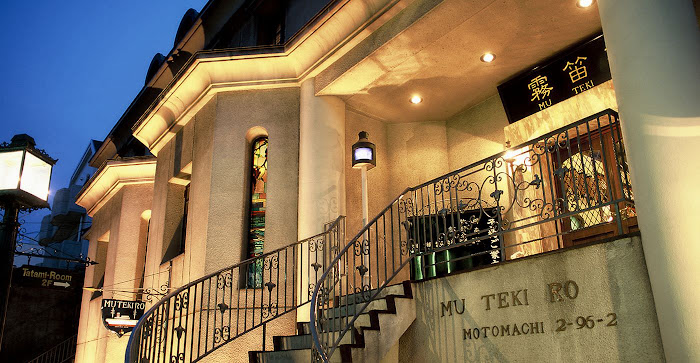
MUTEKIRO is a long-established French restaurant representing Yokohama Motomachi, housed in an elegant Western-style building filled with exotic charm. Based on the concept of "Japanese spirit, Western talent," the restaurant integrates the seasonal sensibilities of Japan into authentic French cuisine to create a unique "Yokohama French" experience.
The restaurant is committed to "local production for local consumption," using fresh vegetables delivered directly from local contracted farms and featuring local brand tableware such as "Yokohama-yaki" to embody the local spirit from sight to taste. Their signature "Vegetable Consommé," brewed from 10 different types of vegetables, serves as the perfect prelude to a magnificent feast.
This three-story Western-style building features a different theme on each floor, recreating the atmosphere of Yokohama during the port-opening era. Whether it is an elegant lunch with close friends, a multi-generational family gathering, or an important business meeting, the classic atmosphere and attentive service at MUTEKIRO ensure you will spend a truly special time.
🎬 横濱元町 霧笛楼 Video
👉autoreserve
Takarada
タカラダ
- Google Maps
- Apple Maps
- Copy address
🕖10:30–19:00
Intro
▼Takarada Yokohama Motomachi Main Store
| Item | Details |
|---|---|
| Address | 3-118 Motomachi, Naka-ku, Yokohama |
| Business Hours | 10:30–19:00 (Open year-round, except New Year's Day) |
| Official Website | www.takarada.co.jp |
Store Introduction
Takarada is an iconic shop with a glorious history located on the Yokohama Motomachi Shopping Street. Since its founding in 1882 (Meiji 15), this long-standing specialty store has been synonymous with high-quality tableware, cutlery, and kitchenware. It has not only witnessed the century-long transformation of Yokohama Motomachi but has also built an excellent reputation both locally and throughout Japan for its professional curation and impeccable service. Its classic and elegant storefront is a prominent landmark on the Motomachi street.
Product Features
Takarada’s product lineup is both deep and broad, showcasing their professional eye for quality. In terms of cutlery, the shop carries top-tier knives featuring traditional Japanese craftsmanship, such as those from Kyoto’s "Aritsugu," which are trusted by professional chefs, as well as internationally renowned brands like Germany’s "ZWILLING J.A. Henckels."
In the realm of Western tableware, their selection is luxurious and exquisite, covering fine porcelain from "Meissen," elegant bone china from "Wedgwood," and even brilliant crystal products from "Baccarat," perfectly meeting the ultimate lifestyle tastes of high-end customers.
Additionally, the shop offers highly professional knife sharpening services, a traditional craft relying on superb skill that is deeply trusted by customers. Furthermore, Takarada has been a purveyor to the Imperial Household Agency, a testament to their long-standing commitment to quality.
🎬 タカラダ Video
Chikazawa Lace Store Motomachi Main Store
近沢レース店 元町本店
- Google Maps
- Apple Maps
- Copy address
🕖10:30–18:00
Intro
▼Chikazawa Lace Motomachi Main Store
| Item | Details |
|---|---|
| Address | 3-119 Motomachi, Naka-ku, Yokohama, Kanagawa |
| Business Hours | 10:30–18:00 (Hours may vary during special events such as Charity Sales) |
| Official Website | chikazawa-lace.co.jp |
Store Introduction
Founded in 1901 (Meiji 34), Chikazawa Lace is one of the iconic, long-standing establishments in Yokohama's Motomachi district. Originally an exporter of silk products, the store later transitioned into a linen store catering to foreign residents. Stepping into the Motomachi main store, you will find an elegant space filled with exquisite lace products, ranging from daily essentials to sophisticated interior decorations, all showcasing a century of craftsmanship and beauty. It is not only a fantastic place to purchase souvenirs but also a window into the exotic history and culture of Yokohama.
Product Features
Chikazawa Lace products are renowned for their exceptional quality and unique designs, with their charm lying in the clever integration of delicate lace craftsmanship into modern life.
- Classic Towel Handkerchiefs:
These are the store's most popular signature items. They perfectly combine high-quality Imabari towels with delicate lace edging. The lace not only adds an elegant touch, but the masterful sewing technique—said to be mastered by only a few artisans in Japan—reinforces the edges of the towel, making them highly durable and machine-washable, blending beauty with practicality. - Fun and Seasonal Patterns:
Beyond classic floral and geometric patterns, one of the most appealing features of Chikazawa Lace is its constantly evolving "fun lace" collection. Designs featuring themes like sushi, ramen, vegetables, and even Yokohama landmarks (such as gas lamps) frequently spark lively discussions on social media and have become a target for collectors. - Collaborations and Limited Editions:
As a representative brand of Yokohama, the store actively collaborates with local brands and teams, such as the Yokohama Motomachi "Kitamura" bag brand or the Yokohama DeNA BayStars baseball team, to release unique, locally-inspired limited edition goods. - Diverse Product Line:
In addition to handkerchiefs, the store offers a variety of bags, pouches, parasols, aprons, as well as luxurious tablecloths and curtains for dining and home interiors, allowing the beauty of lace to be seamlessly integrated into your daily life.
🎬 近沢レース店 元町本店 Video
Fukuzo Western Clothing
フクゾー洋品店
- Google Maps
- Apple Maps
- Copy address
🕖10:30~18:00
Intro
▼FUKUZO (フクゾー洋品店)
| Item | Details |
|---|---|
| Address | 3-117 Motomachi, Naka-ku, Yokohama, Kanagawa Prefecture |
| Business Hours | 10:30–19:00 (Closed on Mondays) |
| Official Website | www.fukuzo.com |
Product Features
FUKUZO is one of the iconic brands of Yokohama Motomachi and a representative store of the "Hamatora" (Yokohama Traditional) fashion style that swept Japan in the 1970s. The main feature of their products is a commitment to "originality"—from fabric dyeing and weaving to pattern design, everything is one-of-a-kind.
The store's clothing focuses on comfortable, durable, and timeless classic styles. Popular items include sweaters, polo shirts, and button-downs featuring the delicate "F" logo (sometimes accompanied by a small horse silhouette) embroidered on the chest, as well as a variety of towels. FUKUZO's apparel features rich, saturated colors and tailored cuts, perfectly embodying the elegant yet casual vibe of the Motomachi district.
Store Introduction
Founded in 1946, FUKUZO is located on the exotic Motomachi Shopping Street in Yokohama. As one of the birthplaces of the "Hamatora" style, FUKUZO has long been cherished by local residents and fashion enthusiasts from all over Japan. The storefront retains a classic European style, and the window displays are always meticulously arranged to convey the brand's values.
Stepping inside feels like entering a refined world of color. FUKUZO does more than just sell clothing; it carries on the history and culture of Yokohama Motomachi, insisting on providing high-quality "Made in Japan" garments. If you are looking for classic pieces that combine taste and durability, be sure to include this shop in your Motomachi shopping itinerary.
Motomachi Union Motomachi Store
もとまちユニオン元町店
- Google Maps
- Apple Maps
- Copy address
🕖10:00~21:00
Supermarket
Intro
▼Motomachi Union Motomachi Store
| Item | Details |
|---|---|
| Address | 4-166 Motomachi, Naka-ku, Yokohama, Kanagawa |
| Business Hours | 10:00~21:00 |
| Official Website | www.keikyu-store.co.jp/list/37 |
Product Highlights
"Motomachi Union" is renowned as one of the pioneers of "high-end supermarkets" in Japan. It is famous not only for its high-quality fresh ingredients but also for its wide variety of imported foods, wines, and cheeses. To cater to health-conscious customers, the store actively stocks organic, additive-free, gluten-free, and plant-based products. Additionally, their "UNION brand" original products—ranging from deli items and specialty eggs to jams and coffee—are highly popular among customers. Their classic green canvas "Union Bag" is even considered a fashion icon of the Motomachi area.
Store Introduction
"Motomachi Union Motomachi Store" is the flagship store under Keikyu Store, located in the historic and exotic Yokohama Motomachi Shopping Street. Since its opening, it has introduced high-quality domestic and international ingredients to meet the needs of residents in the nearby "Yamate" area (a former foreign settlement). Inheriting the Yokohama Motomachi merchant spirit of "embracing and creating new things," the store continues to provide high-taste, international lifestyle proposals, serving as an iconic supermarket that represents the sophisticated lifestyle of Yokohama.
🎬 もとまちユニオン元町店 Video
Chatsubo
茶つぼ
- Google Maps
- Apple Maps
- Copy address
🕖12:30~
🕖18:00~
Intro
▼Tea Pot (Oryori Tea Pot)
| Item | Details |
|---|---|
| Attraction Address | 3-147-7 Motomachi, Naka Ward, Yokohama, Kanagawa Prefecture |
| Business Hours | Wednesday 18:00~ (Takeout 17:30~) Thursday [Lunch] 12:30~ (Takeout 12:00~) / [Dinner] 18:00~ (Takeout 17:30~) Saturday & Sunday [Lunch] 12:00~ / [Dinner] 18:20~ Closed: Monday, Tuesday, Friday, the second Thursday of each month. *Business hours and holidays may change, please confirm before visiting. |
| Dining Budget | Dinner ¥10,000~¥14,999 Lunch ¥10,000~¥14,999 |
| Tabelog Rating | 3.66 |
| Official Website | tyatubo.sakuraweb.com |
Restaurant Features
"Tea Pot" is a standalone restaurant hidden on Shiozumi-zaka Street in Yokohama's Motomachi, operating solely by reservation. The restaurant has only 9 counter seats and is run by a friendly couple, creating a calm and warm atmosphere.
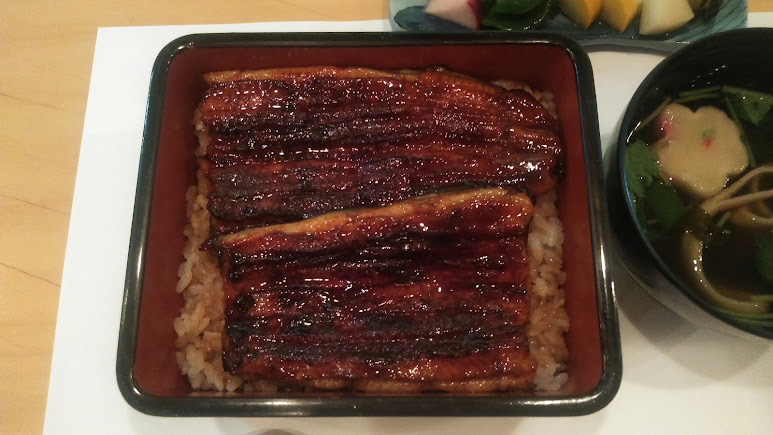
The restaurant offers exquisite Japanese kaiseki cuisine and eel sets. The chef hails from Kyoto's traditional cuisine and has inherited the superb skills from his parents' eel specialty store "Daisenri," incorporating delicate Japanese culinary techniques into eel dishes.
The eel sets here are divided into "Jiyaki" (Kansai-style grilled) for lunch and "Namizume" (Kanto-style steamed) for dinner. The restaurant carefully selects eel from Lake Hamana, and on lucky days, you might taste the rare natural eel from Lake Biwa (additional charge applies). Watching the chef meticulously grill the eel using Kishu white charcoal right in front of you, paired with a perfectly balanced sauce and rice cooked in an earthen pot, is a true delight. The attentive service from the female staff is also highly praised, making it a hidden gem sought after by food enthusiasts.
🎬 茶つぼ Video
👉autoreserve
Der Kleine Laden Tokyo
デア クライネラーデン 東京
- Google Maps
- Apple Maps
- Copy address
🕖10:00–17:00
Intro
▼デア クライネラーデン 東京 (Der Kleine Laden Tokyo)
| Item | Details |
|---|---|
| Address | 5-209 Motomachi, Naka-ku, Yokohama, Kanagawa (Located in Yokohama Motomachi) |
| Business Hours | Wed, Thu, Fri: 10:00–17:00; Tue, Sat, Sun: 10:00–18:00 |
| Official Website | www.dkldkl.com |
Closed:Mondays (If Monday is a national holiday, the shop will be open and closed on the following weekday instead)
Store Introduction
Despite having "Tokyo" in its name, "Der Kleine Laden" (German for "The Little Shop") is a well-known, long-established store that has been operating in the Yokohama Motomachi Shopping Street for over 30 years. Guided by the philosophy of "offering items you can't find anywhere else," the shop specializes in exquisite imported goods from Europe and is a charming boutique for "ladies' lifestyle goods." Stepping inside feels like entering a European fairy tale world.
Product Features
The shop's standout feature is its overwhelming selection of paper napkins. With thousands of designs on display—including renowned brands like Caspari, Marimekko, and William Morris, as well as rare patterns and seasonal limited editions—it is a sanctuary for paper napkin enthusiasts and decoupage crafters. In addition to napkins, the shop specializes in various decoupage materials and tools, as well as beautiful stationery, greeting cards, and gift-wrapping supplies, making it the perfect place to find unique gifts or add a touch of color to your daily life.
🎬 デア クライネラーデン 東京 Video
LENTO
- Google Maps
- Apple Maps
- Copy address
🕖11:00–18:00
Intro
▼LENTO
| Item | Details |
|---|---|
| Address | 101, 5-213 Motomachi, Naka-ku, Yokohama, Kanagawa |
| Business Hours | 11:00–18:00 (L.O. 17:30) *Business hours and holidays are subject to change; please check before visiting. |
| Budget | ¥1,000–¥1,999 |
| Tabelog Rating | 3.65 |
| Official Website | www.addresslento.com |
Restaurant Features
LENTO is a popular cafe tucked away in the alleyways of Motomachi, Yokohama, known for its nostalgic, antique-style decor and tranquil atmosphere. It is the perfect place to take a break while shopping in Motomachi and attracts a constant stream of visitors with its delicious desserts and meals.
The cafe is famous for its variety of homemade tarts (タルト), with the classic "Cheese Tart" and the top-selling "Baked Strawberry Tart" being the favorites. The crust is crispy and firm, creating a perfect balance with the moist, rich filling. The drinks are served in generous portions, which is a nice touch. In addition to desserts, they also offer well-regarded main dishes such as beef stew (ビーフシチュー).
As this is a popular spot with limited seating, it is recommended to allow plenty of time for queuing. Please note that the shop currently only accepts cash payments.
🎬 LENTO Video
👉autoreserve
Bluff No. 18
ブラフ18番館
- Google Maps
- Apple Maps
- Copy address
🕖09:30–17:00
Intro
▼Bluff 18 (ブラフ18番館)
| Item | Details |
|---|---|
| Address | 16 Yamate-cho, Naka-ku, Yokohama, Kanagawa 231-0862 (Inside Yamate Italian Garden) |
| Opening Hours | 09:30–17:00 (Open until 18:00 in July and August) |
| Admission Fee | Free |
| Official Website | www.hama-midorinokyokai.or.jp/yamate-seiyoukan/bluff18 |
Closed:Second Wednesday of each month (if it falls on a holiday, it will be closed the following day), year-end and New Year holidays.
Introduction
Bluff 18 stands quietly within the "Yamate Italian Garden" in the Yokohama Yamate area. It is a charming two-story wooden Western-style building. Its exterior features pure white walls, French-style roof tiles, and green window frames, creating a striking contrast that exudes an elegant, exotic atmosphere. The interior faithfully recreates the lifestyle of foreigners during the reconstruction period following the Great Kanto Earthquake (late Taisho to early Showa era) and displays "Yokohama furniture" that was crafted in Motomachi and meticulously restored. You can admire classic Western architectural elements such as bay windows, sash windows, shutters, and a sun-drenched sunroom.
Historical Background and Cultural Significance
This building was originally constructed in 1923 after the Great Kanto Earthquake at 45 Yamate-cho as the residence of Australian trader R.C. Bowden. After World War II, ownership was transferred to the Catholic Diocese of Yokohama, and it was used for a long time as a rectory (priest's residence) for the "Catholic Yamate Church" until 1991.
In that same year, the City of Yokohama received the building materials as a donation, relocated them to the current "Yamate Italian Garden," and reconstructed the building, which opened to the public in 1993. During the dismantling and investigation process, it was discovered that the building cleverly reused some construction materials that had survived the Great Kanto Earthquake, serving as a testament to the disaster-prevention wisdom and resourcefulness of that time. As a "Yokohama City Designated Historical Building," Bluff 18 is not only a representative Western-style house in the Yamate area but also an important window into understanding Yokohama's post-earthquake reconstruction history and the foreign lifestyle of that era.
🎬 ブラフ18番館 Video
Home of a Diplomat
外交官の家
- Google Maps
- Apple Maps
- Copy address
🕖09:30–17:00
Intro
▼Diplomat's House (Gaikokan no Ie)
| Item | Details |
|---|---|
| Address | 16 Yamate-cho, Naka-ku, Yokohama, Kanagawa (Inside Yamate Italian Garden) |
| Opening Hours | 09:30–17:00 (Extended to 18:00 in July and August) |
| Admission | Free admission |
| Official Website | www.hama-midorinokyokai.or.jp/yamate-seiyoukan/gaikoukan |
Introduction
The "Diplomat's House" stands quietly within the Yamate Italian Garden in Yokohama, an elegant Western-style mansion offering views of the Yokohama port area. Featuring ornate decorations, a prominent octagonal tower, and a natural slate roof, the building is a prime example of the American Victorian style. The interior recreates the lifestyle of a diplomat from that era; with its exquisite furniture, stained glass, gas fireplaces, and luxurious living and dining rooms, it radiates the romance and opulence of the Meiji period. Visitors can soak in the historical atmosphere and enjoy a relaxing time at the on-site café while taking in the beautiful garden views.
Historical Background and Cultural Significance
This building was originally the residence of Sadatsuchi Uchida, a diplomat for the Meiji government, built in 1910 (Meiji 43) in Nanpeidai, Shibuya, Tokyo. It was designed by the American architect James McDonald Gardiner, who was active in Japan at the time. As Sadatsuchi Uchida served as Consul General in New York, the residence was designed to integrate public spaces for hosting important guests with private living quarters, perfectly reflecting the characteristics of high-society homes of that period.
Due to its immense architectural value, the building was donated to the City of Yokohama in 1997 (Heisei 9). It was relocated and restored at its current site (formerly the location of the Italian Consulate, hence the name "Italian Garden") and was designated as a National Important Cultural Property of Japan that same year. It is not only a key member of the Yamate Western-style houses in Yokohama but also a precious cultural heritage site that bears witness to the fusion of modern Japanese diplomatic history and architectural aesthetics, offering a glimpse into the Westernized lifestyle of Japan during the Meiji era.
🎬 外交官の家 Video
▼Yamate Park Area▼
Harbor View Park
Located in the Yamate area, this is a famous scenic spot where you can enjoy a panoramic view of the Yokohama Bay Bridge. The garden features approximately 1,900 rose bushes across 470 different varieties. With the British House Yokohama as a backdrop and an English-style garden theme, you can see a stunning array of roses in bloom throughout the year.
Showing: All(10)
Harbor View Park
港の見える丘公園
- Google Maps
- Apple Maps
- Copy address
🕖24H
Intro
▼Harbor View Park (港の見える丘公園)
| Item | Details |
|---|---|
| Address | 114 Yamate-cho, Naka-ku, Yokohama, Kanagawa Prefecture |
| Opening Hours | Open 24 hours (※ The "French Hill" area has restricted hours: 06:00–19:00 (April–September), 07:00–17:00 (October–March)) |
| Admission Fee | Free admission |
| Official Website | www.city.yokohama.lg.jp/kurashi/machizukuri-kankyo/midori-koen/koen/koen/daihyoteki/kouen007.html |
Attraction Overview
Harbor View Park is situated on the high ground of the Yamate district. True to its name, it is one of the best spots to overlook the Port of Yokohama and the magnificent Yokohama Bay Bridge. It is not only a fantastic place for a daytime stroll but also a famous destination for night views in Yokohama. When night falls, the harbor lights and the silhouette of the bridge create a mesmerizing scene.
The park features flowers throughout the four seasons, most notably its Rose Garden (ローズガーデン). Every spring and autumn, hundreds of rose varieties bloom in a vibrant display of color and fragrance, attracting countless flower enthusiasts and photographers. The park also preserves several historical buildings, including the elegant "Former British Consular Residence (British House)" and "Yamate 111 Bankan." Walking through the grounds feels like stepping back in time to the exotic atmosphere of Yokohama when the port first opened.
Historical Background and Cultural Significance
The history of this land is closely tied to the opening of the Port of Yokohama. After the port opened to the world in 1859, this area became part of the "foreign settlement." During the end of the Edo period, it served as a base for British and French troops. The "French Hill" area within the park was the site of the former French Consulate, and some ruins and monuments, such as an old well and a replica windmill, still remain today.
The park officially opened in 1962 (Showa 37). The "Former British Consular Residence (British House)" located in the park was built in 1937 (Showa 12) and served as a consular residence for over 30 years; it is an important surviving historical building that has witnessed Yokohama's transformation into an international port city. Additionally, the park houses the "Osaragi Jiro Memorial Museum," dedicated to the famous author who had deep ties to Yokohama. This park not only offers stunning harbor views but also carries the rich history and diverse culture of Yokohama's modernization.
🎬 港の見える丘公園 Video
Yokohama British House
横浜市イギリス館
- Google Maps
- Apple Maps
- Copy address
🕖09:30–17:00
Intro
▼British House Yokohama (横浜市イギリス館)
| Item | Details |
|---|---|
| Address | 115-3 Yamate-cho, Naka-ku, Yokohama, Kanagawa (Located inside "Harbor View Park") |
| Opening Hours | 09:30–17:00 (July and August: 09:30–18:00) (Closed on the 4th Wednesday of every month) |
| Admission Fee | Free admission |
| Official Website | www.hama-midorinokyokai.or.jp/yamate-seiyoukan/british-house |
Introduction
The British House Yokohama stands quietly at the highest point of "Harbor View Park," overlooking the sparkling Yokohama Port. This grand building is one of the most significant and largest among the Yamate Western-style residences in Yokohama. Stepping inside feels like traveling back in time to the prosperity of the Showa era. The interior recreates the living quarters of the former British Consul General; from the magnificent banquet hall and exquisite study to the cozy bedrooms, every detail exudes a rich sense of British elegance and history. Visitors can not only enjoy the exotic atmosphere but also take in the stunning view of the Yokohama Bay Bridge from the second-floor balcony.
Historical Background and Cultural Significance
Completed in 1937 (Showa 12), the building was designed by the Shanghai Office of the British Ministry of Works to serve as the official residence of the British Consul General. At the time, it was a vital venue for diplomatic activities in Yokohama, witnessing countless exchanges between Japan and the United Kingdom. Its architectural style showcases the "Imperial style" characteristic of the British colonial period, featuring an imposing presence while cleverly incorporating design elements suited to the Japanese climate.
After the end of World War II, it continued to be used as a consular residence until it was acquired by the City of Yokohama in 1969 (Showa 44). In 1990 (Heisei 2), its immense historical value was recognized when it was designated a "Yokohama City Tangible Cultural Property." Today, the British House Yokohama is not only a historical window into the lives of past diplomats but has also transformed into a vibrant cultural space. The first-floor banquet hall frequently hosts concerts, while the second floor serves as a resource room for the "Yamate Western-style residences," sharing the unique history and cultural heritage of Yokohama as an international port city with the public.
🎬 横浜市イギリス館 Video
Osaragi Jiro Memorial Museum
大佛次郎記念館
- Google Maps
- Apple Maps
- Copy address
🕖10:00–17:00
Intro
▼Yokohama Osaragi Jiro Memorial Museum
| Item | Details |
|---|---|
| Address | 113 Yamate-cho, Naka-ku, Yokohama, Kanagawa Prefecture (Located inside "Minato-no-Mieru Oka Park") |
| Opening Hours | April–September: 10:00–17:30 (Last admission 17:00) October–March: 10:00–17:00 (Last admission 16:30) (Closed: Mondays, year-end/New Year holidays, and during exhibition change periods) |
| Admission Fee | Adults: 200 yen; Elementary and junior high school students: Free |
| Official Website | osaragi.yafjp.org |
Exhibition Overview
This memorial museum stands quietly in a corner of "Minato-no-Mieru Oka Park" (Harbor View Park), overlooking the port of Yokohama. It was built to commemorate the literary giant Osaragi Jiro, who was born in Yokohama and held a deep love for the city. The museum building itself is a work of art, designed by the renowned architect Urabe Kentaro. Its iconic arched roof and warm red-brick exterior are said to be inspired by the French tricolor flag, appearing exceptionally elegant amidst the park's greenery.
The museum displays Osaragi Jiro's original manuscripts, first-edition books, and related materials. It also recreates his study from his later years, offering a glimpse into the creative space of this literary master. Osaragi Jiro is world-renowned for his masterpiece "Kurama Tengu." He was also a famous cat lover, and the museum is filled with various cat-related collections and artworks, adding a warm and charming touch to this literary memorial.
Historical Background and Cultural Significance
Osaragi Jiro (1897-1973) was a representative writer of Japan's Showa era. Born in Yokohama, he held deep affection for this port city and infused this sentiment into many of his works, such as "Muteki" (Foghorn) and "Gento" (Magic Lantern), making the Yamate area of Yokohama a classic setting for his stories.
After Osaragi Jiro passed away in 1973, his family donated his vast collection of books, manuscripts, and personal belongings to the city of Yokohama. To honor this literary giant with such deep ties to the city, Yokohama established this memorial museum in May 1978 on the former site of "French Hill" (now part of Minato-no-Mieru Oka Park), a location that frequently appeared in his works. It serves not only as a center for research into Osaragi Jiro's literature but also as a vital cultural hub where Yokohama citizens and visitors alike can experience the city's history and literary atmosphere.
🎬 大佛次郎記念館 Video
Yamate No. 111
山手111番館
- Google Maps
- Apple Maps
- Copy address
🕖09:30–17:00
Intro
▼Yamate 111 Bankan (Yamate 111)
| Item | Details |
|---|---|
| Address | 111 Yamate-cho, Naka-ku, Yokohama, Kanagawa Prefecture (Located inside "Harbor View Park") |
| Opening Hours | 09:30–17:00 (Closed: 2nd Wednesday of every month, year-end and New Year holidays from December 29 to January 3) |
| Admission Fee | Free admission |
| Official Website | www.hama-midorinokyokai.or.jp/yamate-seiyoukan/yamate111 |
Attraction Overview
Located within "Harbor View Park" overlooking Yokohama Port, Yamate 111 Bankan is a charming Spanish-style Western building. Characterized by its vibrant red-tiled roof and pure white walls, it exudes a strong Southern European atmosphere. The well-manicured rose garden in front of the building complements the architecture, making it one of the most photogenic spots in the Yamate area.
The interior recreates the lifestyle and furniture arrangements of the early Showa era, offering visitors a glimpse into the elegant lives of foreign merchants in Yokohama at the time. The first floor, which faces the rose garden, has been converted into the popular "Cafe the Rose," where visitors can enjoy a relaxing afternoon tea while admiring the seasonal flowers outside the window.
Historical Background and Cultural Significance
Built in 1926 (Taisho 15), Yamate 111 Bankan is a designated cultural property of Yokohama City. The building was originally the private residence of American foreign exchange merchant J.E. Raffin.
It was designed by American architect J.H. Morgan. Mr. Morgan left behind many outstanding architectural works in Yokohama (such as the Bluff No. 234 and the Berrick Hall), and Yamate 111 Bankan is considered one of his masterpieces. The structure consists of one basement level (reinforced concrete) and two floors above ground (wood). At the time, the first floor served as public space, including the living and dining rooms, while the second floor was used as private quarters for bedrooms.
In 1996 (Heisei 8), Yokohama City acquired the building and opened it to the public in 1999 (Heisei 11) following restoration work. Today, the building not only displays period furniture but also features an exhibition on the designer, Mr. Morgan, making it an essential place to gain a deeper understanding of the history and architectural aesthetics of the Western-style houses in Yamate, Yokohama.
🎬 山手111番館 Video
Elisé Hikaru
エリゼ光
- Google Maps
- Apple Maps
- Copy address
🕖11:30–15:00
🕖17:30–22:30
Intro
▼Elysée Hikaru
| Item | Details |
|---|---|
| Attraction Address | 246 Yamate-cho, Naka-ku, Yokohama, Kanagawa Prefecture, 2F, Kernel's Corner |
| Business Hours | Monday, Tuesday, Thursday, Friday, Saturday, Sunday Lunch 11:30–15:00 Dinner 17:30–22:30 Closed on Wednesday |
| Dining Budget | ¥10,000–¥14,999 |
| Tabelog Rating | 3.59 |
| Official Website | www.elysee-hikaru.com |
Restaurant Features
Elysée Hikaru is a high-end French restaurant located in Yokohama's Yamate area, renowned for its elegant atmosphere and beautiful views, making the journey to the restaurant itself a delight. The establishment insists on using local ingredients, and the chef showcases creativity with exquisite culinary skills, such as crafting beef slices into a unique texture reminiscent of hamburger patties, paired with a delicious soup made from Yamakawa oranges.
In addition to its exquisite main courses, it surprisingly offers café services. The restaurant's signature dessert is the "Original" "Raw Pudding" (生プリン). This dessert, which originated here, features a smooth milk mousse topped with a carefully selected "Keisuke Egg" yolk, drizzled with caramel sauce by table-side service. Its unprecedented new texture and rich flavor have made it a nationally famous signature dessert.
🎬 エリゼ光 Video
👉autoreserve
Yamate No. 234
山手234番館
- Google Maps
- Apple Maps
- Copy address
🕖09:30~17:00
Intro
▼Yamate 234
| Item | Details |
|---|---|
| Address | 234-1 Yamate-cho, Naka-ku, Yokohama, Kanagawa Prefecture |
| Opening Hours | 09:30–17:00 (Extended to 18:00 in July and August) (Note: Closed on the 4th Wednesday of every month; if that day is a public holiday, it will be closed the following day. Closed for the year-end and New Year holidays from 12/29 to 1/3) |
| Admission Fee | Free |
| Official Website | www.hama-midorinokyokai.or.jp/yamate-seiyoukan/yamate234 |
Introduction
Strolling through the exotic Yamate district of Yokohama, Yamate 234 is an elegant building that invites you to pause and admire it. Quietly situated next to Motomachi Park and facing the Foreign General Cemetery, it is one of the most iconic structures among the Yamate Western-style houses. The building features a simple exterior with warm cream-colored walls and green window frames, exuding a nostalgic atmosphere from the early Showa era. The interior is currently used as a public space and exhibition hall; the first floor recreates the living room of the original apartment, while the second floor serves as a gallery, regularly hosting photography and painting exhibitions by local citizens. It is not only a fantastic spot for photography enthusiasts but also a wonderful place for travelers to experience the historical depth of Yokohama.
Historical Background and Cultural Significance
Yamate 234 was built in 1927 (Showa 2), and its
historical background
is closely linked to the Great Kanto Earthquake of 1923. The earthquake devastated Yokohama, leaving many foreigners without homes. To meet the housing needs at the time, this building was constructed as an apartment complex specifically for foreigners.The building's design is highly ingenious, featuring a symmetrical layout with a central entrance that divides the structure into four identical residential units. Each unit included three rooms, a living room, a kitchen, and a bathroom, which was considered quite modern and comfortable at the time. It bears witness to Yokohama's post-earthquake reconstruction and carries the historical traces of the foreigners who lived there. In 1999 (Heisei 11), Yamate 234 was designated as a historical building by Yokohama City. After restoration, it was opened to the public, serving as an important window for sharing the unique exotic culture and history of the Yamate area.
🎬 山手234番館 Video
Enokitei Main Store
えの木てい 本店
- Google Maps
- Apple Maps
- Copy address
🕖10:30–19:00
Intro
▼Enokitei Main Store (えの木てい 本店)
| Item | Details |
|---|---|
| Address | 89-6 Yamate-cho, Naka-ku, Yokohama, Kanagawa Prefecture |
| Business Hours | Mon-Fri 12:00–17:30, Sat/Sun/Holidays 11:30–18:00 |
| Budget | ¥1,000–¥1,999 |
| Tabelog Rating | 3.59 |
| Official Website | www.enokitei.co.jp |
Payment methods:Cash only (Credit cards and e-money are not accepted)
Restaurant Features
Located in Yamate, one of Yokohama's most prestigious residential areas, "Enokitei" is a renowned Western-style café brimming with vintage charm and an exotic atmosphere. The building itself is an elegant Western-style mansion nestled in greenery. Both the exterior and interior evoke a strong sense of Western nostalgia, making you feel as if you have stepped into a scene from a Ghibli film.
As a famous landmark in the Yamate area, the cakes and teas here are of the highest quality. Enjoying exquisite desserts in such an elegant space is a classic Yokohama sightseeing experience. The unique atmosphere is also popular among photography enthusiasts, cosplayers, and fans of Gothic Lolita fashion, making it a must-visit spot to experience the exotic charm of Yokohama's Yamate district.
🎬 えの木てい 本店 Video
Ehrismann Residence
エリスマン邸
- Google Maps
- Apple Maps
- Copy address
🕖09:30–17:00
Intro
▼Yokohama Ehrismann Residence
| Item | Detailed Information |
|---|---|
| Attraction Address | 1-77-4 Motomachi, Naka-ku, Yokohama-shi, Kanagawa Prefecture (Inside Motomachi Park) |
| Business Hours | 09:30–17:00 (Extended to 18:00 in July and August) |
| Admission Ticket | Free Admission |
| Official Website | Yamate Western House - Ehrismann Residence |
Closed:2nd Wednesday of every month (open if it falls on a national holiday, closed the following day), year-end and New Year holidays (December 29 – January 3)
Attraction Introduction
Located in Yokohama Motomachi Park, the Ellis Mansion is an elegant white-walled, green-windowed Western-style house that exudes the romantic atmosphere of the Taisho era. Surrounded by trees and flowers that change color with the seasons, it is one of the most representative Western-style buildings in the Yamate area of Yokohama.
Entering the residence, the first floor faithfully recreates the living space of the past, including a comfortable reception room with a fireplace, a spacious living and dining area, and a sunroom with a view of the beautiful garden. Many of the tables and chairs here were personally designed by architect Raymond, featuring a simple and classic style. The former kitchen space has now been transformed into "しょうゆきゃふぇ" (Soy Sauce Café), where you can enjoy the famous "raw egg pudding" and have a delightful afternoon tea in a nostalgic atmosphere. The second floor serves as a resource room, showcasing the history and architectural features of the Yamate Western-style house through precious photographs and blueprints.
Historical Background and Cultural Significance
The Ehrismann Residence was built in 1926 (Taisho 15) and was originally the private residence of Swiss silk trader Mr. Fritz Ehrismann. At that time, Mr. Ehrismann served as the branch manager of Sieber Hegner & Co. in Yokohama and was quite active in the local business community.
The designer of this building is the internationally renowned Czech architect Antonin Raymond, known as the "Father of Modern Japanese Architecture." Raymond was a disciple of the world-class architectural master Frank Lloyd Wright, so the design of the Elysian Mansion clearly shows the influence of his mentor, such as the emphasis on horizontal lines in the eaves design. The building's exterior is uniquely crafted, with vertical slatted boards on the first floor and horizontal boards on the second floor, creating a distinctive visual contrast, making it a masterpiece of wooden modernist architecture.
This residence was originally located at 127 Yamate-cho and was relocated to its current site in Motomachi Park in 1990 (Heisei 2) for restoration and preservation. It is open to the public free of charge as a "Yokohama City Recognized Historical Building," becoming a valuable cultural heritage that witnesses the history of Yokohama's international trade and the beauty of modern architecture.
🎬 エリスマン邸 Video
Bluff Bakery - Motomachi Main Store
ブラフベーカリー 元町本店
- Google Maps
- Apple Maps
- Copy address
🕖08:00–18:00
Intro
▼BLUFF BAKERY (ブラフベーカリー) Motomachi Main Store
| Item | Details |
|---|---|
| Attraction Address | 2-80-8 Motomachi, Naka Ward, Yokohama, Kanagawa Prefecture |
| Business Hours | 08:00~18:00 (Closed on Mondays and Tuesdays; please check the official website for announcements) |
| Official Website | www.bluffbakery.com |
Product Features
BLUFF BAKERY is recognized as one of Yokohama's top bakeries, famous for its authentic New York-style baking. The shop offers a wide variety of products, with the most popular being the hearty and flavorful "Bagels," available in original, onion, cinnamon, and other flavors. Additionally, the crispy-on-the-outside and soft-on-the-inside "Doughnuts," moist and aromatic "Carrot Cake," and various handmade toasts are must-try signature items. The bakery insists on using high-quality flour and natural yeast, baking fresh daily, showcasing the craftsmanship of skilled artisans.
Store Introduction
Located in a quiet neighborhood of Motomachi, Yokohama, near "Yamashita Park," BLUFF BAKERY Motomachi Main Store attracts passersby with its stylish and simple blue exterior. Although the shop is small, there is always a steady stream of customers lining up, indicating its immense popularity. The interior space is simple and bright, filled with freshly baked bread that fills the air with delightful aromas. This place is not only a daily favorite for locals but also a must-visit for many bread enthusiasts who come to Yokohama on pilgrimage.
🎬 ブラフベーカリー 元町本店 Video
Former Yamate No. 68
旧山手68番館
- Google Maps
- Apple Maps
- Copy address
🕖09:30~17:00
Intro
▼Yokohama Old Yamate 68 Building
| Item | Details |
|---|---|
| Attraction Address | 68 Yamate-cho, Naka Ward, Yokohama, Kanagawa Prefecture (within Yamate Italian Garden) |
| Business Hours | 09:30 AM - 05:00 PM (Monday to Friday) / 09:30 AM - 06:00 PM (Saturday, Sunday, and Holidays) |
| Admission Ticket | Free Admission |
| Official Website | www.hama-midorinokyokai.or.jp/park/yamate/sports.php |
Attraction Introduction
The Old Yamate 68 Building quietly stands in a corner of the "Yamate Italian Garden," a two-story wooden Western-style building full of early Showa period charm. It faces the tennis courts within the garden and is currently used primarily as a clubhouse for the tennis courts and as an office for garden management. Although it is not as grand as the more famous "Diplomat's House" in the garden, its exquisite wooden structure, comfortable balcony, and cozy fireplace still exude a strong historical atmosphere. Visitors can freely enter and explore (except for some management areas) to experience the daily life of foreign merchants from back in the day.
Historical Background and Cultural Significance
This building was originally constructed in 1934 (Showa 9) at the then Yamate-cho 68 (which is also the origin of its name) as the private residence of the foreign merchant Mr. Zingel. As one of Japan's first opened ports, Yokohama's Yamate area quickly became a primary residence for foreigners (known as "settlements") after the port's opening, leading to the construction of numerous Western-style buildings.
With the passage of time, the original building faced the fate of demolition. To preserve this precious building that witnessed Yokohama's internationalization history, it was donated to the city of Yokohama in 1988 (Showa 63) and relocated to the current "Yamate Italian Garden" for restoration and preservation. The Old Yamate 68 Building, being one of the smaller and more livable structures in the "Yamate Western-style Houses" series, vividly showcases the lifestyle of foreign merchants in Yokohama during the Showa period, making it an indispensable stop for exploring Yokohama's port city culture and modern architectural history.
🎬 旧山手68番館 Video
The entire route is approximately 6km
▼Attractions South of Yokohama Chinatown▼
This area is a more remote attraction in southern Yokohama, requiring a ride to get there.
Yokohama Tram Museum
横浜市電保存館
- Google Maps
- Apple Maps
- Copy address
🕖10:00~16:00
Intro
▼Yokohama City Tram Museum
| Item | Detailed Information |
|---|---|
| Attraction Address | 3-1-53 Takigashira, Isogo-ku, Yokohama, Kanagawa Prefecture |
| Business Hours | •Weekdays: 10:00–16:00 (Last admission 15:30) •Weekends, national holidays, and school holidays: 09:30–17:00 (Last admission 16:30) •Closed: Every Wednesday and Thursday (open if it falls on a national holiday), year-end and New Year holidays (12/29–1/3) |
| Admission Fee | •Adults (High school students and above): 300 yen •Ages 3 to Junior high school students: 100 yen |
| Official Website | www.shiden.yokohama |
Exhibition Overview
The Yokohama City Tram Museum is a nostalgic museum dedicated to the collection and display of trams that operated in the city from 1904 to 1972, serving as "the means of transportation for the citizens of Yokohama." Inside, seven precious actual vehicles are preserved, ranging from wooden trams of the Taisho era to streamlined vehicles of the Showa era, each carrying the urban memories of Yokohama. Visitors can freely enter the carriages, experiencing the warm Showa atmosphere created by the wooden floors and dark green seats, and can also enjoy the fun of being a tram driver for a day through a driving simulator. Additionally, the large railway model (O gauge) performs scheduled shows, and the area displaying tram parts, station signs, photographs, and other historical materials makes one feel as if they are traveling back in time to the era of the clattering trams.
Historical background and its cultural significance
The history of the Yokohama City Tram (Yokohama Municipal Electric Tramway) is a microcosm of the modern urban development of Yokohama. Since the first line opened in 1904 (Meiji 37), the tram network expanded rapidly, becoming a vital artery supporting the industrialization of this port city and the lives of its citizens. At its peak, the total length of its routes exceeded 50 kilometers, serving as an indispensable transportation artery for Yokohama.
However, with the popularization of automobiles in the 1960s and the development of the subway, the streetcar began to face operational difficulties, ultimately ceasing all operations on March 31, 1972 (Showa 47), ending its nearly 70 years of service. To commemorate this history and preserve the collective memory of the citizens, the Yokohama City Transportation Bureau established this preservation hall in 1973 at the former site of the Takitō Vehicle Depot.
This is not only a sacred place for railway enthusiasts but also a cultural space for the citizens of Yokohama to engage in intergenerational exchange. It not only preserves precious industrial heritage but, more importantly, carries the shared emotions and memories of the older generation of Yokohama residents towards the city, passing on this cultural essence to the next generation.
🎬 横浜市電保存館 Video
Sankeien Garden
三溪園
- Google Maps
- Apple Maps
- Copy address
🕖09:00–17:00
Intro
▼Yokohama Sankeien
| Item | Detailed Information |
|---|---|
| Attraction Address | 58-1 Honmoku Sannodani, Naka Ward, Yokohama City, Kanagawa Prefecture |
| Business Hours | 09:00–17:00 (Last admission at 16:30) (Closed: December 26–31) |
| Admission Ticket | Adult (High school student and above) ¥900 / Child (Elementary/Junior high school student) ¥200 |
| Official Website | Sankeien Garden |
Attraction Introduction
Sankeien Garden is a magnificent Japanese-style garden spanning 17.5 hectares (approx. 53,000 tsubo), created by the industrialist Sankei Hara. This garden is not only a canvas of nature but also a living architectural museum. The park skillfully utilizes the natural undulating terrain, featuring ponds, streams, and winding paths. Different flowers bloom throughout the four seasons—from cherry blossoms in spring and lotus flowers in summer to the vibrant autumn foliage—offering breathtaking scenery that attracts countless visitors.
The park is divided into two main areas: the "Outer Garden" (Gaien) and the "Inner Garden" (Naien). The Outer Garden centers around its iconic three-story pagoda and large pond, offering an open landscape filled with seasonal charm. The Inner Garden was originally the private garden of Sankei Hara; it features an exquisite layout and hides numerous tea houses and elegant structures. Strolling through it feels like traveling through time, allowing you to experience the purest atmosphere of an ancient Japanese capital within the modern city of Yokohama.
Historical background and its cultural significance
The birth of Sankeien Garden is credited to the Meiji-era silk manufacturing and raw silk trade tycoon, Hara Tomitaro (pseudonym "Sankei"). He began developing the garden here in 1902 and was the first to open the "Outer Garden" (Gaien) to the public in 1906. Hara Sankei was not only a successful industrialist but also a visionary art enthusiast and protector of cultural assets.
The soul of Sankeien Garden lies in its collection of 17 historic buildings. These structures were relocated here by Sankei Hara from places like Kyoto and Kamakura to save precious ancient buildings that were on the verge of destruction or loss, giving them a new lease on life. At the time, this was a monumental effort to rescue Japanese cultural heritage. Currently, 10 buildings in the garden are designated as National "Important Cultural Properties," and 3 are designated as Yokohama City Tangible Cultural Properties.
The most iconic of these is the "Old Tomyo-ji Temple Three-storied Pagoda," which stands atop the hill. Originally located at Tomyo-ji Temple in Kyoto Prefecture, it is one of the oldest surviving wooden pagodas in the Kanto region and serves as a symbol of Sankeien Garden. Another national treasure, "Rinkunkaku" (an Important Cultural Property), is said to have been a villa for the Kishu Tokugawa family during the Edo period; its exquisite shoin-zukuri structure and Kano school sliding door paintings demonstrate superb craftsmanship and aesthetics. At Sankeien, visitors do not just admire the scenery, but also read a condensed history of Japanese architecture.
🎬 三溪園 Video
👉kkday
👉klook
👉Trip
Mitsui Outlet Park
三井アウトレットパーク
- Google Maps
- Apple Maps
- Copy address
🕖10:00–20:00
Intro
▼Mitsui Outlet Park Yokohama Bayside
| Item | Detailed Information |
|---|---|
| Attraction Address | 5-2, Baihan, Kanazawa Ward, Yokohama City, Kanagawa Prefecture 236-0007 |
| Business Hours | Stores & Services: 10:00 AM - 8:00 PM Restaurants: 11:00 AM - 9:00 PM Food Court: 10:30 AM - 9:00 PM (Some store hours may vary) |
| Official Website | Mitsui Shopping Park Yokohama |
Featured Introduction
This is an ocean-themed outlet mall located by Yokohama Bay, next to Japan's largest yacht marina. With the design concept of "New Marina Life," the mall creates a relaxed resort atmosphere reminiscent of a seaside town in Southern Europe. After a complete renovation and reopening in 2020, the number of stores has significantly increased to about 170, featuring many international fashion brands, sports and outdoor goods, lifestyle products, and dining restaurants.
Visitors can enjoy the pleasure of shopping while feeling the sea breeze at any time, appreciating the yachts docked at the pier and the vast sea view. The mall features a large food court "Bayside Food Hall," as well as several independent restaurants with sea views, offering a rich variety of dining options.
Floor Guide
The mall is mainly composed of three blocks: A, B, and C. The buildings are mostly 2 to 3 stories high and are connected by walkways and plazas.
- A District:As the main area of the shopping mall, it gathers the most fashion apparel, boutique accessories, and miscellaneous goods. The second floor features a large food court, "Bayside Food Hall."
- B District:Located next to the Central Garden Plaza, it features a café and a lifestyle grocery store, making it an excellent spot for relaxation and meetings.
- C District:The area closest to the pier features several independent restaurants with sea views, as well as lifestyle shops.
- UNIQLO PARK:Next to the shopping mall is a unique "UNIQLO PARK," which combines UNIQLO and GU. The building's exterior resembles a playground, featuring facilities such as slides and climbing walls, making it a popular attraction for families.
Historical Background
The predecessor of "Mitsui Outlet Park Yokohama Bayside" is the "Yokohama Bayside Marina Shops & Restaurants," which opened in September 1998. It is regarded as Japan's "first true factory outlet mall" and is one of the pioneers that introduced the outlet concept to the Japanese market.
After 20 years of successful operation, in response to market changes and to provide a better shopping experience, the mall temporarily closed in September 2018 for a comprehensive demolition and expansion plan. After nearly two years, it grandly reopened in June 2020 with a brand new look, not only doubling the number of shops but also enhancing the overall design to better integrate with the surrounding bay scenery, becoming a prominent seaside shopping landmark in Yokohama.
🎬 三井アウトレットパーク Video
Kanazawa Zoo
金沢動物園
- Google Maps
- Apple Maps
- Copy address
🕖09:30~16:30
Intro
▼Yokohama City Kanazawa Zoo
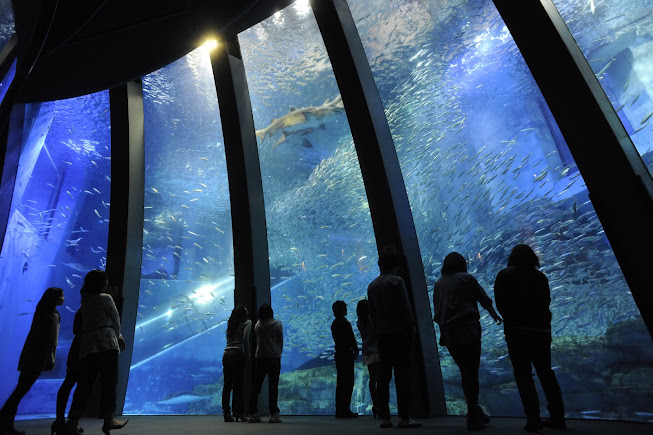
| Item | Details |
|---|---|
| Attraction Address | 5-15-1 Kamariya Higashi, Kanazawa Ward, Yokohama City, Kanagawa Prefecture |
| Business Hours | 09:30~16:30 (Last entry at 16:00) |
| Admission Tickets | • Adults (18 years and older): 500 yen • High school students: 300 yen • Elementary and junior high school students: 200 yen • Preschool children: Free (Closed on Mondays (if a holiday falls on Monday, it will be postponed to the next day), December 29 to January 1. Open every May and October.) |
| Official Website | www.hama-midorinokyokai.or.jp/zoo/kanazawa |
Attraction Introduction
Nestled in the outskirts of Yokohama and surrounded by the lush greenery of Kanazawa Nature Park, Yokohama City Kanazawa Zoo is a large zoo dedicated to the care of "herbivorous animals." Unlike typical zoos, there are no roars from lions or tigers; instead, a relaxed and tranquil atmosphere prevails. The zoo is cleverly divided into four main exhibition areas: "Americas," "Eurasia," "Oceania," and "Africa," based on the animals' natural habitats.
Here, you can observe adorable and lazy koalas, the rare Okapia from Asia, giraffes, and Indian elephants with their massive tusks up close. The zoo is committed to a barrier-free, free-range approach, allowing animals to live in an environment closer to their natural habitat. Additionally, the "Warm Plaza" in the zoo offers opportunities for intimate interactions with small animals like goats and sheep, making it a favorite among family visitors. As the seasons change, cherry blossoms, hydrangeas, and other flowers bloom throughout the park, allowing guests to enjoy the beautiful scenery along with the animal exhibits.
Historical Background and Cultural Significance
Yokohama City Kanazawa Zoo officially opened on March 17, 1982. Since its opening, the two Asian elephants raised in the zoo have become symbolic animals of the zoo. This zoo not only serves as a great recreational spot for citizens but also carries an important educational and conservation mission.
One of the core philosophies of the zoo is "species conservation," focusing on the breeding of rare and endangered animals. The zoo conveys the importance of animal conservation and the value of Earth's ecological diversity by showcasing rare herbivorous animals from around the world. It is not just a place for entertainment but also a living natural classroom, allowing visitors of all ages to learn about respecting life and protecting the environment through their encounters with animals.
🎬 金沢動物園 Video
Yokohama Hakkeijima Sea Paradise
横浜八景島シーパラダイス
- Google Maps
- Apple Maps
- Copy address
🕖10:00–19:00
Intro
▼Yokohama Hakkeijima Sea Paradise
| Item | Detailed Information |
|---|---|
| Attraction Address | Hakkeijima, Kanazawa Ward, Yokohama City, Kanagawa Prefecture |
| Business Hours | 10:00–19:00 (These are reference hours; operating hours for the aquarium, amusement rides, dates, and seasons may vary. Please be sure to check the official website.) |
| Admission ticket | 1-Day Pass (4 Aquariums + Attractions) - Adult ¥5,600 / High School Student ¥4,700 / Elementary & Junior High Student ¥3,600 / Child (ages 4+) ¥2,300 (※Other ticket combinations are available; prices may vary by season) |
| Official Website | www.seaparadise.co.jp |
Sightseeing Attractions
Yokohama Hakkeijima Sea Paradise is a giant complex marine leisure facility located on an artificial island in Yokohama Bay. This "island" itself is a theme park that combines an aquarium, amusement park, shopping center, restaurants, and hotels, providing visitors with a comprehensive entertainment experience.
At its core is the "Aqua Museum," one of the largest in Japan, housing over 120,000 marine creatures of more than 700 species. Most famous is the "Super Sardine Illusion," where tens of thousands of sardines form a spectacular storm in a giant tank. Additionally, the arched tank of the "Dolphin Fantasy" makes you feel as if you are walking through the sea, looking up as dolphins swim gracefully overhead; the "Fureai Lagoon" allows for close encounters with animals such as sea lions and penguins; and the "Umi Farm" offers a unique "food education" experience where visitors can fish for themselves and have their catch cooked and tasted on the spot.
In addition to marine life, the land-based "Pleasure Land" is equally exciting. Here, you can find Japan's only roller coaster that spans the sea, the "Leviathan," as well as the "Blue Fall," which drops vertically from a height of 107 meters, guaranteed to thrill adrenaline-seeking visitors.
Historical Background and Cultural Connotations
Yokohama Hakkeijima Sea Paradise opened on May 8, 1993. It is one of the highlights of Yokohama's large waterfront redevelopment project carried out from the late 1980s to the early 1990s. This island is an artificial island created through land reclamation, designed to be a unique recreational space that integrates "ocean, island, and living organisms," serving not only as entertainment for citizens but also as a marine ecological education facility.
The birth of Hakkeijima continues the connection between the port city of Yokohama and the ocean. It set a precedent by perfectly combining a large-scale aquarium with thrilling amusement rides. The "Umi Farm" within the park embodies the "Shokuiku" (food education) culture that Japan has emphasized in recent years, allowing children to learn about the origins of food and respect for life through play. In addition, the park's seasonal "Fireworks Symphonia" and the winter-exclusive light shows have become classic itineraries for couples' dates and family outings in the Kanto region, carrying the joyful memories of countless people.
🎬 横浜八景島シーパラダイス Video
👉klook
👉Trip
👉agoda
Yamashita, Chinatown↔︎Yokohama City Tram Preservation Museum
Yokohama Bus Line 158 (31min)
Yamashita, Chinatown↔︎Sankeien
Yokohama Bus No. 008 (23min)
Yokohama Bus No. 168 (23min)
Yamashita, Chinatown ↔︎ Mitsui OUTLET
From JR Ishikawacho (Negishi Line) → Transfer at Shin-Sugita (Keihin Kyuko Line) → Torihama
8 minutes on foot (total about 28 minutes)
Yamashita Park, Chinatown↔︎Kanazawa Zoo
From JR Ishikawacho (Negishi Line) → Transfer to bus (Yoko 1) at Yokohama Station → Entrance to Citizen’s Forest
Walk 3 min (Total about 1H)
Yamashita Park, Chinatown ↔︎ Mitsui OUTLET
From JR Ishikawacho (Negishi Line) → Transfer at Shin-Sugita (Seaside Line) → Hakkeijima
8 minutes on foot (Total about 1 hour)
