Okinawa Travel Guide 2026: Itineraries, Food & Transport

8.1K views
Overview
Okinawa Free Travel Directory.
How to Use This Page
  • Understand the Geography: South / Central / North Division
  • Decide Between Driving or Yui Rail + Bus / Day Tours
  • Preparation, airport, and itinerary days below.
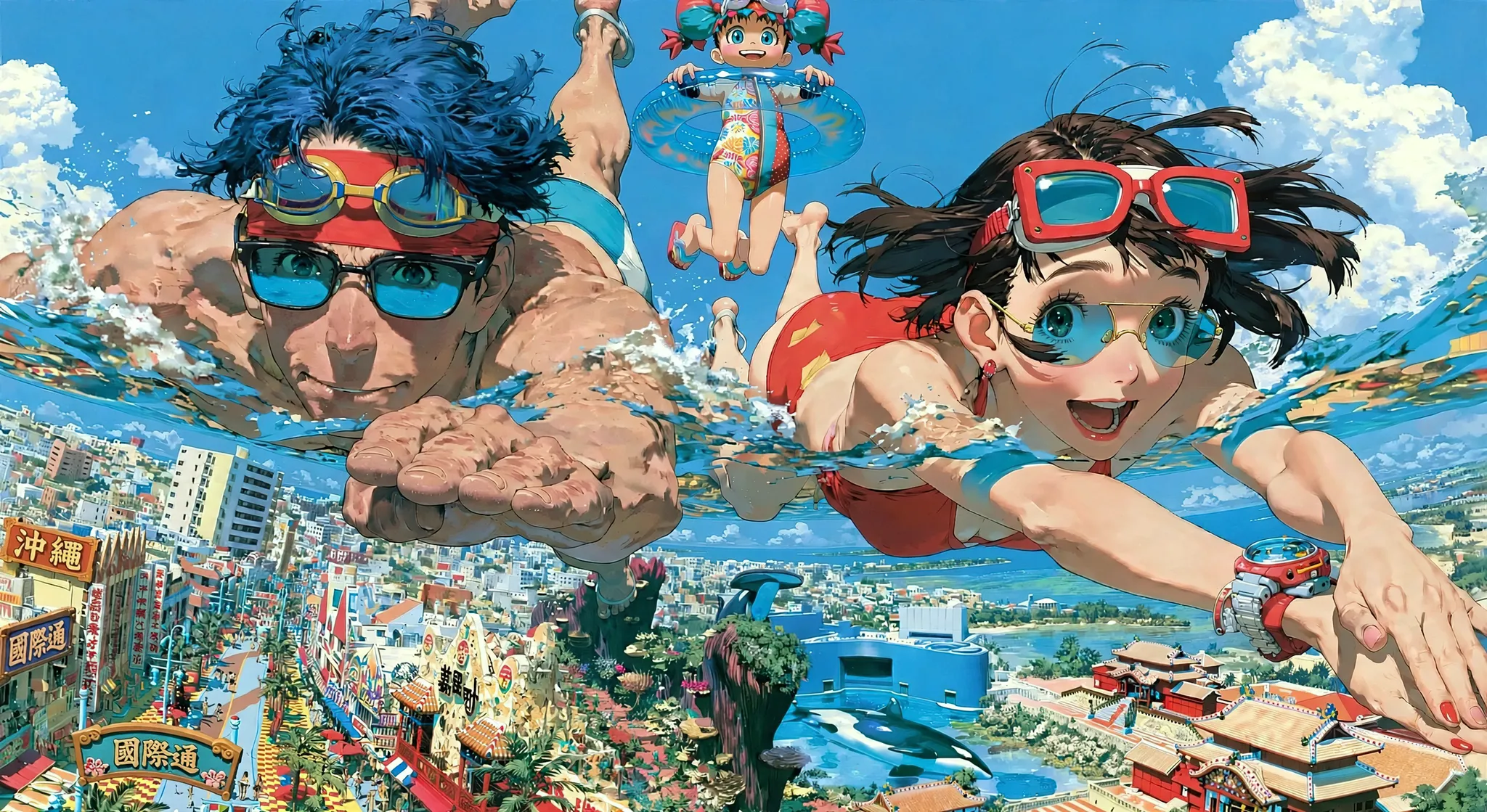
Okinawa自由行城市插圖:海、傳統與現代街景
OKINAWA FREE TRAVEL GUIDE · 2026

Complete guide to attractions × food × transportation.

The clearest sea in all of Japan, Ryukyu culture, and a tropical rhythm different from Honshu. First time in Okinawa: first clarify the itinerary for the south, central, and north, then decide whether to drive - this page serves as a guide.Okinawa Free Travel Directory.Use this to connect to in-station attractions and food guides.

First, choose your accommodation area (mostly Naha or central resorts), then plan your attractions for half a day to a full day. The northern aquarium, the southern attractions near the airport, and the sunset on the west coast—focusing on one direction per day is more practical than cramming a long list.
Contents

How to Use This Guide

Table of Contents

Recommended order: Beginner concepts → Pre-trip checklist → Where to stay/Areas → Airport → Attractions → Duration. For driving, see advanced tips.

1

Understanding Okinawa: A Beginner's Guide

What to Expect on Your First Visit

Okinawa is a dream destination for many, known for its clear waters, Ryukyu culture, and a tropical vibe distinct from Honshu. Whether you're visiting for the first time, with family, or as a couple, you'll find a suitable pace.

The main island stretches about 100 kilometers north to south, with attractions spread out—No zoning in advance.It's easy to spend half a day on the road. There are two main transportation routes:Rent a car and drive.(Most efficient for the central and northern regions, orNaha Yui Rail + taxi/bus/day tour.(You can enjoy without driving, but flexibility is limited.)
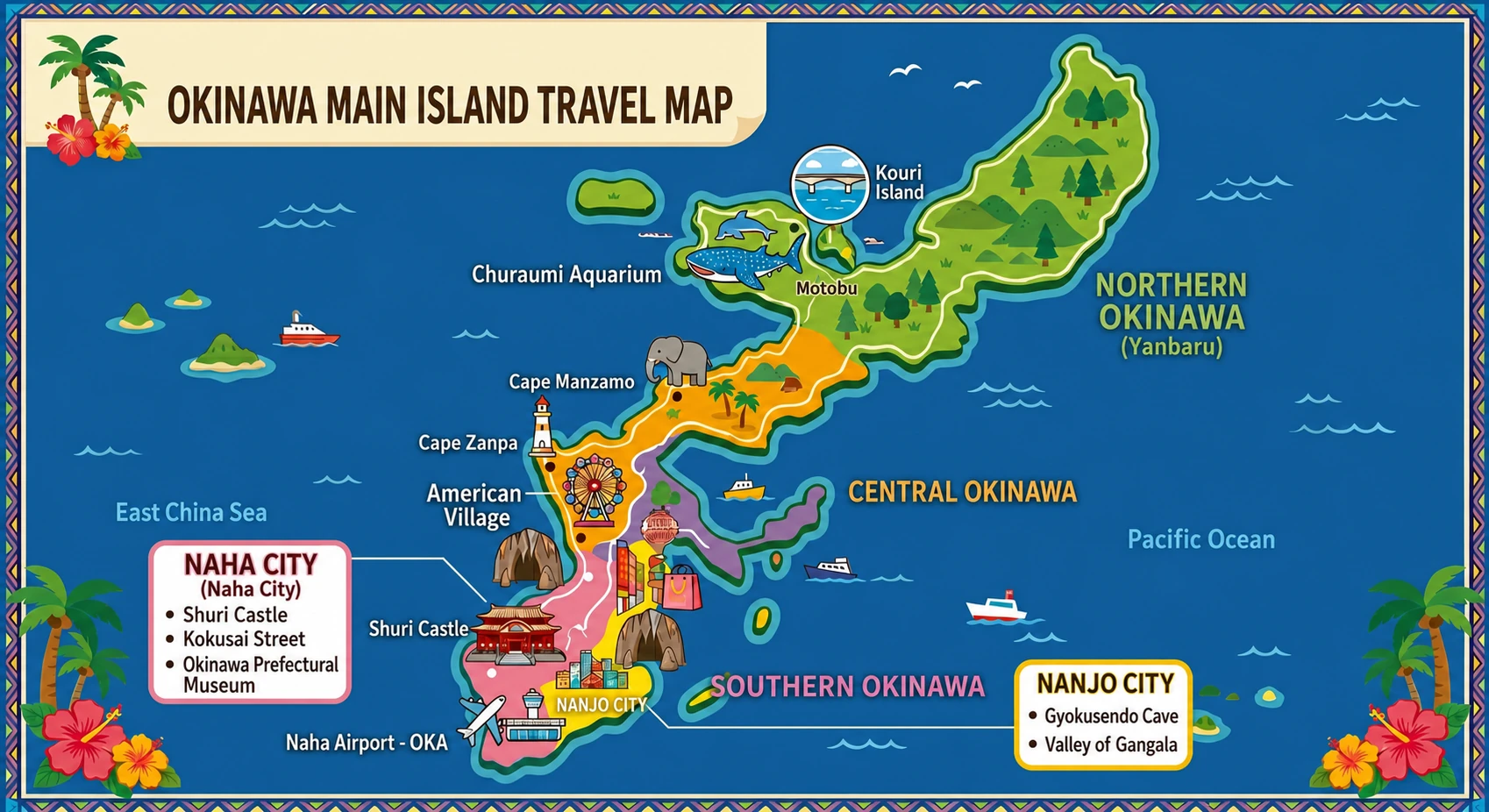
Okinawa main island travel map showing the northern, central and southern regions and key attractions
Attractions distribution across Okinawa

Where is Okinawa? Let's understand the geography first.

Okinawa Prefecture lies in the southwestern part of Japan. When travelers say “Okinawa,” they usually mean Okinawa Main Island. Because the island is long and narrow, group your itinerary by area instead of zigzagging across the island.

  • Southern Region (around Naha): Naha Airport, Kokusai Street, and Shuri Castle—ideal for your first or last day.
  • Central Region (Chatan, Onna, Yomitan, and nearby areas): American Village and west-coast beaches, with a strong resort atmosphere.
  • Northern Region (Nago, Motobu, and nearby areas): Yanbaru nature, Churaumi Aquarium, and other northern attractions; plan at least one full day.

Time Difference, Climate, Voltage

  • Time Difference: Japan Standard Time (JST, UTC+9) does not use daylight saving time. Japan is usually 8–9 hours ahead of London, 7–8 hours ahead of Central Europe, 13–14 hours ahead of New York, and 16–17 hours ahead of Los Angeles, depending on daylight-saving time. Check your departure city’s current offset before booking.
  • Climate: Subtropical; best for water activities from April to October; typhoon season from July to September, so keep flexibility when booking accommodations and tickets.
  • Voltage: 100V dual flat head, the same as your departure country, chargers can usually be used directly.
  • Payment: Credit cards and electronic payments are widely accepted in malls, convenience stores, and car rentals; cash is often used in izakayas and local shops—keep 1,000 yen bills handy.

Seasonal temperatures and clothing (quick reference)
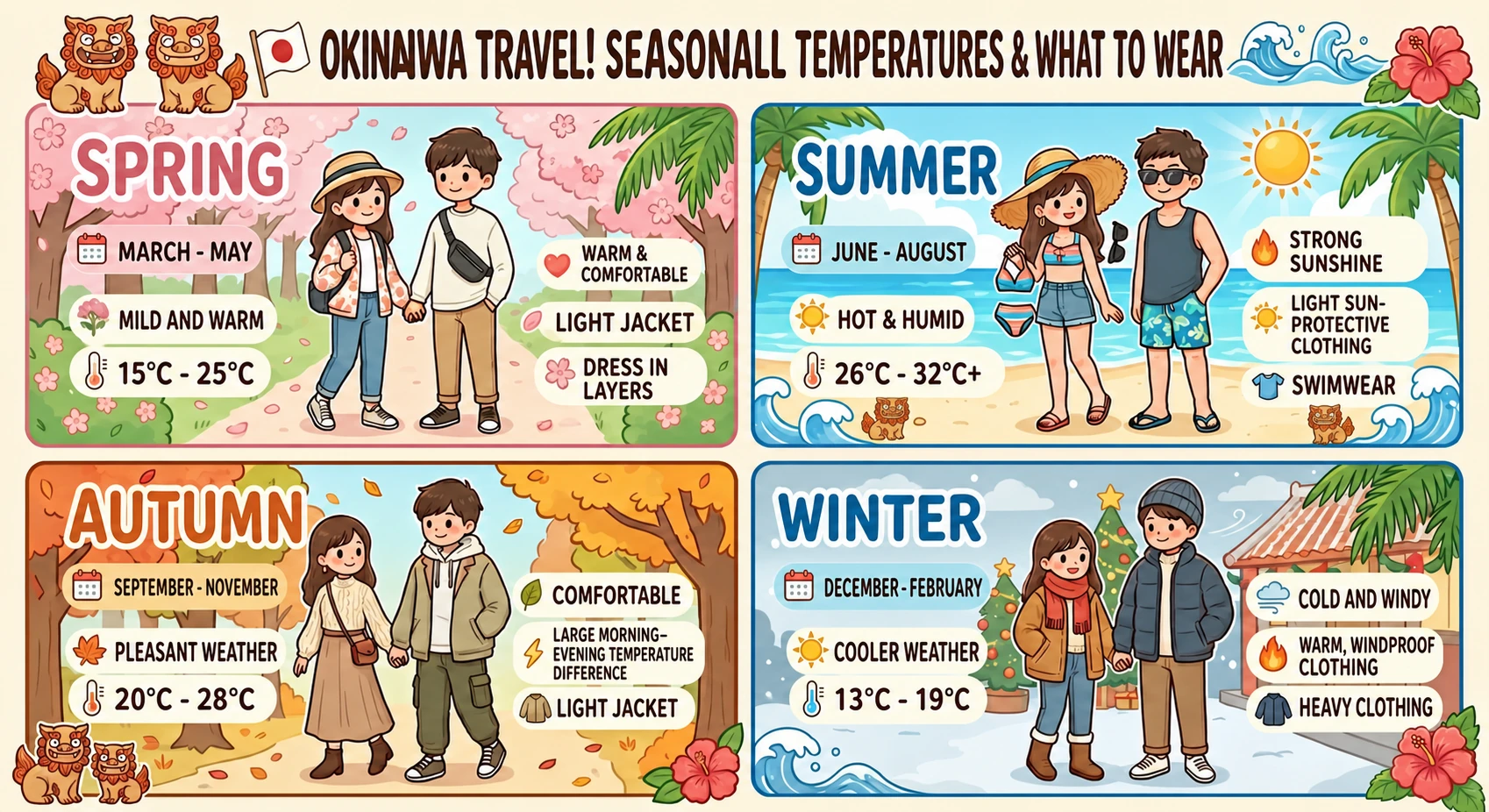
Okinawa seasonal temperatures and what to wear guide
Overview of Seasonal Temperatures and Clothing (Refer to the original image); details are based on the table below.

Historical averages vary year by year; check the forecast and typhoon updates 3–5 days before departure.

SeasonTemperature (approx.)Clothing Recommendations
Spring: March to MayApproximately 19–24°CLayered clothing; short sleeves/thin long sleeves during the day, light jacket for early morning and evening; May has more rain, so bring rain gear.
Summer: June to AugustApproximately 27–32°CShort-sleeve shirts, shorts, and sandals; sunscreen, sunglasses, and sun hats; a lightweight jacket for indoor air conditioning; be aware of afternoon thunderstorms and typhoons.
Autumn: September to NovemberApproximately 23–28°CSeptember is still quite summer-like; in October and November, a light long-sleeve shirt plus a windbreaker is comfortable and often more cost-effective.
Winter: December to FebruaryAround 15–20°CLong-sleeve sweater and long pants; windbreaker or light down jacket; a hat/scarf may be needed at the beach due to strong winds. Check for seasonal activities like whale watching.

Driving in Japan: which documents are accepted?

For car-rental options, see Okinawa Car Rental. For bus routes, check Okinawa Bus.

To drive in Japan, bring an official 1949 Geneva Convention IDP issued by your home country, your original driver's license, and your passport. Unofficial online “international driver's licenses” are not accepted. Apply before departure and check the Tokyo Metropolitan Police guidance before booking.

  • Drive on the left, with the driver's seat on the right; the positions of the turn signals and wipers are often opposite to those in your departure country—familiarize yourself before hitting the road.
  • Mnemonic: 'Left turn for small bends, right turn for large bends.'
  • Navigation: Google Maps + car navigation; when searching with map codes or phone numbers, be aware that 'office address ≠ store' to avoid mistakes.
  • If you don't want to drive: You can take a sightseeing bus or a day tour with pick-up service (less flexible, but saves on parking and navigation).

🚌 Okinawa tours

2

Complete Pre-Departure Checklist

Review Before Departure

Check your documents, internet access, and luggage before leaving to avoid any last-minute issues at Naha Airport. Go through the checklist item by item and pay attention to the documents needed for driving.
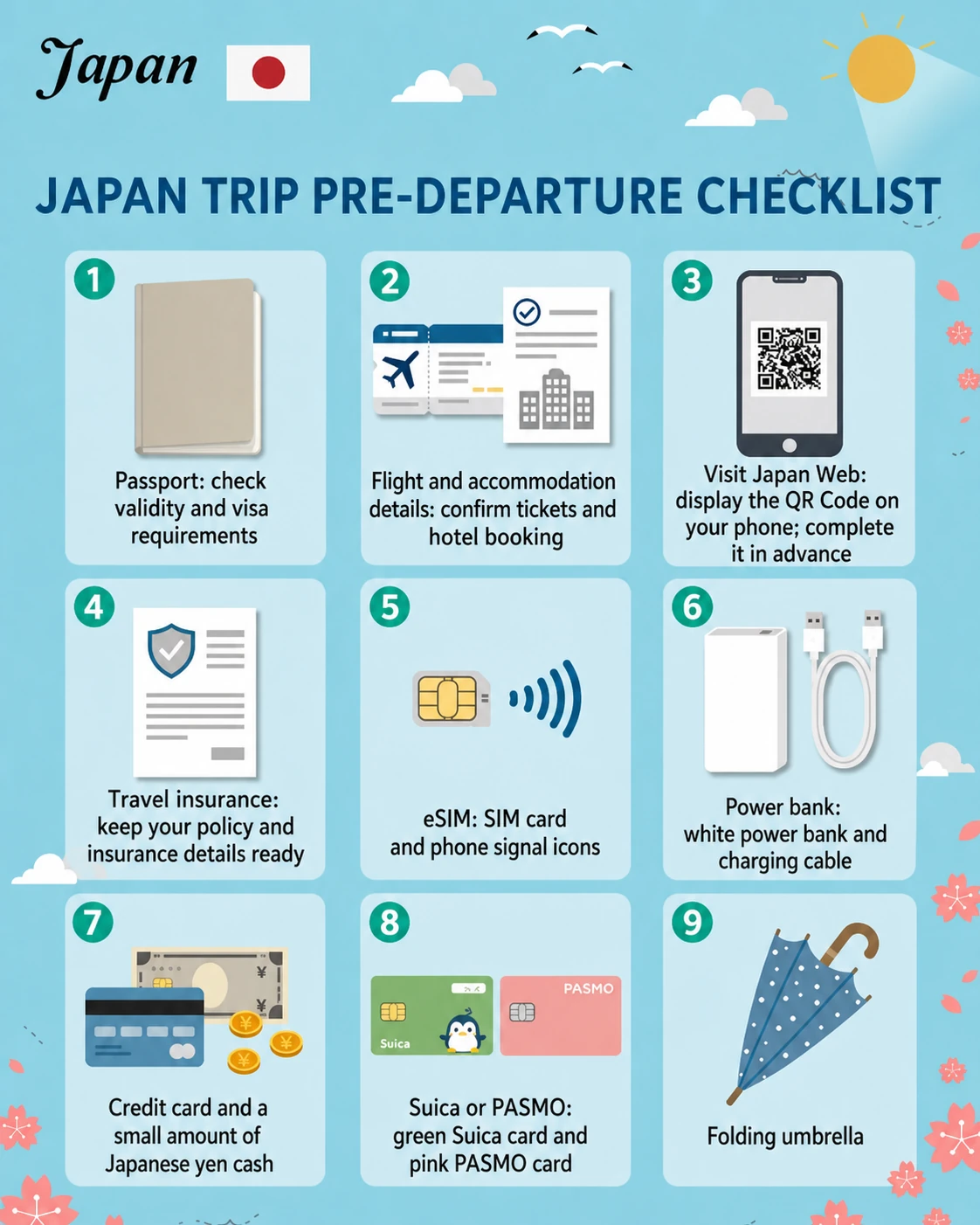
First, take care of these three items.: Passport and Visit Japan Web, internet (eSIM / SIM card), drivers should remember Official 1949 Geneva Convention IDP + original driver's license + passport. Other details can be added later.
Japan trip pre-departure checklist
Go through the checklist before departure to feel more at ease on-site.

Pre-trip preparation checklist

Documents and Entry

  • Passport validity, flight tickets, and accommodation information (recommended to have at least 6 months validity from the date of return)
  • It is advisable to complete in advance Visit Japan Web(Subject to official regulations)
  • Travel inconvenience insurance (baggage, medical); evaluate full insurance/NOC for car rentals
  • Driving documents: Bring an official 1949 Geneva Convention IDP issued by your home country, your original driver's license, and your passport. Obtain the IDP before departure; unofficial online “international licenses” are not accepted. See the official rules.

Internet and Electricity

  • eSIM/Wi-Fi card/choose one (navigation while driving requires internet)
  • Japan uses 100V, most your departure country chargers can be used directly
  • Power bank: useful for transfers, waiting in line, and at the beach

Money and payments

  • Credit card + a small amount of cash (for snacks, shrines, rural areas; prepare 1,000 yen bills)
  • Mobile transportation IC cards can be linked in advance (Naha Yui Rail / convenience stores for small amounts are also commonly used).
  • PayPay and similar apps are useful, but don't rely on them as your only payment method.
  • Foreigners can use discounts / coupons at:A guide to discounts / coupons in Japan.

Luggage and clothing.

  • Comfortable shoes: You'll need them for the beach, ruins, and American Village.
  • Sunscreen, sunglasses, and a light jacket (indoor air conditioning can be strong); water shoes for snorkeling.
  • Foldable umbrella: Afternoon thunderstorms and rainy season are quite common.

Starting November 2026: Major changes to Japan's tax refund system (tax first, refund later)

If your itinerary falls within After November 2026, the tax refund process for shopping in Japan has changed, so be sure to clarify it before your trip to avoid confusion at the airport. Previously, if you spent over 5,000 yen and showed your passport at checkout, you could receive an immediate tax deduction;Starting from November 1, 2026, "on-site tax refunds" will be completely discontinued, and will be replaced bytax first, refund later.When shopping, pay the tax-inclusive price first, and then handle the tax refund at the airport upon departure to get your tax back.

  • Checkout:Price includes tax; provided by the store. J-TaxRefund Website / QR Code registration for passport and payment methods (credit card, bank account, or cash, subject to on-site conditions).
  • Departure: Complete the inspection at the airport self-service kiosk (KIOSK) or customs counter. After confirming eligibility for tax exemption, the refund will be credited to the designated account.
  • Time: Airport tax refunds usually require more waiting in line, so it's recommended to allow ample time compared to the old system to avoid missing your flight.
More traveler-friendly places: The previous restrictions on the classification and purchase limits of general items/consumables have been lifted, allowing for greater shopping freedom; the requirement for duty-free items to be sealed in bags and not opened before departure has also been abolished—drugstore items and snacks can be opened on the same day. However, please note:Starting August 2025, the "additional shipping" option will be canceled.Duty-free items must be carried out of the country by the purchaser or shipped directly from the duty-free shop to their home country; they cannot be taken out by someone else. Additionally, Japan has announced that starting July 2026, the departure tax(International Tourism Tax) will increase from 1,000 yen to 3,000 yen.However, this will not affect your tax refund eligibility, but it may increase your entry and exit costs, so consider adding it to your budget.

Details and updates are subject to official or on-site information; for a comprehensive understanding of the process, you can read:Introduction to Japan's New Tax Refund System

Luggage packing and prohibited items reminder

Before departure, double-check what you can bring, what you cannot check in, and what you cannot bring into the country. It's better than being stopped at the airport or having items discarded.

  • Power banks and lithium batteries: According to civil aviation regulationscannot be checked in, they must be carried on board. Capacity below 100Wh(Approximately 27,000mAh) Most can be placed directly in carry-on luggage;100–160Wh Prior approval from the airline is required, with a maximum of two per person;Over 160Wh is prohibited.For power banks with unknown brands or no capacity markings, some airlines may require disposal—confirm specifications clearly before departure. It's also recommended to carry small items with built-in lithium batteries, such as electric shavers and wireless earphone charging cases.Carry-onAvoid checked baggage being stopped.
  • Food entry (Japan customs is strict): Fresh fruits andAll meat products are strictly prohibited.This includes meat buns, jerky, ham, and meat-containing instant noodles. Violators may face hefty fines. Products with moisture (such as peanut tofu, sea grapes, jelly, etc.) are mostly classified as liquids/semi-liquids, remember to packChecked baggageNot carry-on (subject to the 100ml liquid rule as per airline/security regulations).
  • Essential itemsIt is recommended to carry cold medicine, stomach medicine, pain relievers, and band-aids. Most supermarkets in Japan charge for shopping bags, so bringing a lightweight reusable bag is practical; a thermos is also useful for staying hydrated while out. In Okinawa, consider bringing sunscreen, insect repellent, and snorkeling shoes.
Airline and customs regulations may change, so refer to your airline and the current announcements from Japanese customs/quarantine. If you're unsure about bringing certain foods, it's safer to buy them in Japan to avoid fines.

Mobile Binding Guide: Suica/ICOCA

In Japan, many people use transportation IC cards for train rides and small payments at convenience stores. Binding it to your phone means you can carry fewer cards; if you can't bind it, you can always buy a physical card. Commonly used in the Tokyo area. Suica/PASMOCommonly used in the Kansai area. ICOCA— Most cards can be used interchangeably across regions; Okinawa's Yui Rail and some stores also support IC cards, but the issuance and top-up interfaces may vary depending on the card type.

  • Suica (including Apple Wallet, etc.)You can usually add your iPhone to "Wallet"; see the steps and precautions at Suica mobile binding tutorialAndroid devices in your departure country often cannot use the official digital Suica, so consider purchasing a physical card or checking available options at the moment.
  • ICOCA + Apple PayIf departing from Kansai or if you already need ICOCA, refer to ICOCA Apple Pay tutorial Operation. Device/system version and regional restrictions are based on official guidelines.
  • Useful remindersBefore departure, check if you can add a card and the top-up methods (credit card/cash top-up machine); if your phone is dead, you won't be able to use it, so consider having a physical card or cash on hand. The balance can be used for small payments at convenience stores and some vending machines.
The model, system version, and airline/telecom settings may affect the binding process. The tutorial page will be updated, so refer to the latest instructions linked within; if binding fails, don’t worry, you can still purchase a physical IC card at the airport or station.

Climate attire and local etiquette (Okinawa)

For detailed seasonal charts and images, see Getting to Know Okinawa: A Beginner's GuideHere are the key points to remember:

  • Strong UV rays: sunscreen, sunglasses, light jacket; bring water shoes for snorkeling.
  • Eat while walking; take your trash back to the hotel (there are few trash cans on the street).
  • Hot Springs / Stone Baths: Please wash before entering, towels are not allowed in the pool.
  • Be aware of typhoons from July to September; book accommodations and tickets with flexible cancellation options.

Check the official website / entry requirements before departure (take care of these first).

The following are official or semi-official entry points; links may change, so refer to the on-site information. Spend 15 minutes before departure to avoid stress at the airport.

Useful Apps for Traveling in Japan (Recommended to install before departure)

No need to install everything. Essential recommendations: maps, translation, transportation check, payment/IC. Below are links for iOS/Android; the store pages will depend on your device's region.

Entry

Visit Japan Web

You can complete this in your browser; an app is not necessary. Official website:vjw.digital.go.jpFill out everything before landing for a smoother experience.

Map

Google Maps

Walking, Yui Rail, and store hours are sufficient; driving navigation is the main option. You can download offline maps as a backup.
App Store |  Google Play

Transfer

Japan Travel by NAVITIME

The Shinkansen, private railways, and subways are tourist-friendly; you can also check for inter-island transfers as a backup.
App Store |  Google Play

Translation

Google Translate

Using your camera to capture menus and conversation mode is quite common; you can download the Japanese offline language pack in advance.
App Store |  Google Play

Transportation IC

Suica/PASMO (Mobile)

iPhones can usually add Suica/PASMO in the 'Wallet' app. Android devices from your departure city often cannot use digital cards, so it's better to buy a physical card. The balance can be used for small payments.

Ride-hailing

GO(タクシー)/Uber

Use an app to call a taxi when it's hard to catch one during peak times, or if you have a lot of luggage or children. GO is commonly used for taxis in Japan.
GO · App Store |  Uber · Play

Communication

eSIM / Airline App

Get your internet sorted first (see the eSIM section above). Check flight updates through the airline app notifications, which are more reliable than just looking at the airport screens.

Restaurants

Tabelog/Hot Pepper

Find shops and read reviews; for popular places, check reservation methods in advance. Search for '食べログ' or Tabelog to find stores.

The order I often use for planning days:Naha Airport / Transit to Central or Northern Okinawa → Enjoy water activities by the beach → Buy souvenirs in Naha before departureFirst decide where to stay, then whether to rent a car, and finally fill in attractions and restaurants.
3

Geography and Regional Division of the Main Island

How to Divide South, Central, and North
Okinawa main island travel map showing the northern, central and southern regions and key attractions
Relative Locations of South/Central/North (Original Image)

Common Mistake in First-Time Scheduling: Trying to Visit South and North on the Same Day. Even without traffic, it often takes over 2.5–3 hours to travel from South to North—establish a sense of distance before booking accommodations.

AreaCoverage (e.g.)Travel time from Naha (approx.)Travel features
Naha city centerKokusai Street, Shuri Castle, Shintoshin, Sakaemachi MarketCity area / Yui Rail access to main attractionsNo need for a car base; shopping, food, and culture; often visited at the beginning and end of the day
Southern regionSenaga Island, Nanjō, Itoman, Gyokusendo Cave, Chinen Cape, Peace Memorial ParkAbout 20-30 minutes (closer to the airport)Seaside cafes, Ryukyu culture; perfect for half a day to a full day
CentralAmerican Village, Yomitan, Onna, Ginowan, Blue Cave, Manzamo, Cape ZanpaAbout 30-45 minutes (highway about 25-35)Resort hotels are abundant, American style, diving spots
Northern region (Yambaru)Nago, Motobu (Okinawa Churaumi Aquarium), Kouri Island, Nakijin, BiseApproximately 70–90 minutes (high-speed about 60–75)Family-friendly and nature; World Natural Heritage Yambaru; recommended for a full day
Planning Tips: Center your itinerary around your accommodation, grouping attractions in the same area on the same day. If staying in Onna, you can visit the Blue Cave, American Village, and Yomitan. If you're making a day trip from Naha to the aquarium, please leave early and allow at least 1.5 hours for the return trip (traffic jams are common in summer). Naha and Urasoe can be congested during peak times and holidays, so allow 15-20 minutes between attractions.

📍 Okinawa Main Island Area Distribution and Travel Time Guide

Understand the relative locations and travel times from north to south

🌳 Northern Area (Yambaru)
Okinawa Churaumi Aquarium, Kouri Island, Nakijin Castle Ruins, Bise Fukugi Tree Road
🚗 Travel time about 40-60 minutes
🌊 Central Area
American Village, Blue Cave, Manzamo, Cape Zanpa
🚗 Travel time about 30-45 minutes
🛍️ Naha City
Naha Airport ✈️, Kokusai Street, Shuri Castle, Naminoue Shrine
🚗 Travel time about 20-30 minutes
🌅 Southern Area
Gyokusendo (Okinawa World), Senaga Island, Chinen Cape, Peace Memorial Park
4

Family Travel and Luggage

How to Plan with Kids

Traveling with children means a slower pace, more luggage, and hot weather. Below are some frequently asked questions from previous articles to help you prepare before departure.

Okinawa清澈海水與礁岩海岸風景
The biggest concern when traveling with kids is rushing the itinerary: choose a place with a "sea view" to maintain a manageable pace.

How to arrange by age

  • 0-2 years old: Balance rest and attractions. Stay at the hotel beach/pool; if parents can relax, it's a success.
  • 3-5 years old: You can add experiences or toddler-friendly parks, but still avoid over-scheduling. For outdoor beaches, try to go in the early morning or late morning to avoid midday sun exposure.
  • 6 years and older: Snorkeling, water activities, and Ryukyu cultural experiences are suitable; children's tickets are available, so budget accordingly.

How to choose the area

First, determine the "core" of this trip: a relaxing resort hotel or a must-visit like the Churaumi Aquarium—then choose the area to avoid unnecessary detours.

Recommended number of days

Highly recommended 4 days 3 nightsMore relaxed. 3 days 2 nights can cover the highlights but may feel rushed; the first and last days are mostly spent on travel. If possible, minimize hotel changes and luggage.

Transportation is highly recommended

Traveling with childrenThe most flexible option is to rent a car.(You can continue driving while asleep or make temporary stops). Please allow extra time for peak traffic in Naha. If you prefer not to drive, you can take the airport express bus to the resort; use the Yui Rail in the city.Be sure to book in advance.During peak season, it often gets fully booked.

How to choose accommodation?

Resort hotels are more suitable for families; prioritize "family-friendly / children welcome," baby crib and equipment rentals. Hotels with good pools are almost unanimously recommended by experienced parents.

On-site emergencies

  • Motion sickness / fever: Bring motion sickness medication, plastic bags, and wet wipes; it's time-consuming to find fever-reducing medicine in a foreign place.
  • The beach is too hot in summer.: Lunch at the hotel kids' pool / Kids Space / DIY experience.
  • The child is afraid of the sea.: Don't force it; build confidence at the pool first.
  • Dinner is fully booked.: Make a reservation in advance; prioritize places with children's meals or family-friendly options.

Traveling with Kids

  • Clothing and OutingsChange of clothes, light jacket (for sea breeze + indoor air conditioning), sneakers, hat, rain gear, stroller/carrier.
  • Medicine, Sunscreen, and Insect RepellentBand-aids, thermometer, fever patches, insect repellent, sunscreen - it's easier to prepare these in your departure country.
  • Food and Others: Familiarize yourself with snacks and water bottles; check with the hotel about swim diapers/swimwear regulations before departure.
Packing Progress
0 / 0
✈️ All packed! Off to Okinawa Okinawa!
👕
Clothes, Stroller, and Outing Accessories
The sea breeze in Okinawa can be strong in the mornings and evenings, and the indoor air conditioning is quite strong, so a light jacket is useful almost every day.
0 / 8
💊
Medicines, Sunscreen, and Insect Repellent
Having these items ready in your departure country saves a lot of hassle; finding them in Japanese drugstores can be time-consuming due to language barriers.
0 / 6
🧴
Cleaning and Daily Essentials
Each item is small, but missing any one can be a hassle.
0 / 7
🍼
Feeding, Baby Food, and Cleaning Supplies
The more prepared you are, the easier it is to dine out with kids.
0 / 8
🏖️
Water Gear, Snacks, and 3C Charging
Going to Okinawa Okinawa without visiting the beach is missing out on half the fun; confirm sizes for these items a week in advance.
0 / 8

Trip offers an exclusive 6% discount code: 【goodx4s94】 (no minimum purchase)

The tickets below can be purchased at prices lower than other platforms (not applicable for day trips)

5

Naha Airport and Yui Rail

How to get around upon arrival

Airport transit options:Naha Airport transportation overview

After arriving in Naha, first decide: join a transfer or day tour, or take the Yui Rail into the city.

NahaYui Rail車廂與月台
When not driving, the Naha Yui Rail is the backbone—make sure to manage your luggage and the crowd on the platform.

Self-driving travelers

  • At the terminal or rental-car shuttle, follow the operator's instructions; carry the official 1949 Geneva Convention IDP, original driver's license, and passport.
  • After picking up the car, set the navigation, and confirm the fuel and return policies; drive slowly out of the airport area on the left side.

If not driving: Yui Rail
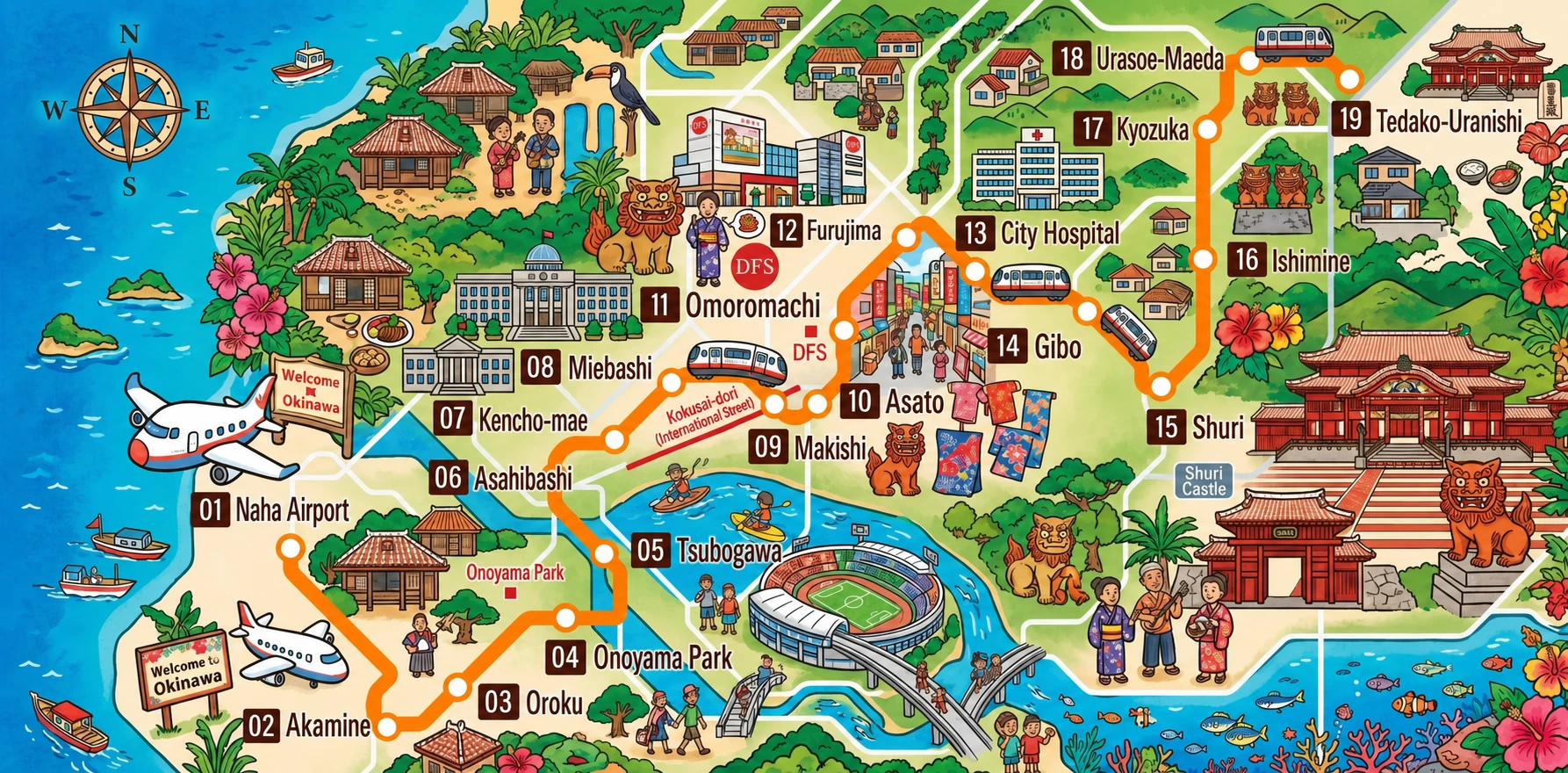
Okinawa Yui Rail route map with stations 01–19
Yui Rail station map (original image); schedule and ticket prices are subject to official information.
  • Connects the airport with major stations in Naha, serving as the backbone for those not driving.
  • Payment: One-way ticket or transportation IC (depending on the site); keep an eye on your luggage when it's crowded.
  • The line passes by Kokusai Street, Kencho-mae, Makishi, Shuri, etc. - staying in downtown Naha is very practical.

Others

  • Taxi: Convenient for short distances but more expensive than in Taipei; consider if you have a lot of luggage or people.
  • Bus (Okinawa Bus) / Day trip: A primary option for those in the central and northern regions without a car.
  • Return trip: Allow time for the airport (car return, fuel, peak traffic).
Ticket prices, schedules, and platforms are subject to the latest announcements from Naha Airport and Yui Rail.

TOCOO offers a special discount of ¥1000

Discount code: TCAFAW

※ Valid for car rentals over 10,000 yen
※ No expiration date

Okinawa car rental

Complete Guide for Beginners on Okinawa Yui-Rail

Naha Airport Station is directly connected to the airport terminal. It takes about 3 to 5 minutes to walk to the platform via the second-floor connecting passage, without needing to exit or transfer, making it very convenient for travelers with luggage.

Tickets and Payment Methods

Single tickets can be purchased at automatic ticket machines. If you plan to ride more than three times in one day, it is highly recommended to buy a “one-day pass,” which is valid for 24 hours from the first entry. Given the density of attractions in Naha, you will almost always get your money’s worth.

The Okinawa Yui-Rail fully supports Japanese transportation IC cards like Suica and ICOCA, as well as the locally issued OKICA, allowing you to enter by simply tapping your card, saving you time from queuing for tickets.

Key Stations Along the Yui-Rail Line

Yui-Rail connects almost all the must-visit places in Naha, making it easy to have a fulfilling itinerary even without renting a car:

Asahibashi Station The Naha Bus Terminal is located at this station, making it an important transfer point for travelers looking to take sightseeing buses to central or northern Okinawa.

Kencho-mae Station / Miebashi Station / Makishi Station These three stations are adjacent to Naha’s busiest shopping districts. For detailed nearby activities, refer to the Naha Kokusai Street attractions and food guide.

Asato Station If you want to experience the traditional local life of Okinawa, Sakaemachi Market near Asato Station is the best place to visit at night, popular among locals far more than tourists.

Omoromachi StationThis is the core station of the Shintoshin shopping district, with the DFS duty-free shop and several large malls within walking distance, making it the top choice for non-car renters. Shuri Station

The historical site of Shuri Castle from the Ryukyu Kingdom era is located near this station, representing a UNESCO World Heritage site in Okinawa, and is almost a must-visit on a day trip to Naha. 

Klook.com
klook

Bus Routes from Naha Airport: A Guide to Okinawa

If your destination is not along the Yui Rail line or if you want to head directly to central or northern attractions from the airport, the bus system at Naha Airport is actually more comprehensive than many people think. The bus boarding area is located outside thedomestic terminal on the first floor, and you can reach it by walking about 2 minutes following the “バス乗り場” signs.

The airport buses in Okinawa are generally divided into two types:route buses, which are regular buses that stop at multiple stations and have lower fares; and the Limousine Bus (リムジンバス), which is a comfortable bus with fewer stops, spacious seating, and luggage storage space, making it especially suitable for travelers with large bags heading directly to their hotels. Below is a breakdown by destination area.

Klook.com
klook
Klook.com
klook
Klook.com
klook
Klook.com
klook

📍 Naha City

Naha City is compact with frequent services, so the Yui Rail is usually the faster option. However, if your accommodation is not along the rail line, taking the bus is also a viable choice.

TypeDestinationRecommended ItineraryTravel Time ReferenceTicket Price Reference
Local busKokusai Street, Prefectural Office FrontNaha Bus No. 25 / Ryukyu Bus No. 23About 25 to 35 minutesAbout 260 yen
Local busShintoshin (Kagomachi)Naha Bus No. 25About 40 minutesAbout 290 yen
Limousine Bus.Main hotels in Naha CityNaha Airport Limousine Bus (Nahan Liner)About 30 to 45 minutesAbout 500 yen

The Limousine Bus route “Nahan Liner” in Naha City stops at several major hotels in the area. If you’re staying at a hotel along the route, it’s very convenient to take your luggage directly to the door without needing to transfer.

📍 Central (American Village, Okinawa City direction)

Direct access from the airport to the central area is a common need for many independent travelers, with both route buses and Limousine Buses offering options.

TypeDestinationRecommended ItineraryTravel Time ReferenceTicket Price Reference
Local busMihama American Village (Chatan)Ryukyu Bus No. 28About 60-75 minutesAbout 760 yen
Local busOkinawa City (Koza)Ryukyu Bus No. 90 / Naha Bus No. 110About 60 to 80 minutesAbout 800 yen
Limousine Bus.Chatan and Okinawa City HotelsChubu Airport Limousine (to Chubu Area)Approximately 50 to 70 minutesApproximately 1,000 yen

Traffic can get congested during peak hours in the central region. If you’re staying in Chatan or Okinawa City, the advantage of the Limousine Bus stopping right at your hotel becomes even more apparent. If you’re on a tight schedule, consider renting a car, or if you’re traveling with a group, sharing a taxi can help reduce costs.

📍 Northern Region (Nago, Ocean Expo Park direction)

Taking a bus from Naha Airport to the northern region requires some patience due to the longer travel time, but it remains a viable option for travelers who do not rent a car. The Limousine Bus in the north mainly serves Nago City and some resort hotels, with fewer departures than in the central and southern regions, so be sure to check the schedule before you go.

TypeDestinationRecommended ItineraryTravel Time ReferenceTicket Price Reference
Local busNago Bus TerminalHigh-speed bus No. 111Approximately 90 to 110 minutesApproximately 1,540 yen
Local busOkinawa Churaumi Aquarium (in front of Memorial Park)Express bus 117, transfer to 65/66 in NagoAbout 2.5 to 3 hoursStarting from around 2,000 yen
Local busAround the ruins of Nakijin CastleTake the Highway Bus No. 111 to Nago, then transfer to No. 66.Approximately over 2.5 hours.Approximately over 1,800 yen.
Limousine Bus.Nago City and Northern Resort Hotels.Northern Airport Limousine (for the Northern Area)Approximately 100 to 130 minutesStarting from around 2,000 yen

Bus services to the northern area are infrequent, with some routes having only a few departures a day. If traveling with two or more people, renting a car for the northern route is more cost-effective and flexible. The attractions around the Churaumi Aquarium are also more spread out, so having a car greatly increases your freedom.

🚌 Useful tips before taking the bus:

Okinawa route buses are available.Board at the front and exit at the back.When boarding, take a numbered ticket and pay cash according to the ticket number displayed when getting off. Some routes support IC cards like OKICA or Suica, but they are not universally accepted, so it’s advisable to carry some change. The Limousine Bus generally has a fixed fare, and some routes allow for advance ticket purchase or online reservations; it’s recommended to confirm in advance during peak seasons.

You can use the following tools to check schedules:

  • Google MapsEnter your departure and destination to find public transport routes and transfer information.
  • Okinawa Bus Information Service (www.okinawabus.com): The official bus inquiry platform for Okinawa, providing the most comprehensive information.

※ Ticket prices and schedules are subject to on-site announcements and official information. It is recommended to confirm again before departure to avoid any schedule changes affecting your itinerary.

See the detailed guide
6

Attractions & Food Guide

Dynamic Categories & Special Articles

Below are the internal linksAttractions + Food Guide

Okinawa神社參道與石燈籠風景
Shuri, shrines, and Ryukyu cultural attractions: Walking through the approach and stone steps offers a rhythm completely different from the beach.
Okinawa main island travel map showing the northern, central and southern regions and key attractions
The main island is long and narrow: Establish a sense of distance between Naha, the south, the central region, and the north.
Naha and Shuri

Tourism hub

Kokusai Street, markets, Shuri Castle; Yui Rail is convenient, perfect for a day trip.

Southern Region

Seaside and Culture

Senaga Island, Nanjō, Itoman, Gyokusendo; close to the airport.

Central Region

American style and West Coast

American Village, Onna, Blue Cave, Manzamo; dense with resorts.

Northern region

Aquarium and Yanbaru

Okinawa Churaumi Aquarium, Kouri Island, Nakijin; recommended for a full day.

Attractions & Food Guide (Dynamic Classification)

Click the tags to filter, then click the card for the full article.

Recommended attractions and food in Southern Okinawa

Senaga Island, Sefa Utaki, Gyokusendo Cave, closest to the airport

Southern RegionAttractionsFood
Read the complete guide

One-day self-drive tour of Okinawa's Central East Coast

Nakagusuku Castle Ruins, Ocean Road, Aeon Mall Okinawa Rycom

Central RegionAttractionsFood
Read the complete guide

How to explore the northernmost part of Okinawa? Must-visit attractions, must-try food, and transportation tips along the Yanbaru coastline.

Must-visit spots and local eats along the northern coastline.

Northern regionAttractionsFood
Read the complete guide

Must-visit attractions in Nago, Okinawa: JUNGLIA Park, Kouri Island, and Nakijin Village...

JUNGLIA, Kouri Island, Nakijin

Northern regionAttractionsFamily-friendly
Read the complete guide

Okinawa Travel: Popular family attractions in Nago, must-try food, and Ocean Expo Park guide

Family attractions, Ocean Expo Park, must-try food

Northern regionFamily-friendlyFood
Read the complete guide

Okinawa's West Coast Highway 58 attractions and food: Cape Zanpa, Blue Cave, Manza...

Cape Zanpa, Blue Cave, Manza Point

Central RegionAttractionsFood
Read the complete guide

Okinawa Central Route 58 Self-Driving Guide 2026

American Village, PARCO CITY, Urasoe

Central RegionShoppingFood
Read the complete guide

Naha Sakaemachi Market・Shintoshin 2026

Market and shopping transportation

NahaFoodShopping
Read the complete guide

2026 Okinawa Free Travel: Must-Eat, Must-Buy, Must-Visit Guide for Kokusai Street

Complete guide for must-eat, must-buy, must-visit

NahaAttractionsFoodShopping
Read the complete guide

Naha Kokusai Street Izakaya 2026

Kokusai Street Dinner Map

NahaFood
Read the complete guide

Recommended Okinawa Grilled Meat 2026

Kokusai Street Grilled Meat Map and Prices

NahaFood
Read the complete guide
7

Days and Itinerary Framework

3/4/5/7 Days
Okinawa開闊公路與山海風景,適合自駕行程示意
How to divide driving days: Don't cram both north and south into the same day; the road scenery is beautiful, but travel time takes longer than expected.

Suitable for: Travelers with limited vacation time who only want a weekend getaway plus an extra day off, or those simply looking to enjoy barbecue and shopping.
Transportation: Mainly using the Yui Rail, with a sightseeing bus tour on Day 2 and supplementing with taxis on Day 3.

Day 1: City Shopping and Barbecue Night
Upon arriving at Naha Airport, take the Yui Rail directly to your hotel for check-in. In the afternoon, explore attractions and food along Kokusai Street, and in the evening, enjoy a pre-booked barbecue dinner on Kokusai Street to recharge for the next two days.

Day 2: Ocean Expo Park Bus Tour
Meet at the designated location provided by the tour operator (available through Klook or KKday; please confirm the meeting point after purchasing tickets, most are in Naha). The entire trip is hassle-free, heading north directly to the Ocean Expo Park and the Churaumi Aquarium, where you can marvel at the giant tank of the Kuroshio Sea. On the return trip, most tours will stop at Manza Beach or American Village, returning to Naha in the evening. End the day by exploring Sakaemachi Market or a popular izakaya in Naha for a taste of local nightlife.

Day-trip itinerary
Naha → Manzamo → Kouri Island → Ocean Expo Park → American Village → Naha

Day 3: Shuri Castle Culture → Shintoshin Shopping Spree → Airport
In the morning, take the Yui Rail to Shuri Castle and immerse yourself in the history of the Ryukyu Kingdom (recommended visit time is about 1.5 hours). In the afternoon, head to Shintoshin for a shopping spree, where you can stock up on drugstore items, clothes, and duty-free goods all at once. ⚠️ The ride from Shintoshin to the airport on the Yui Rail takes about 30 minutes, so it’s recommended to finish shopping and leave at least2.5 hours before your flightto allow time for check-in, baggage drop, and security checks.

Suitable for: Travelers who do not want to drive (or do not have an international driver’s license yet) but are eager to visit the beautiful Okinawa Churaumi Aquarium in the north or the American Village in the central region.
Transportation: Yui Rail, combined with a Klook/KKday day tour bus to the central and northern regions.

Day 1: Shopping in Shintoshin and Izakaya Nightlife
After arriving at the airport, take the Yui Rail directly to Shintoshin. While you have the energy, get your drugstore items, clothes, and duty-free goods all at once. In the evening, choose a popular izakaya in Naha to experience authentic Okinawa nightlife and recharge for the next three days of your itinerary.

Day 2: Day Tour to the Central and Northern Regions by Sightseeing Bus (Highly Recommended!)
Meet at the designated location specified by the tour operator (each operator has different meeting points, so please confirm after purchasing tickets; most are in Naha city or near Asahibashi Station), with no need to plan the route yourself. Travel north directly to the Okinawa Churaumi Aquarium and Ocean Expo Park, with stops on the return trip at Manza Beach and the American Village, and return to Naha city in the evening, all without the stress of driving on the right side.

Day-trip itinerary
Naha → Manzamo → Kouri Island → Ocean Expo Park → American Village → Naha

Day 3: Southern Cultural Attractions Leisure Tour
Head to southern Okinawa to explore the spectacular stalactite cave of Gyokusendo (about a 40-minute drive from Naha city). ⚠️ Bus services are infrequent, and the journey takes over 1 hour. It is recommended to book a half-day tour with pickup through Klook or use a taxi to avoid wasting too much time waiting for transportation. In the evening, return to the city and stroll along Kokusai Street in Naha to enjoy barbecue, experiencing a completely different atmosphere from Shintoshin.

Southern Okinawa day trip

Day 4: Kokusai Street Morning → Light Trip to Senagajima → Airport Home
Start your morning with breakfast on Kokusai Street and grab some last-minute souvenirs. Then, take the Yui Rail to Naha Airport and store your luggage in the coin lockers on the 1F/2F/3F of the airport (various sizes available; it’s recommended to arrive early to avoid them being full). Lightly packed, take a taxi to Senagajima (about 10 minutes, around ¥1,200) to snap some beautiful photos at Umikaji Terrace and enjoy a trendy pancake dish. ⚠️ It’s advisable to leave early on weekends due to long lines, and take a taxi back to the airport at least2.5 hours before your flight(about 10 minutes from Senagajima to the airport) to retrieve your luggage and check in, wrapping up your four-day Okinawa trip smoothly.

Suitable for: The standard number of days for a self-drive trip in Okinawa, perfect for families, couples, and anyone looking to experience 80% of the highlights of Okinawa Main Island.
Transportation: Self-driving throughout, with car pick-up and drop-off at the airport.

Day 1: Depart from the South, Stay in the Central Region
Pick up the car at Naha Airport and visit the southern attractions of Senagajima and Gyokusendo Cave. In the evening, drive north on Route 58 and check into a seaside resort hotel in the central region. Stroll around American Village at night to experience the most American vibe in Okinawa.

Day 2: Blue Journey on the Central West Coast
Focus on the central west coast! Head to Cape Zanpa in the morning for a sea breeze, and arrange for diving or snorkeling at the Blue Cave. In the afternoon, visit Manzamo, a classic sea-eroded plateau, where the ocean fills the entire frame.

Day 3: Family Day in Nago
In the morning, head to Kouri Island for shrimp rice and take photos at the heart-shaped rock. In the afternoon, visit the Nakijin Castle ruins, a UNESCO World Heritage site.

Family Suggestion 👶 For those with young children, after Nakijin Castle, you can visit the nearbyNeo Park Okinawa, which features areas like a wild boar ranch, Amazon jungle, flamingo lake, and African savannah, allowing close encounters with small animals. There’s also a vintage train that takes about 20 minutes to circle the park, making it very child-friendly. Alternatively, considerOkinawa Children’s Kingdom, where entry is free for children under 15. The park includes a zoo, a small train, and a carousel, so plan to spend at least 2 hours exploring. There are also nursing rooms and diaper-changing facilities available.

For those without young children, you can change the afternoon to visit JUNGLIA Park.

Day 4: Aquarium Shock → Shopping at Parco City → Naha
In the morning, head to the Okinawa Churaumi Aquarium and Ocean Expo Park, and plan to spend 2-3 hours mesmerized by the giant Kuroshio Sea tank. Depart south around 1:00 PM and stop by SAN-A Urasoe West Coast Parco City for shopping and a break. Parco City is open from 10:00 AM to 10:00 PM and is about a 15-minute drive from Naha Airport, featuring around 250 shops. The third floor has a Namco amusement area and VR experiences, while the rooftop terrace offers sea views and sunsets, making it enjoyable for both adults and children. After shopping, drive back to Naha and enjoy a leisurely stroll along Kokusai Street, treating yourself to some yakiniku. 

Day 5: City Exploration, Return with Satisfaction
In the morning, visit Shuri Castle and Shintoshin for last-minute shopping. ⚠️ It’s recommended to return the car at least3 hours before your flight(rental companies usually require 30-60 minutes for processing, plus about 15 minutes for the shuttle to the airport). If time is tight, you can shorten your visit to Shuri Castle and just take photos from the outside. Be sure to leave time to explore the duty-free area at Naha Airport, where there are plenty of souvenir options to choose from.


 Suitable for: Those who want to explore the hidden gems of Okinawa’s northernmost and eastern coasts, away from the typical tourist spots.
Transportation: Self-driving throughout the trip.
Accommodation strategy: Days 1-5 stay in the central area (Aeon Rycom lifestyle zone), Day 6 after exploring the north, move south for accommodation, and on Day 7, return the car at the final stop. Only one luggage transfer is needed, with a complete route from north to south around the island.

Day 1: Departing from the airport, leisurely travel to the central area
After picking up the car at the airport, head north to the first stop,Kankawa Foreign Residential Area, for a stroll and afternoon tea, experiencing Okinawa’s unique foreign-style coffee culture (⚠️ The surrounding alleys are narrow and parking is difficult; it’s recommended to park at a nearby paid parking lot and walk in). Next, head to Parco City in Urasoe for shopping. ⚠️ The two attractions may take up more time; if you arrive in Okinawa in the afternoon, it’s advisable to choose one and save energy for the evening visit to American Village. Arrive at the central hotel in the evening for check-in, then walk around American Village to enjoy the most American-style night atmosphere in Okinawa, officially starting the seven-day journey.

Day 2: Stunning East Coast Day, Ocean Road × World Heritage × Aeon
In the morning, drive across the spectacular Ocean Road, unlocking the World Heritage Site Nakijin Castle Ruins, then return to Aeon Mall Rycom in the afternoon for some serious shopping, satisfying both the blue skies of the east coast and shopping desires, and spend the night back at the central base.

Day 3: Dominating the West Coast Sea Views
Take Route 58 along the west coast, enjoy Cape Zanpa, and arrange a snorkeling experience at the Blue Cave. In the afternoon, visit Manzamo, letting the ocean fill the entire frame. Return to the central area in the evening for steak dinner before heading back to the hotel, and if there’s time, stop by Aeon to stock up on snacks and drinks.

Day 4: Relaxing Day in Nago, Kouri Island × Kima Village
Leisurely travel north from the central area, enjoying shrimp rice and taking photos of the heart-shaped rock on Kouri Island in the morning, then visit the Kima Village Castle Ruins in the afternoon to check in at the World Heritage Site. Alternatively, visit JUNGLIA Park in the morning and then head to Kouri Island for sunset; today’s pace is intentionally slower compared to the Day 6 rush in the north, returning to the central base for a leisurely dinner in the evening.

Family Suggestion 👶 For those with young children, after visiting the Kima Village Castle Ruins, you can head to the nearbyNeo Park Okinawa, which is divided into several areas including a wild boar farm, Amazon jungle, flamingo lake, and African savannah, where you can interact closely with small animals and feed them. There’s also a vintage train that takes about 20 minutes to circle the park, making it very child-friendly. Alternatively, you can chooseOkinawa Children’s Kingdom, which is free for children under 15, featuring a zoo, small train, carousel, and more; it’s recommended to reserve at least 2 hours for exploration, and there are nursing rooms and diaper-changing spaces available.

Day 5: Unlocking Okinawa’s Northernmost Point, Round Trip for the Day
Set off early to head straight to the northernmost point, experiencing the primal charm of the Yanbaru World Natural Heritage along the way. First, arrive at the Great Stone Forest and walk the trail for about 1.5 hours, then head to Cape Hedo to enjoy the magnificent cliffside sea views at the northernmost point of the main island. ⚠️ The round trip from the central area takes over 3.5 hours; it’s recommended to depart before 8:00 AM and start returning before 4:00 PM to avoid driving on mountain roads in the dark. Return to the central area for the last night, leisurely completing any remaining shopping at Aeon.

Day 6: Wrapping Up at the Beautiful Ocean, Moving South
In the morning, head to the Okinawa Churaumi Aquarium and Ocean Expo Park (suggested time: 2-3 hours). After finishing, instead of returning to the central area, head directly south along the west coast; if time permits, you can shop in Shintoshin. Arrive at the southern hotel in the evening for check-in, completing the only accommodation transfer. In the evening, explore Sakaemachi Market and local izakayas to celebrate the first night of the countdown to the end of the trip.

Day 7: Southern Culture → Afternoon Sea Views at Senagajima → Outlet Shopping → Return Car and Fly Back
In the morning, enjoy the southern area, visiting the sacred and tranquil atmosphere of the World Heritage Site, Shikinaen, and exploring the stalactite cave at Gyokusendo to experience Okinawa’s distinctly different earth charm. In the afternoon, head to Senagajima Umikaji Terrace for picturesque photos of the Greek-style white walls and enjoy a trendy pancake (⚠️ Expect long lines on weekends; it’s recommended to arrive early). Next, head to ASHIBINAA Outletnear the airport (about 5 minutes from Naha Airport) for last-minute shopping. ⚠️ Please complete shopping at least3 hours before your flight, return the rental car (allow 30-60 minutes for the process), and the shuttle to the airport takes about 15 minutes, wrapping up the island-hopping journey with wonderful memories.

8

Advanced Driving

Before and After Hitting the Road

Special Traffic Pitfalls to Note When Driving in Okinawa

Renting a car in Okinawa offers comfortable road conditions and beautiful scenery, creating a true vacation vibe. However, in Naha and certain specific areas, there are unique traffic rules that even locals from mainland Japan may not fully understand. If you don’t familiarize yourself in advance, you might get lost or take longer routes, and in the worst case, receive a fine. Spending five minutes reading this before you set off is the most basic responsibility to yourself and your travel companions.


🛑 Pitfall 1 | During peak hours on Kokusai Street, the left lane is restricted for general vehicles.

Restricted times: Monday to Friday 07:30 – 09:00, 17:30 – 19:00

During this time, the leftmost lane of major roads like National Route 58 and Kokusai Street will be designated for buses and taxis only, and rental cars are strictly prohibited from driving there.

It’s important to note that the lanes on Kokusai Street are already narrow, and with the leftmost lane designated for buses, the space for regular vehicles is very limited. If your navigation leads you to Kokusai Street during peak hours, it’s advisable to take an alternate route instead of trying to push through.


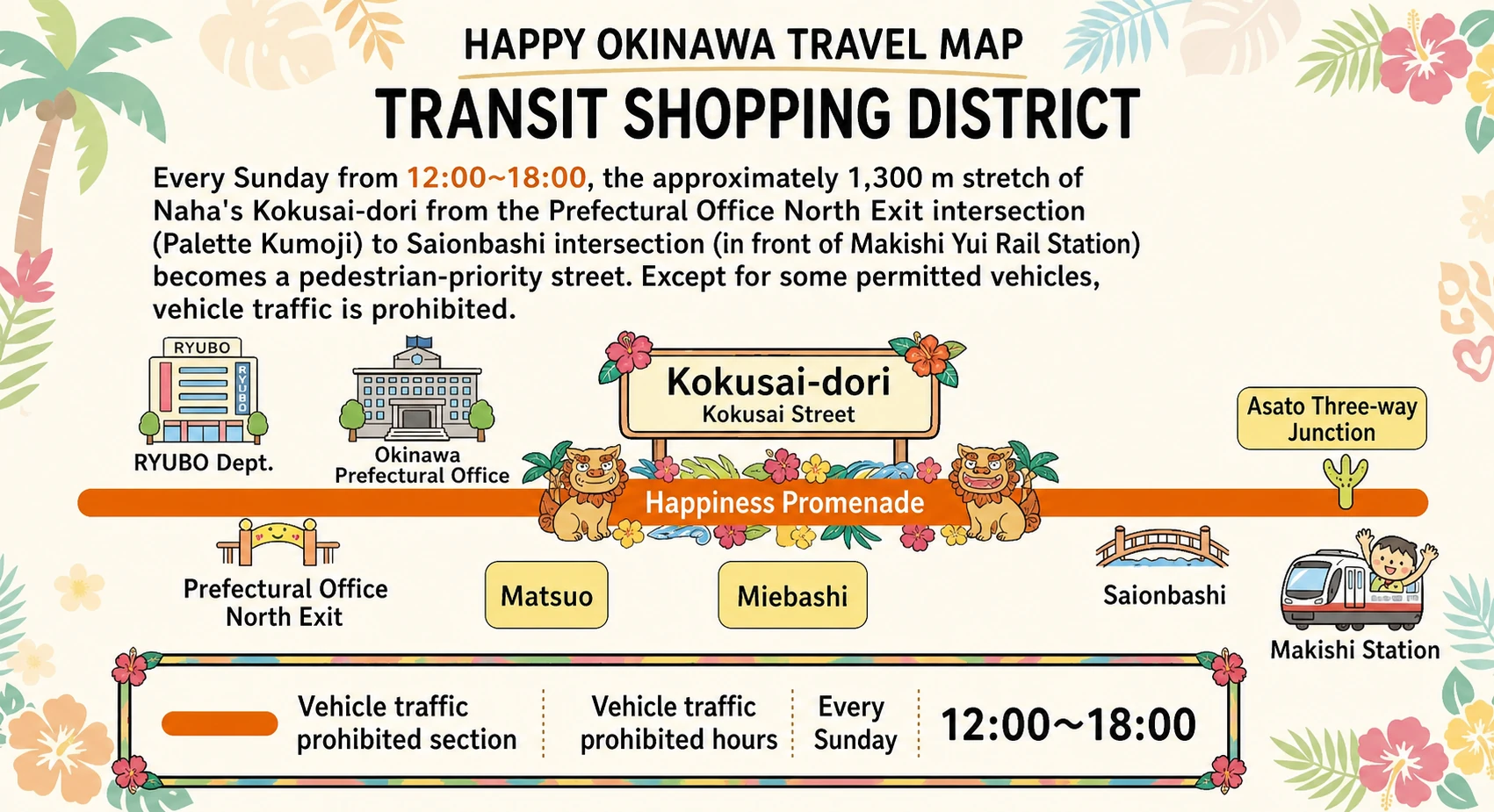
🛑 Warning 2|On Sunday afternoons, Kokusai Street is closed to traffic and becomes a pedestrian zone.
Happy Okinawa travel map・transit shopping district


Closure times: Every Sunday from 12:00 PM to 6:00 PM

The core section of Kokusai Street (from the Prefectural Office North Exit intersection to the Tsukasa Bridge intersection) is closed to vehicles every Sunday afternoon, becoming a pedestrian-friendly zone where general vehicles cannot enter.

If you’re driving in Naha City on Sundays, please adjust your navigation to detour mode in advance to avoid being led into the closed street by Google Maps.

(Regarding driving to Kokusai Street, to avoid trouble, I always take the outer roads.)


🛑 Warning 3|In Naha City, there is a ‘moving central line,’ so drivers need to understand the signals above.

日本中央線號誌

Some roads in Naha City (such as Prefectural Road 29) have implemented a rare ‘allocation lane’ system due to heavy traffic and fewer lanes. This means that the position of the central line changes according to the time of day, and the lanes you can use will also change.

When entering urban areas, be sure to pay attention to the overhead traffic signals and road markings to confirm whether the lane you are in is valid. If you are not careful, it is easy to drive in the wrong direction without realizing it, which is very risky.


🛑 Caution 4|If you encounter license plates starting with “Y, A, E” on the road, keep your distance.

美軍車牌

While driving in Okinawa, you will often see license plates starting with English letters, among which “Y”, “A”, and “E” are related to vehicles from U.S. military bases.

If these vehicles get into an accident, the subsequent handling and insurance claims will involve the U.S. military system, making the process much more complicated than a typical Japanese traffic accident. Keeping a safe distance from license plates starting with these letters is the easiest way to avoid issues.


🛑 Caution 5|During the Qingming Festival and Obon season, remember to avoid the “Yukita IC” when traveling to and from the northern region.

許田IC地理位置圖

Okinawa locals place great importance on traditional ancestor worship, and during these two festivals, the entire island is almost in full swing.

Key dates to note are the “Qingming Festival” in early April and the Lunar New Year “Obon” (from August 25 to 27 in 2026). During these periods, traffic congestion around the core intersection “Kyotan IC” when traveling between the central and northern parts of the island can be severe. If your itinerary coincides with these days, it’s advisable to leave at least an hour earlier than usual when heading to the Churaumi Aquarium.


🛑 Warning 6|On rainy days during rush hour, it’s best to avoid these routes.

Okinawa’s commuting heavily relies on private cars, and traffic jams in Naha city are a daily sight. The following routes are particularly prone to congestion during peak hours on weekdays: National Route 58 (especially towards Naha), National Route 330, Himeyuri Street, and the entire Shintoshin area.

When it rains, the traffic congestion on these routes can almost double. When heading to the airport or rushing for restaurant reservations, it’s essential to allow for extra time.


🦉 Tips for Exploring Northern Okinawa|In May and June, please slow down when driving in the mountains to protect the Yanbaru Kuina.

Okinawa動物注意標誌

If your itinerary includes the Yanbaru coastline or northern primeval forest routes, please reduce your speed when driving into the mountains in May and June. This is the peak season for the Okinawa national treasure, the Yanbaru Kuina, and they may suddenly cross the road from the roadside bushes. Slowing down is the most direct way to protect both yourself and them.


💰 Fill up your tank before getting on the highway|There are no gas stations along the Okinawa Expressway.

While driving on the Okinawa Expressway, although there are rest areas like Chuo PA and Igei SA, there are no gas facilities along the entire highway.

If you plan to take the highway north to the Ocean Expo Park or Yanbaru, please ensure your fuel gauge is full before getting on the interchange to avoid disrupting your trip due to fuel issues.

Okinawa Expressway toll chart

Departure IC (Starting Point) Nishihara JCT Nishihara Kita Nakagusuku Okinawa South Okinawa North Ishikawa Yaka Kin Ginoza
Naha 160 yen 210 yen 320 yen 420 yen 500 yen 650 yen 700 yen 780 yen 900 yen
Nishihara JCT - 270 yen 370 yen 460 yen 610 yen 650 yen 740 yen 860 yen 1000 yen
Nishihara - - 210 yen 320 yen 410 yen 550 yen 600 yen 680 yen 810 yen
Kita Nakagusuku - - - 210 yen 300 yen 450 yen 480 yen 570 yen 700 yen
Okinawa South - - - - 190 yen 340 yen 390 yen 470 yen 590 yen
Okinawa North - - - - - 240 yen 300 yen 380 yen 500 yen
Ishikawa - - - - - - 140 yen 170 yen 340 yen
Kyoda (end point) 1040 yen 1040 yen 940 yen 830 yen 730 yen 640 yen 490 yen - 340 yen

🚗 2026 Okinawa popular driving route toll fee quick reference

📍 Naha ➡️ Kyoda (direct to the aquarium/Kouri Island) 1,040 yen
📍 西原 ➡️ 許田 (Departing from the city to the north) 1,040 yen
📍 Naha ➡️ Okinawa南 (Towards American Village / Churaumi Aquarium) 420 yen
📍 Naha ➡️ Ishikawa (to Aoi Cave / Cape Zanpa) 650 yen
📍 Ishikawa ➡️ Kyoda (from Chubu Resort to the North) 490 yen
📍 Nishihara JCT ➡️ Kyoda (highest price on the expressway) 1,000 yen

※ Rate basis: standard car, special ETC discount conditions. For a complete and detailed comparison, please use a tablet or computer to read.※

When is the best month to visit Okinawa? Depending on your travel goals, whether you want to enjoy water activities 🏊 or focus on shopping and food 🛍️, here’s a breakdown of Okinawa throughout the year into four prime travel periods, helping you find the most suitable time to travel based on your needs.

【June to August】Classic Summer: Sunshine, Beaches, and Peak Water Activities

From June to August, Okinawa is in its peak travel season. The weather is hot, and the sea is crystal clear, making it the best time for water sports, snorkeling, and other aquatic activities. Okinawa usually ends its rainy season in late June, and the period from late June to early July coincides with the time just before Japanese students start their summer vacation. The weather is extremely stable, and flight and accommodation prices are relatively low, making it a hidden gem for many travelers.

From late July to August, the summer vacation rush brings both domestic and international tourists, causing flight and hotel prices to soar to their highest levels of the year.

【March to May】Spring Travel: Comfortable Weather and Relatively Fewer Crowds

The beaches in Okinawa typically open in early April, but the water temperature can still be quite low in early spring, making swimming a bit chilly. The weather is very pleasant, and with whale watching activities available in January and February, this season has become increasingly popular among travelers from your departure city in recent years.

In terms of budget, if you avoid the spring break and Golden Week (GW) of Japanese students, accommodation and itinerary costs in early March and April are quite affordable.

【September to November】Autumn: The Best Value for Okinawa Tourism

In September, you can still enjoy swimming, marking the last month for water activities; by October and November, the weather stabilizes, making it comfortable for outdoor activities or simply strolling along the coastline. With the summer crowds gone, flight and accommodation prices during this period are usually much cheaper than in summer, making autumn a top choice for travelers who want to spend their budget on food and fun rather than transportation and lodging.

【December to February】Winter Budget: A Time for Food, Shopping, and Early Cherry Blossom Viewing

With strong northeast monsoons and very low water temperatures, this period is not suitable for water activities but is the cheapest season for travel in Okinawa. Major resorts light up with romantic decorations in winter, and from late January, the earliest blooming “kanhizakura” cherry blossoms will start to bloom in northern Okinawa, bringing a hint of spring to travelers from your departure city.

If your focus in Okinawa is shopping, indulging in barbecue, or deeply exploring Ryukyu heritage sites, winter is actually the most budget-friendly and least crowded option (excluding the New Year period).

9

Frequently Asked Questions

FAQ
Do I need to rent a car?

If you're just visiting Naha and the southern area for half a day, you can skip the rental. However, if you want to explore the central and northern regions freely, renting a car is usually the most time-efficient option.

Which driving documents does Japan accept?

Japan accepts an official 1949 Geneva Convention IDP together with the original driver's license and passport. Unofficial online “international licenses” are not accepted.

Where should I stay?

If you're not driving, stay in Naha. If you want to see the ocean every day, consider staying on the central west coast. You can also use the central area as a base to explore the entire island; it takes about an hour to travel from north to south, but remember to account for travel time to and from the airport.

Should I choose tax refund or on-site discount?

Starting from November 2026, the system will change to tax first, with refunds upon departure. Please refer to the new guidelines for details.

合作提案
部落格推廣
____________
協力提案
ブログプロモーション

goodxssss@gmail.com