

📜 Intro
🇯🇵 Tokyo's Cultural Core: Yaesu, Nihonbashi, Ningyocho - Your Ultimate Guide! 🛍️
The interconnected areas of Yaesu, Nihonbashi, and Ningyocho embody Tokyo’s rich commercial and cultural legacy since the Edo period. This route, spanning from the modern Tokyo Station’s east entrance to Japan’s financial birthplace and the charming traditional Shitamachi, is essential for truly experiencing ‘authentic Tokyo.’
1. 🚄 Yaesu: Tokyo Station’s Modern Gateway
Located on Tokyo Station’s east side, Yaesu has transformed into a vibrant, modern hub for transit, business, and fashion through extensive redevelopment.
2. 🌉 Nihonbashi: Birthplace of Edo Commerce & Culture
Since the Edo period, Nihonbashi marked the starting point of the ‘Five Routes,’ serving as Japan’s road network center and a symbol of prosperity and finance.
3. 🏘️ Ningyocho: Tokyo’s Shitamachi Charm
Once an Edo-era entertainment hub, Ningyocho maintains its warm, traditional ‘Shitamachi’ atmosphere despite changing times.
We’ll dive into each spot in detail later in the ‘Attraction Sticky Notes’ section!
🚝 Getting Around

🚂 Getting Around: Yaesu, Nihonbashi & Ningyocho

These three areas are super well-connected, making getting around a breeze!
1. Key Transport Hubs
| Area | Main Station | Available Lines |
| Yaesu | Tokyo Station | JR Shinkansen, JR Lines, Marunouchi, Tozai Lines, etc. |
| Nihonbashi | Nihonbashi Station | Tokyo Metro Ginza & Tozai Lines; Toei Asakusa Line |
| Ningyocho | Ningyocho Station | Tokyo Metro Hibiya Line; Toei Asakusa Line |
2. How to Get Between Areas
Yaesu ↔ Nihonbashi:
Subway: Just one stop on the Tozai Line (transfer at Otemachi) or one stop on the Ginza Line.
Walk: A pleasant 10-15 minute stroll from Tokyo Station’s Yaesu Exit along the main street will take you right to the heart of Nihonbashi.
Nihonbashi ↔ Ningyocho:
Subway: A quick one-stop ride on either the Hibiya Line or Toei Asakusa Line.
Walk: It’s an easy 10-minute walk through main streets or charming alleys. We highly recommend exploring the traditional shops along the way!
3. Discount Travel Passes
Tokyo Metro 1-3 Day Pass: As these areas are primarily connected by Tokyo Metro (Marunouchi, Ginza, Tozai, Hibiya, and Asakusa Lines), a subway pass is your most economical option if you plan multiple rides in a day.
🛫 Useful Japanese for Travelers
Tap the text below for audio playback!
旅遊實用日文
你好 안녕하세요
Hello
不好意思 실례합니다
Excuse me
非常感謝你 감사합니다
Thank you very much
再見 안녕히 계세요
Goodbye
廁所在哪裡? 화장실이 어디에 있습니까?
Where is the toilet?
旅遊咨詢處在哪裡? 관광 안내소가 어디에 있습니까?
Where is the tourist information center?
有宣傳冊子嗎? 팸플릿이 있나요?
Do you have a brochure?
我可以拍照嗎? 사진을 찍어도 될까요?
May I take a photo?
可以幫我拍照嗎? 사진 좀 찍어주시겠어요?
Could you take a photo for me?
計程車站在哪裡? 택시 승강장이 어디에 있습니까?
Where is the taxi stand?
請去這裡 여기로 가주세요
Please go here
請展示這個 이것 좀 보여주세요
Please show this
我想去這裡。 여기에 가고 싶습니다.
I would like to go here.
我不會說日語 일본어를 할 줄 모릅니다
I don't speak Japanese
你會說英語嗎? 영어 할 줄 아세요?
Do you speak English?
請說慢一點。 좀 더 천천히 말씀해 주세요.
Please speak more slowly.
請再說一遍 다시 말씀해 주세요
Please say it again
有店員會說中文嗎? 직원은 중국어를 할 수 있나요?
Can the staff speak Chinese?
🎁 Useful Japanese for Shopping
Tap the text below for audio playback!
購物實用日文
請給我這個。 이것 주세요.
Please give me this.
我想要這個,謝謝。 이것 부탁드립니다.
I would like this, please.
請給我菜單。 메뉴 주세요.
Please give me the menu.
您推薦什麼? 추천하는 건 무엇인가요?
What do you recommend?
有更便宜的東西嗎? 더 저렴한 것이 있나요?
Do you have anything cheaper?
這是日本製的嗎? 이것은 일본 제품입니까?
Is this made in Japan?
我想點餐。 주문하겠습니다.
I would like to place an order.
請結帳。 계산서 부탁드립니다.
Could I have the bill, please?
可以免稅嗎? 면세 가능한가요?
Is this tax-free?
多少錢? 얼마입니까?
How much is it?
我在哪裡付款? 어디에서 결제하나요?
Where do I pay?
可以用信用卡嗎? 신용카드 사용 가능한가요?
Can I use a credit card?
我要用現金付款。 현금으로 결제하겠습니다.
I'll pay in cash.
我用 Suica 付款。 스이카로 결제하겠습니다.
I'll pay with Suica.
我用卡付款。 카드로 결제하겠습니다.
I'll pay with a card.
可以分開包裝嗎? 따로 포장해 주실 수 있나요?
Can you wrap them separately?
請給我收據。 영수증 부탁드립니다.
Could I have a receipt, please?
👗 Useful Japanese for Clothing Stores
Tap the text below for audio playback!
服飾店實用日文
這個多少錢? 이거 얼마예요?
How much is this?
我可以試穿嗎? 이걸 입어봐도 될까요?
May I try this on?
有 S 號的嗎? S 사이즈 있어요?
Do you have this in size S?
有 M 號的嗎? M 사이즈 있어요?
Do you have this in size M?
有 L 號的嗎? L 사이즈 있어요?
Do you have this in size L?
有 XL 號的嗎? XL 사이즈 있어요?
Do you have this in size XL?
有再大一點的嗎? 좀 더 큰 사이즈 있어요?
Do you have a larger size?
有再小一點的嗎? 좀 더 작은 사이즈 있어요?
Do you have a smaller size?
這個尺寸合適。 사이즈가 맞아요.
The size fits.
不好意思,這個尺寸不合適。 죄송해요, 사이즈가 안 맞아요.
Sorry, the size doesn't fit.
我再想一想。 좀 더 생각해볼게요.
I'll think about it a bit more.
這個可以。 이거 괜찮아요.
This is fine.
我不用了,謝謝您。 괜찮습니다, 감사합니다
No, thank you though
我要這個。有全新的嗎? 이걸로 할게요. 새 제품 있어요?
I'll take this one. Do you have a new one?
可以再便宜一點嗎? 좀 더 싸게 할 수 있어요?
Can it be a little cheaper?
我想再看看其他的。 좀 더 다른 걸 봐볼래요.
I want to look at others a bit more.
跟我想像的不一樣,我不要了。 생각했던 거랑 달라서 패스할게요.
It's different from what I imagined, so I'll pass.
我要這個。 이걸로 할게요.
I'll take this.
🍴 Useful Japanese for Restaurants
Tap the text below for audio playback!
打擾了 실례합니다
Excuse me
請給我菜單! 메뉴판을 주세요!
Can I have the menu, please?
我要點餐 할게요
I'd like to order.
我點這個 이거 주세요
I'll have this.
謝謝招待 감사합니다
Thank you for the hospitality.
請給我水 물 좀 주세요
Can I have some water, please?
這個要怎麼吃呢? 이거 어떻게 먹죠?
How do I eat this?
請給我一個小盤子 작은 접시 하나 주세요
Can I have a small plate, please?
可以幫我拍照嗎? 사진 좀 찍어 주실래요?
Could you take a photo for me, please?
麻煩幫我換烤網 구이망을 바꿔 주시겠어요?
Could you change the grill net for me, please?
麻煩結帳 계산서 주세요
Can I have the bill, please?
我在哪裡付款? 어디에서 결제하나요?
Where do I pay?
多少錢? 얼마입니까?
How much is it?
可以用信用卡嗎? 신용카드 사용 가능한가요?
Can I use a credit card?
我要用現金付款。 현금으로 결제하겠습니다.
I'll pay in cash.
請給我收據。 영수증 부탁드립니다.
Could I have a receipt, please?
🔥 Hot Tickets & Deals 🔥
💴 All the best Japanese department stores, cosmetics, and electronics deals — right here!!
Electronics + cosmetics + sundries

Bic Camera
(Discount vouchers are generally valid across Japan)

Yamada Denki
(Discount vouchers are generally valid across Japan)

EDION
Namba Main Store / Kyoto Shijo Kawaramachi / Akihabara Store

Don Quijote
(Discount vouchers are generally valid across Japan)

Matsumoto Kiyoshi
(Discount vouchers are generally valid across Japan)

COSMETICS AND MEDICAL (cosmetics)
Shin-Marunouchi Building / New Yurakucho Building / Otemachi FirstSquare / Otemachi Plaza / Kodemmacho / Higashi-Nihonbashi

COSMOS Cosmetics
(Discount vouchers are generally valid across Japan)

SUGI Pharmacy
(Discount vouchers are generally valid across Japan)

Daikoku Drugstore
(Discount vouchers are generally valid across Japan)

Tsuruha Drug
(Discount vouchers are generally valid across Japan)

Cocokara Fine Cosmetics
(Discount vouchers are generally valid across Japan)

Kokumin Cosmetics
(Discount vouchers are generally valid across Japan)

Hokkaido Drugstore “Satsudora”

Okinawa cosmetics chain “RYUSPA”
Department stores
Mitsui Outlet
Odaiba DiverCity
COREDO Muromachi
LaLaport
Lazona

Daimaru Matsuzakaya Department Stores
Umeda Store / Shinsaibashi Store / Tokyo Store / Matsuzakaya Ueno Store / Kyoto Store
Sapporo Store / Kobe Store / Shimonoseki Store / Matsuzakaya Nagoya Store / Matsuzakaya Shizuoka Store

Tobu Department Store Ikebukuro

Seibu Department Store
SOGO Department Store

Tokyo Rakuten Duty-Free Ginza
(GinzaNovo)

Odakyu Department Store Shinjuku
(Shinjuku West Exit)

Kintetsu Department Store
Osaka Abeno Harukas
Tax-free 10% + up to 5% extra discount

Keio Department Store Shinjuku
Tax-free 10% + up to 5% extra discount
Sports gear + apparel

JEANS MATE Clothing Store Coupon
Ikebukuro Store / Harajuku Takeshita Street Store / Kawasaki Store / Ofuna Store

Alpen Discount Coupon (sports goods)
(Discount vouchers are generally valid across Japan)
(Shinjuku store — Japan’s largest sports goods store)

L-Breath (sports goods)
(Discount vouchers are generally valid across Japan)

Victoria Golf (sports goods)
(Discount vouchers are generally valid across Japan)

Victoria (sports goods)
(Discount vouchers are generally valid across Japan)

Aoyama (The Suit Company)
Tax-free + extra 10% off coupon

Japanese luggage brand ACE
10% off coupon
📌 Yaesu, Nihonbashi, Ningyocho Attraction Notes 📌
Attraction Map
Attraction Flow with Sticky Notes
We recommend opening the map on your computer and following along with the attraction descriptions below to get a clear picture of the route!
a. Orange zone (Yaesu Area), b. Green zone (Nihonbashi Area), c. Blue zone (Nihonbashi Area), d. Purple line (Amazake Yokocho)
🚶♂️ Yaesu Area 🚶♀️
Yaesu, on the east side of Tokyo Station and opposite Marunouchi, has undergone a massive transformation! Thanks to projects like “Tokyo Midtown Yaesu,” it’s now a vibrant new gateway featuring luxury shopping, exquisite dining, and premium transportation options!
Tokyo Midtown Yaesu: Yaesu’s newest landmark, boasting luxury hotels, upscale offices, and a fantastic shopping mall. Get ready for boutique shopping and incredible fine dining experiences here! ✨
Yaesu Underground Mall: One of Japan’s oldest and largest underground malls! It’s packed with a dizzying array of restaurants, trendy boutiques, and handy facilities—perfect for shopping and dining even on a rainy day.
Kyobashi Edogrand: Just south of Yaesu, this modern complex blends striking architecture with excellent dining and leisure options.
📜 History Tidbit: The Origin of Yaesu's Name
The unique name Yaesu has a fascinating international history:
A Dutch Navigator’s Legacy: Yaesu is named after Jan Joosten van Lodensteyn, a Dutch navigator who arrived in Japan in the early 17th century.
Advisor to Tokugawa Ieyasu: Joosten became an advisor to Shogun Tokugawa Ieyasu and was granted a residence. Locals transliterated his Japanese name pronunciation as “Yayosu (Yaesu).”
The Name Lives On: Though Joosten met an unfortunate end, his name lives on as the place name “Yaesu” today! 🌎
大丸百貨 東京店
Daimaru Tokyo Store
다이마루 도쿄점
大丸百货 东京店
 Click to navigate
 🕐10:00~20:00
Introduction
Daimaru Tokyo Store
Address: 1-9-1 Marunouchi, Chiyoda-ku, Tokyo
Official Website: https://www.daimaru.co.jp/tokyo/
Opening Hours:
・B1F~11F (Shopping): 10:00~20:00
・12F & 13F (Restaurants): 11:00~23:00 (12F closes 22:00)
(*Closed January 1st)
Why you’ll love it:
Daimaru Tokyo Store is connected directly to JR Tokyo Station’s Yaesu North Exit, making it incredibly convenient! It’s located within the “GranTokyo North Tower” and is a key landmark in Marunouchi.
The highlight is definitely the B1 food floor, “Hoppetown” – one of Japan’s biggest underground food markets. It’s packed with famous sweets, souvenirs, and especially the 60-meter “Bento Street” offering nearly a thousand delicious bento options. A foodie’s dream! You’ll also find Tokyu Hands and Ishii Sports. Don’t forget to check out the 12th-floor restaurants for amazing views of Tokyo Station’s red-brick building and the Marunouchi night lights!
Floor Highlights:
From gourmet to luxury, Daimaru has it all:
・13F: Restaurants
・12F: Restaurants
・11F: Golf / Outdoor / Tax-Free
・10F: Art / Jewelry / Watches / Tokyu Hands
・9F: Home / Toys / Kids / Tokyu Hands
・8F: Men’s / Tokyu Hands
・7F: Men’s Apparel / Travel Goods
・6F: Women’s Fashion
・5F: Women’s Fashion
・4F: Women’s Fashion / Lingerie
・3F: Women’s Shoes / Bags / Accessories
・2F: Cosmetics / International Brands
・1F: International Brands / Women’s Accessories / Food (Sweets, Souvenirs)
・B1F: “Hoppetown” Food Floor (Bento, Deli, Fresh Food, Sweets)
A Bit of History:
Daimaru started as a Kyoto kimono store in 1717! It grew into a major department store and, after a brief closure in Tokyo, reopened in 1954. The current store, opened in 2007, quickly became a symbol of Tokyo retail, proudly carrying on a 300-year legacy!
江戶城外壕的石牆
Stone Walls of Edo Castle Outer Moat
에도성 외호의 돌담
江户城外壕的石墙
 Click to navigate
 Introduction
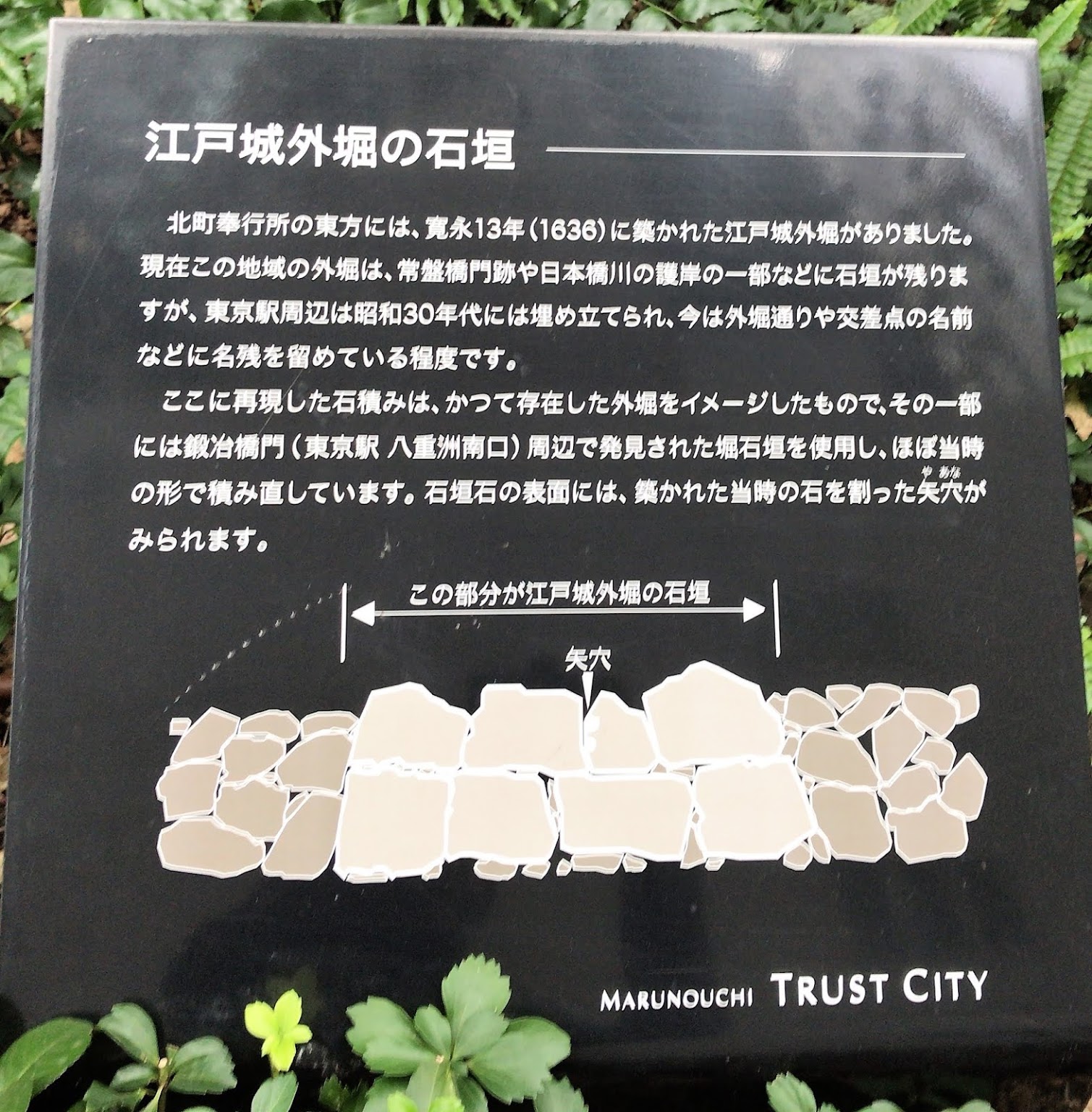
Back in Kan’ei 13 (1636), the Edo Castle Outer Moat was built, and you can still spot parts of its stone walls around Tokyo today, like near Tokiwabashi Gate or the Nihonbashi River. Unfortunately, the area around Tokyo Station was filled in much later, so you mainly find hints in street names now.
But here’s a cool reconstruction! This stonework gives you a peek at what the outer moat once looked like. Some of the stones were even found near Tokyo Station’s Yaesu South Exit and reassembled just like they were back then. Keep an eye out for the arrow slits carved into the stones – a neat touch from the original builders!
揚·尤斯滕紀念碑
Jan Joosten Monument
얀 요스텐 비
扬·尤斯滕纪念碑
Click to navigate Yaesu Underground Mall B1
Introduction
Travel back to 1600! That’s when Dutch navigator Jan Joosten, sailing on the ship ‘Liefde,’ famously drifted ashore in Japan. When he met Tokugawa Ieyasu, he brought a unique gift: twelve tigers! Ieyasu was so impressed he made Joosten a diplomatic advisor, giving him a residence near Edo Castle and trusting him with international trade.
Here’s a fun fact: the name “Yaesu” itself is believed to come from Joosten! His Japanese name, “Yayōsu,” gradually transformed into “Yaesu” – pretty cool, right?
Fast forward to the Genroku era (late 1600s), and the area near Edo Castle was already known as “Yayosu Embankment.” Then, in 1872, it officially became “Yaesu-cho.” Finally, in 1929, with the Tokaido Line as a clear divide, the area facing the Imperial Palace was named “Marunouchi,” while the other side became the “Yaesu” we know today. What a journey for a name!
東京中城八重洲
Tokyo Midtown Yaesu
도쿄 미드타운 야에스
东京中城八重洲
 Click to navigate
 🕐11:00-23:00
Introduction
TOKYO MIDTOWN YAESU
Address: Directly connected to JR Tokyo Station Yaesu Exit
Official Website:https://www.yaesu.tokyo-midtown.com/
Opening Hours:
・B1F (Shops): 10:00 AM – 9:00 PM
・1F-3F (Shops/Services): 11:00 AM – 9:00 PM
・1F-3F (Restaurants): 11:00 AM – 11:00 PM
(*Hours may vary for some stores)
What’s Special?
Opened in March 2023, Tokyo Midtown Yaesu is the third exciting “Tokyo Midtown” spot (after Roppongi and Hibiya!). This incredible 45-story complex is directly connected to Tokyo Station underground, making it super easy to explore. You’ll find about 57 unique shops here, with many making their grand debut in Tokyo or even all of Japan! The design cleverly blends traditional Japanese craftsmanship with modern flair, creating a chic space for both locals and international visitors to enjoy top-notch shopping, delicious eats, and a touch of refined Japanese culture.
Floor by Floor Fun:
・B1F (Daily Essentials):
Directly linked to Tokyo Station’s underground Yaesu shopping street, this floor is your go-to for convenience! Think delicious takeaway food, pharmacies, and even the biggest Anker Store in the Kanto region. Perfect for quick grabs before or after your train!
・1F (Japan Luxury):
Ready to indulge? This floor is all about “Japan Luxury,” bringing together a curated selection of popular Japanese brands. From exquisite artisanal crafts to cutting-edge fashion, it perfectly embodies Japan’s renowned manufacturing spirit and aesthetic.
・2F (Japan Lifestyle / Yaesu Public):
Discover cool Japanese souvenirs and unique lifestyle goods from various regions here. Don’t miss the “Yaesu Public” space, an innovative area combining standing-style food stalls with comfy relaxation spots. It’s a great place to snack, chill, and mingle!
・3F (Dining & Bar Floor):
Hungry or thirsty? This floor is home to a fantastic array of restaurants and bars, each with a distinct “Tokyo touch.” Whether you’re in the mood for a gourmet feast or just a casual drink, your taste buds are in for a treat!
A Quick Look Back
The birth of Tokyo Midtown Yaesu is a huge part of the ongoing redevelopment around Tokyo Station. The Yaesu area itself has been a bustling transport hub since the Edo period. This new landmark isn’t just a building; it’s designed to be a vibrant, international “gateway” to Japan. It beautifully integrates a bus terminal, shops, offices, and even Japan’s first Bulgari Hotel, aiming to be a central pillar connecting Japan to the world, and tradition to the future.
東京火炬
Tokyo Torch
도쿄 토치
东京火炬
Click to Navigate 🕒 11:00-23:00
Introduction
TOKYO TORCH
Address: 2-6-4 Otemachi, Chiyoda-ku, Tokyo (Tokiwabashi Tower address) – just steps from Tokyo Station’s Nihonbashi Exit!
Official Website:https://tokyotorch.mec.co.jp/
Opening Hours: Shops 11:00 AM – 8:00 PM / Restaurants 11:00 AM – 11:00 PM (*Hours may vary, please check the official website)
What’s Special?
TOKYO TORCH is a massive, super cool complex right in front of Tokyo Station’s Nihonbashi Exit. Developed by Mitsubishi Estate, its name “TORCH” literally means to “light up Japan,” aiming to be a sparkling new symbol of hope for the future. Beyond being a top-tier business hub, it’s packed with diverse shops, eateries, and boasts huge outdoor public spaces to relax and explore.
One of the current highlights is “TOKYO TORCH Park,” a sprawling 7,000 square meter plaza that connects directly to the Nihonbashi River waterfront. It’s filled with unique plants from across Japan and even has a lovely Koi Pond – truly an urban oasis! You can chill out here or grab a bite at the outdoor seating areas of “TOKYO TORCH Terrace,” soaking in the vibrant yet laid-back vibe of central Tokyo.
Exploring TOKYO TORCH (Key Public Areas):
TOKYO TORCH is a whole district made of several buildings. As of 2025, here’s where you can explore:
- Tokiwabashi Tower:
- B1F-3F: These are the main commercial floors, home to “TOKYO TORCH Terrace” where you’ll find a fantastic mix of restaurants and shops – from gourmet dining to cozy cafes and lively izakayas.
- B1F: Don’t miss “T-Market,” a food court offering a wide variety of delicious dining options.
- TOKYO TORCH Park (Outdoor Plaza):
- This awesome outdoor space sits between Tokiwabashi Tower and the upcoming Torch Tower. It’s a central spot for events and a perfect place for visitors and locals to unwind.
- Torch Tower – *Expected Completion: FY 2027
- This is the future centerpiece of the project! Once finished, it will soar to about 390 meters, making it Japan’s tallest building.
- Future plans include a luxury hotel, a massive performance hall, and an observation deck on the very top floors offering breathtaking panoramic views of Tokyo. Get ready for this one!
A Glimpse into History
The Tokiwabashi area, where TOKYO TORCH stands, has been a significant gateway connecting Edo Castle and Nihonbashi since the Edo period, steeped in history. This area was once home to venerable old buildings like the Nihon Keizai Shimbun and Nippon Building. The “Tokiwabashi Area Redevelopment Project” was born from the larger Tokyo Station redevelopment, aiming to create a cutting-edge international financial and business hub that draws people from all over and is ready for future challenges.
While Tokiwabashi Tower officially opened in 2021, the ambitious “Torch Tower” – the very heart of the TOKYO TORCH project – is still under construction. This isn’t just about showcasing incredible architectural tech; it’s a powerful symbol of Tokyo’s bold vision to link its rich past (the history of Tokiwabashi) with its exciting future (Japan’s soon-to-be tallest skyscraper!).
一石橋
Isshikibashi
이시키바시
一石桥
Click to Navigate Introduction
錢瓶橋遺址
Zenbashi Bridge Ruins
젠병바시 다리 터
钱瓶桥遗址
Click to navigate Introduction

常盤橋門跡
Tokiwabashi Gate Remains
토키와바시 문터
常盘桥门迹
Click to navigate Introduction
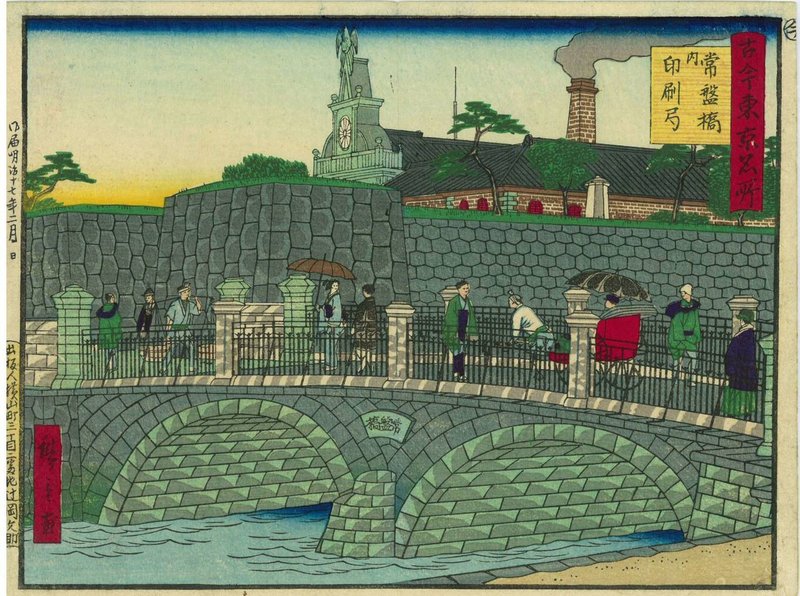
An image of Tokiwa Bridge during the Meiji era, painted by Utagawa Hiroshige III.
Tokiwa Bridge Gate was a super important entry point to Edo Castle, linking the castle to major highways. It was basically the main outer gate for the castle’s inner defenses and a key spot on the Oshu Kaido route. While parts of the castle’s outer moat were filled in, you can still find traces of the old defenses today, like multi-layered stone walls and the gate’s original layout with its bridge and guardhouse (see attachment). Back in the late Edo period, there were about 60 such gates, and Tokiwa Bridge Gate was really well-preserved, guarded by the daimyo (feudal lords) from the outer domains. After the gates were officially removed in Meiji 6 (1873), the wooden bridge was eventually replaced in Meiji 10 (1877) with a shiny new stone double-arch bridge called “Tokiwa Bridge,” built using stones from the outer moat gate.
This new bridge even had separate walkways and roadways, decked out in Western style – a real symbol of Japan’s modernization!
Tokyo's Hottest Tickets: Smart Travelers Always Compare Prices!
Tokyo's Hottest Tickets: Smart Travelers Always Compare Prices!
Tokyo's Hottest Tickets: Smart Travelers Always Compare Prices!
Tokyo's Hottest Tickets: Smart Travelers Always Compare Prices!
🚶♂️Nihonbashi Area🚶♀️
Nihonbashi is Tokyo’s commercial heart and the zero starting point for Japan’s national road network from the Edo period (1603-1868). It blends traditional culture, grand Meiji-era architecture, and modern shopping, making it a must-visit for a deeper Tokyo experience.
Nihonbashi is renowned for its generations-old shops, offering the most authentic Japanese traditional crafts and gourmet foods:
Mitsukoshi Main Store: Japan’s first department store, its elegant classical architecture is a work of art.
Kanesuke Hannosuke: A famously popular restaurant, known for its affordable and generous “Edomae Tendon”. 🍤
Yamamoto Noriten, Eitaro Sohonpo, Nihonbashi Nishikawa: These shops offer a variety of traditional nori (seaweed), wagashi (Japanese sweets), and bedding, making them excellent spots for high-quality Tokyo souvenirs.
Nihonbashi Origins
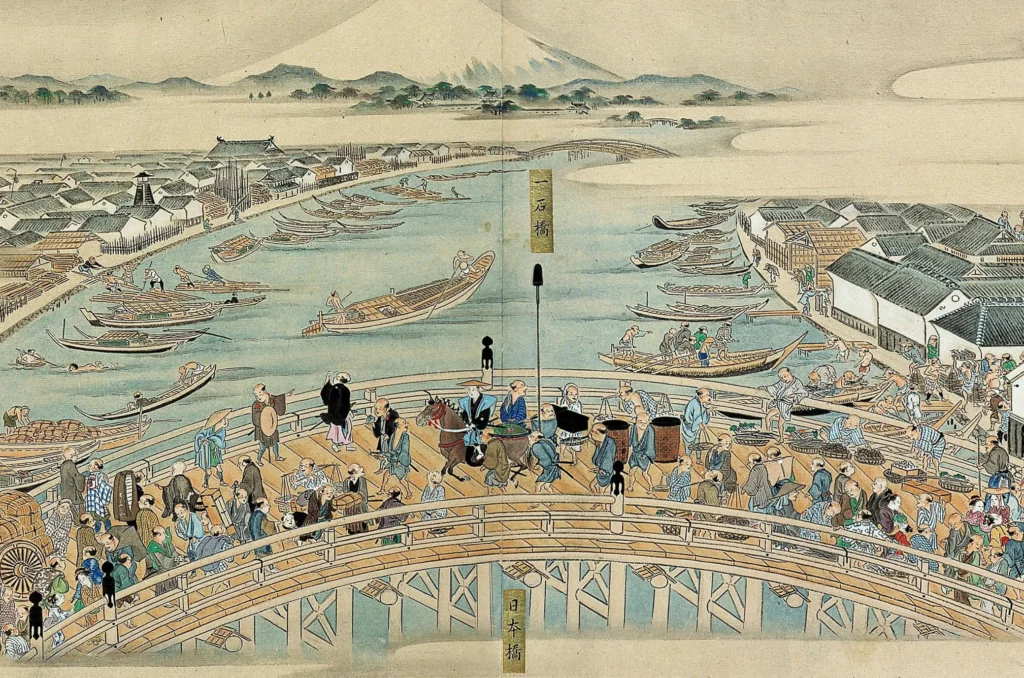
Nihonbashi, in Tokyo’s Chuo Ward, is a fascinating area where you can still feel the vibe of old Edo. The name comes from the bridge itself, a major landmark. It was made a key transport hub by Tokugawa Ieyasu when he founded the shogunate in 1630, marking the start of Japan’s five main land routes. The current elegant Renaissance-style stone bridge, built in 1911, is famous for its beautiful kirin statues and is designated an Important Cultural Property. It’s still the official starting point for Japan’s road network!
After Nihonbashi became a transport hub, it quickly transformed into a thriving commercial center in the Edo period, home to mints and big stores like Echigoya (now Mitsukoshi!). Don’t miss nearby Yaesu and Ningyocho, too—they’re packed with history and unique city vibes. Exploring Nihonbashi and Ningyocho is perfect for diving into Tokyo’s traditional culture and enjoying modern shopping!
📍 Travel Highlights: Urban Charm Blending Old and New
Historic Landmark: The Nihonbashi Bridge Itself 🌉
Zero Kilometer Marker: When you’re on Nihonbashi, definitely look for the “Nihon-koku Doro Genpyo” (Japan National Road Origin Marker) in the middle of the bridge! This signifies the historic starting point of the Gokaido (Tokaido, Nakasendo, etc.) and the official zero point for all distance calculations in Japan.
Bridge Decorations: Take your time to appreciate the bronze ornaments and the magnificent stone lion 🦁️ and kirin statues on the bridge – they’re stunning examples of Meiji-era architectural beauty!
View Beneath the Elevated Highway: While the bridge’s top is partially covered by an elevated expressway, this actually creates a unique modern sight for Nihonbashi: a striking contrast between the old stone bridge and contemporary traffic!
Culture and Food Experiences 🍵
Urban Oases: Hamacho Park and Suitengu Shrine offer peaceful escapes in the city. Suitengu is especially famous for granting blessings for fertility and safe childbirth, drawing many families.
Waterway Exploration: The Nihonbashi area has a rich network of canals. Many visitors enjoy a Sumida River cruise or a Nihonbashi boat tour to see Tokyo from a different perspective!
Unique Cuisine: Beyond the old shops, Nihonbashi is also home to many upscale restaurants and charming, hidden cafes tucked away in its alleys.
📜 Historical Stories: Commercial Hub of the Edo Period
Center of Edo: After Tokugawa Ieyasu founded the Edo Shogunate, Nihonbashi became the official starting point for the Gokaido (Five Routes), a vital road hub for all of Japan, much like Rome’s “Golden Milestone”!
Glory of the Fish Market: Nihonbashi once hosted Edo’s largest fish market, the Uogashi. Every morning, fresh fish from across the nation arrived here, making it the economic and daily lifeblood of Edo citizens.
Economic Lifeline: Thanks to its superb location, Nihonbashi became Edo’s financial and commercial center, attracting rice exchanges, currency exchange houses, and large wholesalers. This laid the foundation for its enduring role as a cornerstone of modern Tokyo’s economy.
Modern Regret: Before the 1964 Tokyo Olympics, to quickly fix traffic, the Metropolitan Expressway was built right over the river, unfortunately obscuring Nihonbashi’s beautiful views. But don’t worry, there are recent proposals to move the expressway underground, hoping to bring back the bridge’s past glory! 🏗️
日本橋高島屋 S.C.
Nihonbashi Takashimaya S.C.
니혼바시 다카시마야 S.C.
日本桥高岛屋 S.C.
Click for navigation 🕒11:00-20:00
Introduction
Nihombashi Takashimaya S.C.
Address: 2-4-1 Nihombashi, Chuo-ku, Tokyo
Official Website:https://www.takashimaya.co.jp/nihombashi/
Opening Hours:
・Main Building, Takashimaya WATCH MAISON: 10:30 AM – 7:30 PM
・New Building (Specialty Stores): 10:30 AM – 8:00 PM
・East Building (Pokémon Center DX): 10:30 AM – 9:00 PM
(*Restaurant and some store hours may vary)
What’s Inside?
Nihombashi Takashimaya S.C. is a super cool blend of old-school charm and modern vibes, right in the heart of Tokyo! It’s made up of four awesome buildings: the historic Main Building (it’s even a designated National Important Cultural Property!), the New Building packed with trendy shops and eateries, the East Building where you’ll find the legendary Pokémon Center TOKYO DX, and the Takashimaya Watch Maison, one of the biggest watch specialty stores in the world.
Step into the Main Building and seriously feel like you’ve time-traveled! Its dazzling early Showa-era decor, grand marble pillars, and even the manually operated vintage elevators scream history. Head to the New Building for a modern shopping spree, with everything from the latest fashion and chic lifestyle goods to popular restaurants. Whether you’re a history buff, a shopaholic, or adventuring with the family, Nihombashi Takashimaya S.C. has a blast in store for you!
Floor Guide:
The four buildings of Nihombashi Takashimaya S.C. are connected, offering a massive variety:
- Main Building: The heart of the department store! Head to B1F for “Depachika” – a gourmet food paradise with Japanese sweets and deli items. Above 1F, you’ll find international luxury brands, cosmetics, men’s & women’s fashion, and homeware. The 8F hosts a restaurant street, and there’s even a serene rooftop garden – your urban oasis!
- New Building: All about specialty stores! From B1F to 7F, it’s a treasure trove of curated Japanese and international shops and restaurants, including the popular “365 Days & Nihombashi” bakery, the “Nihonichi” lifestyle store, and stylish restaurants on 6F and 7F.
- East Building: Mostly specialty floors, but the absolute highlight is the “Pokémon Center TOKYO DX & Pokémon Cafe” on 5F – a must-visit pilgrimage spot for all Pokémon fans!
- Takashimaya Watch Maison: A standalone haven for watch lovers, showcasing and selling exquisite timepieces from the world’s top brands.
A Peek into the Past:
Takashimaya’s story began in Kyoto way back in 1831 as a kimono shop. The Nihombashi Takashimaya (our current Main Building) grandly opened in 1933. It was Japan’s very first department store to have full air conditioning throughout – pretty revolutionary for its time! Its unique architecture, blending Western Renaissance style with Eastern elements, was a huge talking point.
Believe it or not, in the 1950s, they even had a baby elephant named “Takako” living on the rooftop! It became a cherished memory for many Tokyo residents. In 2009, the Main Building’s incredible historical and artistic value earned it the distinction of being Japan’s first department store building designated an Important Cultural Property. Then, in 2018, with the fabulous additions of the New and East Buildings, it reborn as Nihombashi Takashimaya S.C., becoming a vibrant new landmark that beautifully connects Nihombashi’s rich past with its exciting future!
Click for Navigation 🕐11:00 AM – 11:00 PM
About
KABUTO ONE
Address: 7-1 Nihombashi Kabutocho, Chuo-ku, Tokyo
Official Website:https://kabutoone.tokyo/
Opening Hours: 8:00 AM – 8:00 PM (Hours vary for individual shops and facilities, e.g., 1F Kable Book Lounge)
What’s Inside?
Get ready for KABUTO ONE, a super modern complex in Tokyo’s Nihombashi Kabutocho – affectionately known as Japan’s “Wall Street”! This spot is the birthplace of Japanese finance, and KABUTO ONE’s arrival signals a vibrant new era for this historic financial district.
The real showstopper is “The Heart,” an awesome open-air atrium on the first floor. At its core, you’ll find “The K,” a massive 11-meter LED screen that flashes real-time market data like the TOPIX stock index. It’s a brilliant fusion of finance and public art! This bright, open space is also home to a cool cafe, a cozy book lounge, and chill-out zones – perfect not just for finance gurus to network, but for anyone to relax and soak up the urban green oasis.
Floor Guide:
KABUTO ONE is a 15-story building (with 2 underground floors). The public and commercial goodies are mostly on the lower levels:
- B1F (Shops & Services): Need a quick snack or essentials? You’ll find a convenience store, deli, pharmacy, and even a clinic – super convenient for the folks working here!
- 1F (Atrium & Dining): This is where all the action is, in “The Heart”! Grab a unique coffee at “KNAG” or a craft beer at “HOPPERS,” then unwind in the “Kable” Book Lounge – a comfy spot for reading or catching up on emails.
- 3F (Meeting Rooms): Flexible meeting spaces available for rent.
- 4F (KABUTO ONE Hall): A huge event hall, fitting about 300 people, perfect for financial seminars, startup showcases, and all sorts of cool happenings.
- 5F-15F (Office Area): Mostly office spaces up here.
A Peek into the Past:
Nihombashi Kabutocho is literally the birthplace of Japanese capitalism! Japan’s first national bank opened its doors here in 1871, and the Tokyo Stock Exchange followed in 1878. It’s always been a central powerhouse for the Japanese economy.
Over time, Kabutocho’s buzz mellowed out a bit. But fear not, KABUTO ONE arrived in 2021 as the star of the “Nihombashi Kabutocho Area 1 Urban Redevelopment Project”! Its name cleverly combines “Kabuto” from the district’s name, with “ONE” representing its historical role as the “first” financial hub. Plus, it aims to be the “one and only” driving force revitalizing the area. KABUTO ONE is all about linking the past with the future, and bringing back that financial district sparkle!
乙姬廣場
Otohime Plaza
오토히메 광장
乙姬广场
Click for Navigation About
日本橋三越本店 新館
Nihonbashi Mitsukoshi Main Store - New Building
니혼바시 미츠코시 본점 신관
日本桥三越本店 新馆
Navigate 🕐10:00-19:00
Introduction
Nihonbashi Mitsukoshi Main Store
Address: 1-4-1 Nihonbashi Muromachi, Chuo-ku, Tokyo
Official Website:https://cp.mistore.jp/global/zh_hant/nihombashi.html (Traditional Chinese)
Opening Hours:
・ All floors: 10:00 AM – 7:00 PM
・ Main Building & New Annex B1F, 1F: 10:00 AM – 7:30 PM
・ New Annex 9F, 10F Restaurants: 11:00 AM – 10:00 PM
Highlights
Nihonbashi Mitsukoshi Main Store isn’t just a department store; it’s a piece of history! As Japan’s oldest, its magnificent main building is a designated Important Cultural Property. The modern New Annex, added in 1973 and revamped in 2004, seamlessly connects to create a top-tier shopping experience.
The New Annex focuses on a contemporary lifestyle. A cool feature? It houses a huge BIC CAMERA electronics store on the 6th and 7th floors, so you can grab the latest gadgets while enjoying luxury shopping! Plus, the 9th and 10th floors are packed with fantastic restaurants, open late for your dinner cravings. With a seamless link between the old and new, you can effortlessly hop from classic elegance to modern chic for a truly unique retail adventure.
Floor Guide (New Annex)
The New Annex focuses on lifestyle functions and dining experiences:
・ 10F: Restaurant Street
・ 9F: Restaurant Street / Mitsukoshi Culture Salon
・ 8F: Hair Salon / Beauty Salon / Photo Studio
・ 7F: BIC CAMERA (Electronics) / Travel Salon
・ 6F: BIC CAMERA (Electronics)
・ 2F-5F: Men’s & Women’s Fashion / Lifestyle Goods
・ 1F: Entrance Floor (Connected to Main Building)
・ B1F: Food / Fresh Produce
・ B2F: Food / Delicatessen
History
Mitsukoshi’s story began way back in 1673 (Edo Period) as a kimono shop called ‘Echigoya’. Fast forward to 1904, Mitsukoshi made history with Japan’s first ‘Department Store Declaration,’ officially becoming a modern department store and leading the way for others!
The stunning main building, completed in 1914 in a glorious Renaissance style, quickly became an architectural icon. Despite being damaged in the 1923 Great Kanto Earthquake, it was swiftly restored and expanded by 1935. To keep up with growing shoppers, the ‘New Annex’ was added in 1973. In 2016, the main building earned its status as an Important Cultural Property, celebrating its rich history and artistic flair. Mitsukoshi Nihonbashi isn’t just a place to shop; it’s a living, breathing chapter of Tokyo’s commercial history!
日本橋三越總店
Nihonbashi Mitsukoshi Main Store
니혼바시 미쓰코시 본점
日本桥三越总店
Navigate 🕐10:00-19:00
Introduction
Nihombashi Mitsukoshi Main Store
Address: 1-4-1 Nihombashi Muromachi, Chuo-ku, Tokyo
Official Website: https://www.mistore.jp/store/nihombashi.html
Opening Hours:
・Whole Store (Main Building & New Building): 10:00~19:00
(Note: Opening hours may vary by floor and event. Please refer to the official website for details.)
Features:
More than just a department store, the Nihombashi Mitsukoshi Main Store is a living museum! Its main building, designated as a “National Important Cultural Property” in 2016, boasts grand Renaissance-style architecture, exuding an unparalleled sense of history and grandeur.
As you step into the central hall on the first floor of the Main Building, prepare to be captivated by two iconic symbols:
- The “Magokoro” (Sincerity) Statue of Tennyo (Heavenly Maiden): This colossal wooden sculpture, soaring five stories high (approximately 11 meters), is a masterpiece by sculptor Genzo Sato, taking ten years to complete. Its exquisite craftsmanship and magnificent posture symbolize Mitsukoshi’s spirit of “sincere hospitality,” making it a rare artistic marvel within a department store.
- Entrance Lion Statues: Guarding the main entrance of the Main Building, these two bronze lion statues are Mitsukoshi’s protectors and one of Tokyo’s most famous meeting spots. Legend has it that rubbing the lions’ forepaws brings good luck!
Beyond these, the central hall also houses an ancient pipe organ, which still features live performances at specific times. The music echoes through the lofty, splendid space, adding an unparalleled elegant atmosphere to your shopping experience.
Floor Guide:
The Nihombashi Mitsukoshi Main Store is comprised of two buildings, the “Main Building” (Honkan) and the “New Building” (Shinkan), connected by convenient passageways.
- Main Building (Honkan):
・B1F: Food Floor (Depachika), a treasure trove of top-tier sweets, prepared foods, and fresh produce from across Japan and around the world.
・1F: Central Hall, cosmetics, and accessories.
・2F~7F: Home to international luxury goods, men’s and women’s fashion, home furnishings, traditional kimono, art galleries, and the historic “Mitsukoshi Theater.”
・RF: Rooftop Garden.
Historical Background:
Mitsukoshi’s history dates back to 1673 (Edo period), when it was known as “Echigoya” and operated as a kimono store. Its founder, Takatoshi Mitsui, achieved immense success with an innovative business model of “cash transactions, fair prices” (a revolutionary concept at a time when credit transactions were common).
In 1904, Mitsukoshi issued its “Department Store Declaration,” officially transforming from a traditional kimono store into Japan’s first modern department store. The current main building was completed in 1914 and rebuilt after the Great Kanto Earthquake, becoming a significant landmark in Japan’s modern architectural history. It is not only a pioneer in Japan’s department store industry but also a century-long symbol of the Nihombashi area’s vibrant prosperity.
HARIO 燈工廠
HARIO Lampwork Factory
하리오 램프워크 공방
HARIO 灯工厂
Tap to navigate 🕐11:00-19:00
Introduction
HARIO Lampwork Factory Nihombashi Store
Store Information
- Address: 2-10 Nihombashi Kodenmacho, Chuo-ku, Tokyo
- Official Website: https://www.hario-lwf.com/
- Opening Hours: 11:00-19:00 (Closed Sundays & holidays)
- Admission/Fees: Free entry! Product prices vary by style, starting from approx. 5,830 JPY (e.g., glass earrings approx. 5,830 JPY, necklaces starting from approx. 8,140 JPY. Please refer to the official website or in-store for actual prices).
Store Introduction
HARIO Lampwork Factory is a specialty handmade glass jewelry store from the century-old Japanese heat-resistant glass brand, HARIO. Tucked away in Nihombashi, Tokyo, this charming shop combines a workshop with a display area, allowing visitors to instantly appreciate the allure of traditional glass artistry. Every glass item displayed here—necklaces, earrings, rings, hair accessories, etc.—is meticulously handcrafted by artisans using the “lampwork” technique. They leverage the unique properties of heat-resistant glass to create light, transparent, and sparkling designs. These pieces not only showcase the pure aesthetic of glass but also incorporate natural elements like water droplets, flower petals, and stars, making you feel as if you’re wearing a tiny piece of crystalline natural scenery.
Beyond selling beautiful jewelry, the store also provides repair services. Should your glass jewelry accidentally get damaged, you can bring it in for professional artisans to mend. Additionally, HARIO Lampwork Factory collaborates with other brands to launch limited editions, such as charming accessories created in partnership with Nagoya’s famous character “Piyorin,” adding to the joy of collecting. The store’s atmosphere is warm and elegant, perfect for travelers seeking unique gifts or a treat for themselves, allowing them to experience the meticulousness and warmth of Japanese craftsmanship firsthand.
Historical Background & Cultural Significance
Founded in 1921, HARIO initially focused on producing heat-resistant glass for laboratory and dining ware. In those early days, every piece was hand-blown by artisans, imbuing each product with a unique soul. As mechanized production became widespread and traditional handcrafting skills declined, HARIO established the Lampwork Factory. Its aim was to return to the brand’s original passion and preserve this precious lampwork technique. The lampwork method involves heating glass with a flame and skillfully shaping it by hand, creating delicate and distinctive jewelry, with each piece embodying the artisan’s heart and creativity.
HARIO Lampwork Factory’s heat-resistant glass products are not only lightweight and durable but also brilliantly capture light, creating dreamlike visual effects that echo Japan’s reverence for nature and harmony. These ornaments are more than just fashion accessories; they embody the fusion of traditional Japanese craftsmanship and modern design, speaking to the artisans’ dedication to handmade spirit and their hopeful vision for the future. Whether as a gift or for personal use, these glass pieces add a touch of refined Japanese elegance to your life.
三井紀念美術館
Mitsui Memorial Museum
미츠이 기념 미술관
三井纪念美术馆
 Tap to navigate
 🕐10:00-19:00
👉 Tokyo Museum Grutto Pass
Introduction
Mitsui Memorial Museum
Address: Mitsui Main Building 7F, 2-1-1 Nihonbashi Muromachi, Chuo-ku, Tokyo
Official Website:https://www.mitsui-museum.jp/
Opening Hours: 10:00~17:00 (Last entry 16:30)
Admission: Varies by exhibition (e.g., General ¥1,500). Check their official website for current exhibition details and prices!
About
Tucked away in Tokyo’s Nihonbashi, the Mitsui Memorial Museum is housed within the Mitsui Main Building – a designated Important Cultural Property itself! It showcases over 4,000 treasures collected by the Mitsui family over 300 years, from the Edo period onwards. You’ll find everything from paintings and calligraphy to samurai swords, Noh masks, textiles, and exquisite tea ceremony tools. Art lovers, this is your spot! Their special exhibitions are always a highlight, offering a deep dive into Japan’s finest craftsmanship and aesthetics.
History & Cultural Significance
The museum’s story is deeply intertwined with the powerful Mitsui family (the origins of today’s Mitsui Group). From the Edo period, they weren’t just business giants but also major patrons and collectors of art. The museum opened in October 2005 to share their incredible legacy with the world.
Its cultural heart beats in two ways: first, the ‘Beauty of Architecture.’ The Mitsui Main Building itself, built in 1929, is a stunning example of Neo-Classical design and a masterpiece in its own right. Second, the ‘Excellence of the Collection,’ featuring 6 National Treasures and 75 Important Cultural Properties. Their tea ceremony collection is particularly famous, including masterpieces like the National Treasure ‘Shino Tea Bowl, Umonaegaki.’ A visit here is more than just seeing art; it’s a deep dive into modern Japanese architecture and the exquisite aesthetics perfected since the Edo period.
福德神社
Fukutoku Shrine
후쿠토쿠 신사
福德神社
 Click for Navigation
 🕐09:00-16:00
About
Fukutoku Shrine (Mebuki Shrine)
Address: 2-4-14 Nihonbashi Muromachi, Chuo-ku, Tokyo
Official Website:https://mebuki.jp/
Opening Hours: 10:00~16:00 (Shrine office hours)
Admission: Free entry
About the Shrine
Hidden amongst the towering skyscrapers of Tokyo’s Nihonbashi financial district, you’ll find the charming and powerful Fukutoku Shrine. Right next to COREDO Muromachi, its vibrant red torii gate creates a striking contrast with the modern glass buildings – a perfect blend of ancient tradition and contemporary hustle. This shrine is super famous for its ‘financial luck’ blessings, making it one of central Tokyo’s top ‘power spots.’ Many visitors come specifically to pray for lottery wins, business success, or overall wealth!
History & Cultural Significance
Fukutoku Shrine boasts over a thousand years of history, dating back to the Heian period (859-877 AD). It’s also widely known as ‘Mebuki Shrine’ (Sprouting Shrine). Legend has it that Tokugawa Ieyasu, the first shogun of the Edo Shogunate, prayed here before battle and saw new buds sprouting on the shrine’s torii gate. He took this as a sign of victory and gave it the auspicious name ‘Mebuki,’ symbolizing ‘new life’ and ‘hope.’
During the Edo period, Fukutoku Shrine was one of the very few allowed by the Shogunate to host ‘Tomi-kuji’ (the precursor to modern lotteries). This unique history cemented its status as a holy site for good fortune and winnings! Though it moved several times over the centuries due to fires and urban planning, it was magnificently rebuilt in 2014 on its original ‘Fukutoku Village’ site as part of the Nihonbashi redevelopment. This ‘rebirth’ perfectly aligns with its ‘Mebuki’ (sprouting) name, making it a key cultural symbol blending tradition and innovation in Nihonbashi.
OREDO 室町露台
OREDO Muromachi Terrace
오레도 무로마치 테라스
OREDO 室町露台
Click for Navigation 🕐11:00-23:00
About
COREDO Muromachi Terrace
Address: 3-2-1 Nihonbashi Muromachi, Chuo-ku, Tokyo
Official Website:https://mitsui-shopping-park.com/urban/muromachi/
Opening Hours:
・Shops Weekdays 11:00~20:00 / Weekends & Holidays 10:00~20:00
・Restaurants 11:00~23:00
(Note: Some stores may have different hours)
What Makes It Special
COREDO Muromachi Terrace is the newest and biggest sibling in the COREDO Muromachi family, nestled within the Nihonbashi Muromachi Mitsui Tower. The absolute star here is Eslite Spectrum Nihonbashi, Taiwan’s ‘coolest department store,’ making its Japan debut as the anchor tenant! The whole design cleverly mixes modern vibes with Nihonbashi’s rich history. Don’t miss the 1,500 sqm ‘Ooyane Plaza’ on the 1st floor facing Chuo-dori – it’s a fantastic semi-outdoor space for events, or just chilling out like an urban oasis.
Floor Guide
COREDO Muromachi Terrace packs about 31 exciting shops and eateries across its commercial floors, from B1F to 2F. Here’s a quick look:
・2F: This floor is almost entirely dedicated to the expansive Eslite Spectrum Nihonbashi. Beyond a fantastic book selection, you’ll find stationery, unique lifestyle items, hands-on workshops, and delicious Taiwanese food and drinks. Its design, inspired by Edo-era ‘corridors,’ makes exploring a delightful discovery!
・1F: Gathered around the ‘Ooyane Plaza,’ this floor features a bunch of exciting restaurants and cafes, many making their first appearance in Japan or the Kanto region. Think popular bakeries and cool coffee spots! It’s super open, letting you soak in the sunlight and gentle breeze while you dine.
・B1F: Directly connected to Mitsukoshimae (Tokyo Metro) and Shin-Nihonbashi (JR) stations – talk about convenient! This floor is a food paradise with great value, offering everything from izakayas and ramen to international delights. Perfect for grabbing lunch or dinner if you’re working or exploring nearby.
History
COREDO Muromachi Terrace officially opened its doors on September 27, 2019. Nihonbashi has been a vibrant economic and cultural heart of Japan since the Edo period. As a crucial part of Mitsui Fudosan’s ‘Nihonbashi Revitalization Project,’ this facility was built to ‘inherit and innovate’ the area’s rich history. It’s not just the latest addition to the COREDO Muromachi family (after 1, 2, and 3); by bringing in culturally curated brands like Eslite Spectrum, it’s infused the historic district with fresh energy and an international flair, making it a fantastic new landmark for people to connect, dive into culture, and simply chill out.
貨幣博物館
Currency Museum
화폐 박물관
货币博物馆
Click for Navigation 🕐09:30-16:30
Free Entry
About
Bank of Japan Currency Museum
Address: 1-3-1 Nihonbashi-Honcho, Chuo-ku, Tokyo (inside the Bank of Japan Annex)
Official Website: https://www.imes.boj.or.jp/cm/
Opening Hours: 9:30 AM – 4:30 PM (Last entry 4:00 PM)
Closed: Mondays (open on national holidays), New Year’s (Dec 29 – Jan 4)
Admission: Free
What’s Inside?
Ready for a wild ride through money’s past? This cool museum, part of the Bank of Japan, is all about currency history! You’ll literally travel through time, from super old Japanese coins (like “Wado Kaichin”) to giant Edo-era gold coins (Oban & Koban!), right up to today’s banknotes. It’s a fascinating look at how money evolved! Plus, they’ve got amazing coins and info from all over the world, especially East Asia. Get ready to rethink money’s role in history and how it reflects different cultures and societies!
The Story Behind the Coins
This museum opened in 1982 to celebrate the Bank of Japan’s 100th anniversary. Its heart? The incredible collection of Mr. Kiyoaki Tanaka, a legendary coin collector. His “Numismatic Museum” collection covered everything from ancient to modern Japanese coins, plus a treasure trove of East Asian currency. During WWII, he donated his entire collection to the Bank of Japan in 1944 to keep these precious cultural relics safe. What a guy!
After a big refresh in 2015, the museum isn’t just a display – it’s also a research hub! But the best part for you? You can actually *touch* a model of a 100 million yen banknote and *feel the weight* of a whole box of 1,000 Edo-era gold coins (Koban!). It’s a seriously cool, hands-on way to understand the true “value of money.” Don’t miss it!
日本銀行總店主館
Bank of Japan Head Office Main Building
일본은행 본점 본관
日本银行总店主馆
Navigation Introduction
小網神社
Koami-jinja Shrine
코아미 신사
小网神社
 Jump to Section
 Strong Luck & Protection from Misfortune
Financial Prosperity
Introduction
Nihonbashi Koami Shrine
Address: 16-23 Nihonbashi Koamicho, Chuo City, Tokyo
Official Website:http://www.koamijinja.or.jp/
Opening Hours: 09:00~17:00 (Shrine office reception hours)
Admission: Free
Spot Introduction
Tucked away amidst the towering skyscrapers of Tokyo’s Nihonbashi financial district, Koami Shrine is a compact yet incredibly powerful sacred spot. Don’t let its size fool you—it’s always bustling with worshippers, often featuring lines of people eager to seek its blessings. This shrine is famously known for its extraordinary powers in “Strong Luck & Protection from Misfortune” and “Financial Prosperity,” earning it the reputation as one of Tokyo’s ultimate ‘power spots’!
History and Cultural Significance
Dating back over 550 years to the Muromachi period (around 1466), Koami Shrine has a truly remarkable history of defying disaster. It miraculously survived both the devastating 1923 Great Kanto Earthquake and the fierce Tokyo air raids of WWII completely intact, preserving its precious pre-war appearance. Legend has it that soldiers carrying charms from this shrine returned home safely, cementing its reputation as one of Japan’s most powerful shrines for protection against misfortune.
But the real buzz here is the “Sen-arai” (money washing) ritual! The shrine dedicates itself to the Tokyo Sen-arai Benzaiten (a goddess of wealth) and features a special “money washing well.” The tradition says that if you place your coins or bills in a bamboo basket and rinse them with the well water, your wealth will be purified and “double return” to you! Talk about a financial boost! Plus, Koami Shrine also houses Fukurokuju, one of the Seven Lucky Gods, who blesses visitors with good relationships, longevity, and happiness. It’s truly an all-in-one super popular spot for comprehensive good fortune!
🚶♂️ Ningyocho Area 🚶🏻♀️
Ningyocho, nestled in Tokyo’s Chuo Ward, sits right by bustling Nihonbashi and Ginza, yet it whispers tales of old Edo with its unique Shitamachi (commoner’s district) nostalgic charm. It’s not just a fantastic spot to experience old Tokyo life; it’s a treasure trove for foodies hunting century-old shops and a haven for traditional crafts.
Amazake Yokocho: This is Ningyocho’s liveliest lane, aptly named after the sweet sake shops that once graced it. Today, it’s a vibrant hub brimming with traditional sweets, pickles, tofu, and more – absolutely the best place for an “eat-as-you-stroll” adventure! 🚶♀️
Must-Try Delights:
Ningyo-yaki (Doll Cakes): The quintessential Ningyocho sweet, these are delightful baked cakes filled with red bean paste, often shaped like the Seven Lucky Gods or doves. Don’t leave without trying them at a historic shop like Shigemori Eishindo!
Tamagoyaki (Rolled Omelet): Soft, sweet, and oh-so-flavorful Japanese rolled omelets from places like Torikin. It’s a local favorite and people happily line up for this everyday treat.
Sukiyaki / Shamo Nabe (Hotpot): Ningyocho is home to several esteemed sukiyaki and shamo nabe (gamecock hotpot) establishments, such as Imahan and Homatei. They’re perfect for indulging in premium wagyu and traditional Japanese hotpot. 🥩
👘 Learn More About Ningyocho 🏮
Traditional Crafts & Hands-On Experiences ✂️
Ningyocho still proudly hosts many specialty shops for traditional crafts:
Dolls (Ningyo): Fitting its name, you’ll find numerous shops selling exquisite Japanese dolls here.
Paper Cuttings & Fans: Hunting for beautifully handcrafted paper cuttings, traditional fans, and Japanese towels (tenugui) makes for unique souvenir shopping! 🎁
Karakuri Clock Towers & Seven Lucky Gods Pilgrimage 🕰️
Karakuri Clock Towers : Near the entrance to Amazake Yokocho, two clock towers perform lively shows at set times daily. Puppets emerge to music, putting on a delightful mechanical doll play – super entertaining!
Ningyocho Seven Lucky Gods Pilgrimage: Eight shrines around Ningyocho enshrine Japan’s Seven Lucky Gods. Follow the special route, and locals say it’ll bring you good luck! It’s a very popular local activity. 🍀
📜 History Unpacked: From Edo Kabuki to Commoner Life
Ningyocho’s captivating history stretches back to Japan’s Edo Period, with its roots deeply intertwined with commoner culture:
Stage for Kabuki & Puppet Theater: In the early Edo period, the Ningyocho area was a bustling hub for government-approved Kabuki theaters and Bunraku (puppet joruri) theaters.
Origin of the Name: Because it was a gathering place for puppet theater (ningyo shibai), many doll makers and shops selling dolls flocked here. Thus, the name “Ningyocho” (Doll Town) was born!
Geisha District & Entertainment Hub: During the theater’s heyday, Ningyocho also flourished as a lively hanamachi (geisha district), serving as a primary entertainment spot for Edo commoners.
Rebirth After the Great Kanto Earthquake: Though Ningyocho suffered greatly during the Great Kanto Earthquake and WWII, its resilient residents and historic shops held firm to tradition. They rebuilt, ensuring that the charming Edo atmosphere endures here to this day.
甘酒橫丁
Amazake Alley
아마자케 요코초
甘酒横丁
Clickable Navigation Introduction
Nestled in eastern Chuo Ward, Amazake Yokocho is a bustling shopping street brimming with lively “shitamachi” (old town) charm. This historic lane stretches from Ningyocho shopping street to Kiyosubashi-dori, packed with vibrant shops.
Legend has it that Amazake Yokocho got its name from a famous amazake (sweet sake) shop called “Owari-ya” located near its southern entrance during the Meiji era. This shop didn’t just sell sweet sake; it left a deep historical mark on the street. Today, you can still find the venerable tofu shop “Futaba,” established in Meiji 40 (1907), right at the street’s entrance. Their amazake is delightfully refreshing, sweet yet not cloying – perfect for sipping as you stroll!
Beyond traditional sweets, Amazake Yokocho is a treasure trove for shopping and dining. You’ll find “Itakuraya Honten” specializing in Ningyo-yaki, while “Ningyocho Imahan Honten” is famed for its sukiyaki and shabu-shabu (and don’t miss their popular beef croquettes!). For some fantastic local snacks, “Torichu” offers delicious grilled chicken skewers and Tamagoyaki.
This area isn’t just about food; it’s also close to historic performance venues like Rakugo theaters and the “Meijiza” theater. These spots draw huge crowds year-round, keeping Amazake Yokocho wonderfully lively. After a show, visitors often wander the shopping street, picking up souvenirs or enjoying more local delicacies.
Stepping out of Amazake Yokocho, a leisurely walk along the Sumida River beckons. Why not pop over to Suiten-gu Shrine and Koami Shrine? These spots aren’t just spiritual havens; they’re fantastic opportunities to immerse yourself in traditional Japanese culture. On these streets, rich with history and culture, every step reveals Tokyo’s fascinating blend of old and new.
人形燒本舖板倉屋
Ningyoyaki Honpo Itakuraya
닌교야키 본포 이타쿠라야
人形烧本铺板仓屋
 Clickable Navigation
 🕖10:00 AM – 5:30 PM
Introduction
Itakuraya: The Original Ningyo-yaki Shop
Address: 2-4-2 Nihonbashi Ningyocho, Chuo-ku, Tokyo
Official Website: http://www.itakuraya.com/
Opening Hours:
Mon-Sat 10:00 AM – 5:30 PM
Closed on Sundays & National Holidays
Tabelog Rating: 3.55
Price Range: ~¥999
Highlights
Established in 1907, Itakuraya is the original shop for Ningyo-yaki, Ningyocho’s famous sweet. It’s a true local landmark!
Their Ningyo-yaki are shaped like the Seven Lucky Gods, featuring a fluffy honey cake exterior and a generous filling of smooth red bean paste (koshian). Fun fact: while they’re called “Seven Lucky Gods,” there are only six molds. The shop says the seventh lucky god is “your smile”!
Itakuraya’s Ningyo-yaki are deliciously moist and perfectly sweet. They’re a classic treat and the perfect souvenir or snack for your Ningyocho visit.
森乃園
Mori no En
모리노엔
森乃園
 Get Directions
 🕐10:00 AM – 7:00 PM
Tea Leaves & Soft Serve Ice Cream
About
Morinoen
Address: 2-4-9 Nihonbashi Ningyocho, Chuo-ku, Tokyo
Official Website: https://morinoen.com/
Opening Hours:
10:00 AM – 7:00 PM (1F: Tea Leaves & Soft Serve Ice Cream Sales)
*Closed only during New Year’s Day
Tabelog Rating: 3.71
Price Range: ¥1,000 – ¥1,999
Highlights
Founded in 1914, Morinoen is a famous Hojicha (roasted green tea) specialty store in Ningyocho, Tokyo. They roast their own tea, offering incredibly aromatic Hojicha that locals and tourists adore.
While their famous 2F cafe is now closed, the 1F still buzzes with tea leaf sales and their popular takeout soft-serve. You absolutely must try their Hojicha Soft Serve! It’s intensely flavorful with a deep roasted aroma, but surprisingly light and refreshing.
If you’re lucky, grab the limited-edition “Hojicha Soft Serve with Monaka” for an extra treat – crispy monaka wafers with elegant hojicha paste. Don’t forget their “Gokujo Hojicha” (Premium Hojicha) – double-roasted to be super low in caffeine, so even pregnant women can enjoy this signature tea!
玉英堂彦九郎
Gyokueido Hikokuro
교쿠에이도 히코쿠로
玉英堂彦九郎
Get Directions 🕐09:30 AM – 5:00 PM
About
Gyokueido Hikokuro
Address: Gyokueido Building 1F, 2-3-2 Nihonbashi Ningyocho, Chuo-ku, Tokyo
Official Website: https://gyokueidou.com/
Opening Hours:
Mon-Fri 09:00 AM – 7:00 PM
Sat 09:00 AM – 6:00 PM
Sun & National Holidays 09:30 AM – 5:00 PM
*Irregularly closed
Tabelog Rating: 3.73
Price Range: ~¥999
Highlights
Founded in Kyoto in 1576, Gyokueido Hikokuro is a legendary wagashi shop with almost 450 years of history, currently offering only takeout. This family-run establishment still handcrafts all its sweets, preserving generations of traditional deliciousness.
Their signature “Torayaki” is a must-try! Unlike regular dorayaki, it features a beautiful tiger-striped pancake that’s incredibly moist, light, and fluffy. Inside, you’ll find a perfectly balanced filling of richly flavored Hokkaido Dainagon red beans, a blend of smooth and chunky paste – pure elegance without being overly sweet!
And prepare to be amazed by “Gyokuman,” a large yam bun that, when sliced, reveals a stunning five-layered cross-section of chestnuts, red bean, and other pastes – truly a work of art! This renowned wagashi shop perfectly blends traditional techniques with a sophisticated modern touch, making it a favorite among foodies.
人形町今半 本店
Ningyocho Imahan Main Branch
닌교초 이마한 본점
人形町今半 本店
 Get Directions
 🕐11:00 AM – 3:00 PM
🕐5:00 PM – 10:00 PM
About
Ningyocho Imahan Main Store
Address: 2-9-12 Nihonbashi Ningyocho, Chuo-ku, Tokyo
Official Website:https://restaurant.imahan.com/honten/
Hours:
Mon-Fri 11:00 AM – 3:00 PM / 5:00 PM – 10:00 PM
Sat, Sun & Holidays 11:00 AM – 10:00 PM
Tabelog Rating: 3.71
Budget:
Dinner ¥10,000 – ¥14,999
Lunch ¥5,000 – ¥5,999
Restaurant Features
Ningyocho Imahan is a renowned sukiyaki spot, famous for its melt-in-your-mouth premium meats and impeccable service. This charming standalone Japanese restaurant offers a perfect setting for enjoying great food and conversation.
Here, whether you’re having sukiyaki or shabu-shabu, kimono-clad staff will meticulously cook your meal right at your table, carefully adjusting seasoning, heat, and doneness. Their exceptional hospitality is highly praised, making it ideal for family gatherings, business dinners, or special occasions, promising an unforgettable experience.
They use carefully selected Kuroge Wagyu beef, paired with seasonal vegetables like ‘Notokko’ shiitake mushrooms, creating exquisite flavors only a long-standing establishment can deliver.
柳屋
Yanagiya
야나기야
柳屋
Click to Navigate 🕒12:30 PM – 6:00 PM
Introduction
Yanagiya
Address: 2-11-3 Nihonbashi Ningyocho, Chuo-ku, Tokyo
Hours:
Tue-Sat 12:30 PM – 6:00 PM
Mon, Sun Closed
Tabelog Rating: 3.78
Budget: Up to ¥999
Shop Features
Established in 1916, Yanagiya is a century-old taiyaki shop, famed as one of “Tokyo’s Big Three Taiyaki Makers.” Located in Ningyocho’s Amazake Yokocho, it always draws a crowd.
The biggest highlight here is their dedication to the traditional “Ichicho-yaki” (also known as “tennenmono”) technique. Artisans meticulously bake each taiyaki individually using heavy, single molds over an open flame. This method results in an incredibly thin, crispy crust with a captivating charred aroma unique to direct-fire cooking.
The taiyaki is generously filled from head to tail with Hokkaido Tokachi red bean paste. Its sweetness is elegant and not cloying, striking a wonderful balance between the rich red bean flavor and the crispy exterior. Though primarily a takeout spot, grabbing a fresh, hot taiyaki here is a must-do for a taste of Tokyo’s finest.
京菓子司 彥九郎
Kyogashi-tsukasa Hikokuro
교가시츠카사 히코쿠로
京菓子司 彦九郎
Click to Navigate 🕒10:00 AM – 7:00 PM
Introduction
Kyogashishi Hikokurou
Address: 2-11-3 Nihonbashi Ningyocho, Chuo-ku, Tokyo
Official Website:https://www.hikokurou.jp/
Hours:
Weekdays 10:00 AM – 7:00 PM
Sat, Sun & Holidays 10:00 AM – 6:00 PM
*Irregular holidays
Tabelog Rating: 3.57
Budget: Up to ¥999
Shop Features
Founded in 1935, this long-established Japanese confectionery (wagashi) shop is located in the charming Amazake Yokocho. Originally opened in Kyoto, it moved to its current Ningyocho location in 1951 and has been a local favorite ever since.
When in Amazake Yokocho, you absolutely can’t miss their amazake (¥200). Made only with rice koji, it has a gentle flavor and pure natural sweetness that warms both body and soul.
Their most popular item is warabimochi, known for its bouncy, soft texture, dusted with exquisite kinako (roasted soybean flour) – a true Japanese delicacy. Another signature item is Torayaki, named for the tiger-stripe pattern on its fluffy pancake. It’s filled with perfectly sweetened red bean paste, offering an elegant taste. This shop offers takeout service only (there’s a bench outside for a short rest) and accepts cash only.
水天宮
Suitengu Shrine
스이텐구 신사
水天宫
Click to Navigate 🕒7:00 AM – 6:00 PM
Introduction


